Understanding power control circuit

Thread Starter

teslatinkering

Joined Nov 19, 2025
7
Hello,

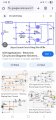
I want to build this phase control circuit using antiparallel SCRs to control the speed of a permanent split capacitor motor.

I think I understand its operation except I'm confused about the zener, if I'm thinking about this right it should be the other way round, so once the capacitor reaches its breakdown voltage it dumps into the primary of the pulse transformer.

Wondering if someone can help clear things up for me.

Thanks in advance! Screenshot_20251102_010217_Chrome.jpg
 

Thread Starter

teslatinkering

Joined Nov 19, 2025
7
A universal motor (as found on vacuum cleaners, mains hand-held power tools etc.)
Ok, that is helpful, thank you.
I'm still curious as to the zener diode, am I just misunderstanding them? I get that they break down at a repeatable voltage but the way it is in the circuit is confusing to me
 

Ian0

Joined Aug 7, 2020
13,097
Ok, that is helpful, thank you.
I'm still curious as to the zener diode,
So am I, I wonder if it was meant to be a diac. Otherwise, there is nothing that could generate a pulse.
It's a rather antiquated circuit. You don't see gate drive transformers very often these days, now that there are opto-triacs.
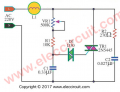
For a basic speed control or light dimmer circuit you would normally see this:

Screenshot from 2025-11-20 07-40-23.png
 

Thread Starter

teslatinkering

Joined Nov 19, 2025
7
So am I, I wonder if it was meant to be a diac. Otherwise, there is nothing that could generate a pulse.
It's a rather antiquated circuit. You don't see gate drive transformers very often these days, now that there are opto-triacs.
For a basic speed control or light dimmer circuit you would normally see this:

View attachment 359122
Yes this is familiar. I wonder about replacing the triac here with back to back SCRs, although through research I've learned just antiparallel-ing them with gates connected together fired by the diac is a no no. Hence, the above solution.

As for the initial circuit presented, I imagine a diac would work in place of the zener. But I'm also thinking it would work if the zener was reversed, so the cathode reaches its voltage threshold once the capacitor is charged (on either polarity) then breaks down to dump the capacitor charged into the corresponding primary on the pulse transformers.

Thoughts?
 

Pasqual

Joined Aug 14, 2011
9
Hello everyone, good afternoon.

Since my colleague teslatinkering asked, I will try to understand the operation of the Zener diode, in that exact position in the Circuits Today circuit, which is the burning question...

Note that in the initial circuit, two SCRs are used; these are devices that conduct the main current in only one direction when activated by the gate terminal. They are truly two thyristors in anti-parallel, with distinct gate terminals, which can even be controlled independently, if necessary.

Commercial thyristors(SCRs) are used with higher power ratings than TRIACs, given the limitations of the latter's package, which integrates the dual thyristor in anti-parallel ready to use.

The circuits are completely different in essence, the initial one and the circuit published by Ian0, because it uses TRIAC instead of SCRs.

Therefore, in order for the SCR firing in the initial circuit to respect the voltage limit of the component's gate, a zener diode is used in that circuit; the polarity must consider the discharge of the capacitor across the variable resistor, in both SCRs in both the + and - directions; and always with a positive voltage at the gate relative to the cathode.
 

Ian0

Joined Aug 7, 2020
13,097
This is how it works:
During the positive half cycle, C2 charges via the potentiometer D1 and D4. When the voltage on C2 reaches the trigger point of the diac (Yes, it is a diac, a zener won't work) the diac breaks over and discharges C2 into the primary of T2, which triggers SCR2 via the secondary of T2.
During the positive half cycle, C1 charges via the potentiometer D2 and D3. When the voltage on C1 reaches the trigger point of the diac, the diac breaks over and discharges C1 into the primary of T1, which triggers SCR1 via the secondary of T1.
 

Thread Starter

teslatinkering

Joined Nov 19, 2025
7
This is how it works:
During the positive half cycle, C2 charges via the potentiometer D1 and D4. When the voltage on C2 reaches the trigger point of the diac (Yes, it is a diac, a zener won't work) the diac breaks over and discharges C2 into the primary of T2, which triggers SCR2 via the secondary of T2.
During the positive half cycle, C1 charges via the potentiometer D2 and D3. When the voltage on C1 reaches the trigger point of the diac, the diac breaks over and discharges C1 into the primary of T1, which triggers SCR1 via the secondary of T1.
Ok, that is what I thought. Thank you for your help and time!
 

Thread Starter

teslatinkering

Joined Nov 19, 2025
7
Just wanted to share that the circuit is now working, thanks to all who answered.

Ended up doing a little more research into thyristors and discovered the Silicon Bilateral Switch, which as far as I can tell is similar to a diac but with a lower breakover voltage. Replacing the zener with the SBS allows variable power control with the potentiometer. This circuit was tested with 24vac and with an incandescent bulb as a load. Still need to test with an inductive load, added a snubber across the SCRs just in case
 

Attachments

MisterBill2

Joined Jan 23, 2018
27,181
No, because a capacitor motor is an induction motor and its speed is controlled by the supply frequency not the supply voltage.
It simply won't work.
Very Interesting, that the speed of an induction motor can not be controlled by the supply. I recently replaced the series speed control on a half HP vent fan motor for a friend's restaurant. I repaired the failed controller to see if it could be fixed. The failure was a broken connection, NOT a failed TrIac. aS A CHECK i USED IT TO DIM A 100 WATT INCANDESCENT BULB. It dimes it nicely.
What IS TRUE is that using a triac dimmer for a speed control does not provide full power at lower speeds. But a 1750nRPM motor slows down to 600RPM very nicely for a vent fan. Moving much less air requires much less power. So it would not work for driving a hydraulic pump delivering 5000PSI at a lower flow. BUT it works well controlling fans and blowers.
 

MrAl

Joined Jun 17, 2014
13,667
Hello,

I want to build this phase control circuit using antiparallel SCRs to control the speed of a permanent split capacitor motor.

I think I understand its operation except I'm confused about the zener, if I'm thinking about this right it should be the other way round, so once the capacitor reaches its breakdown voltage it dumps into the primary of the pulse transformer.

Wondering if someone can help clear things up for me.

Thanks in advance! View attachment 359088
Hello there,

A diac has a breakdown voltage in both directions so it works with AC. A zener typically works with DC.
A diac is used with a triac which often needs a plus and minus gate voltage to trigger it, while and SCR works with just a single polarity gate voltage to trigger it.
If a zener is used, it would be used to get a lower turn-on voltage for the SCR. A diac would have a higher breakdown voltage probably 25v or more. A zener can be almost anything, but probably only those over 6v are used. There may be other parts with it of course.
 

Ian0

Joined Aug 7, 2020
13,097
Hello there,

A diac has a breakdown voltage in both directions so it works with AC. A zener typically works with DC.
A diac is used with a triac which often needs a plus and minus gate voltage to trigger it, while and SCR works with just a single polarity gate voltage to trigger it.
If a zener is used, it would be used to get a lower turn-on voltage for the SCR. A diac would have a higher breakdown voltage probably 25v or more. A zener can be almost anything, but probably only those over 6v are used. There may be other parts with it of course.
The most important thing is that the diac is a breakover device, and a zener isn’t. That is how a diac differs from a pair of back-to-back Zeners.
With a zener, the trigger current is limited to the current through the potentiometer, which is likely to be insufficient to trigger the SCR or triac. A diac will discharge the timing capacitor into the SCR gate, giving a high curren trigger pulse.
SCRs are not easy to break, they are some of the most reliable semiconductors around, but one sure way of killing them is a barely sufficient trigger current, so that it maximises the turn-on time.
 

MrAl

Joined Jun 17, 2014
13,667
The most important thing is that the diac is a breakover device, and a zener isn’t. That is how a diac differs from a pair of back-to-back Zeners.
With a zener, the trigger current is limited to the current through the potentiometer, which is likely to be insufficient to trigger the SCR or triac. A diac will discharge the timing capacitor into the SCR gate, giving a high curren trigger pulse.
SCRs are not easy to break, they are some of the most reliable semiconductors around, but one sure way of killing them is a barely sufficient trigger current, so that it maximises the turn-on time.
Hi there,

I agree there could be problems, but there are different variations that could work, or not work. I did not bother to check out the entire circuit I just wanted to provide some general ideas about what could be happening. It also looks like one of the circuits was working, and it may have some additional details that provide for a cleaner pulse. We also have to consider sensitive gate devices that may work better in this area.
The gate power depends highly on the circuit not a general description of how the gate power 'might' be too high, so we'd have to analyze the exact circuit carefully to find out which ones work and which ones don't.

In the distant past, I've only built one triac circuit with a diac just for testing and never used it, the rest I used an electronic circuit to trigger such as with comparators. I gave up even on diacs a long time ago because they also have mind of their own when it comes to the breakover triggering voltage threshold level. I think only the original designs used a diac and probably very few these days still use them. It's too easy to use an electronic circuit which is much more precise, and microcontrollers make this even easier.

PS: Apparently spell check does not know how to spell "triac" it flags an error :)
 
Top