(Trying to know how to do it without 555 IC) How do we generate oscillating signals today?

MaxHeadRoom

Joined Jul 18, 2013
30,772
For oscillator circuits, my first go-to now is definitely a small Picmicro, starting with the 8pin versions, there are so many other modules included in the IC for add on features that it makes sense.
Also usually less components.
And very accurate timing is possible across a very wide frequency range.
 
Last edited:

SamR

Joined Mar 19, 2019
5,531
That is a show-stopper in my book.
It was, back in the day of tube and transistor TV and Radio repairmen. Now, electronics encompasses programming in at least one language. Our plant Electricians and Instrument guys had their hands on PLCs and VFDs plus computer-based DSCs. Even if they weren't writing the code, they had to be able to read and understand the basics of it and the parameters involved using it. They had to be able to understand if the problem was the field device or the computer driving it. There were areas of the programming that was password protected from editing but there was a lot of the computer interface available to them for monitoring and troubleshooting signal inputs and outputs and their scaling in order for them to calibrate the field devices to the proper scaling. My Mantra used to be "I'm NOT a programmer" and I wasn't writing the base code of the application but I was doing a hell of a lot of programming of the application to allow it to communicate with and process correctly field devices. Programming PLC applications, writing math algorithms for complex calculations, integrating VFDs to flow controls, etc. In addition to specifying, installing, integrating, programming, and maintaining with timely backups all the DCS systems replacing manual process operations plus specify and build new ones for new process areas. I programmed on Unix, Venix, Xenix, OpenVMS, Westinghouse Ovation, and Microsoft OS's and Allen-Bradly SLC PLC's. Plus, combinations of them and some I probably can't remember. I can't even remember all the applications I had running on those operating systems and all the interface protocols. We each have our niche in the "Electronics" industry and programming is becoming a part of it.
 

Thread Starter

blink13

Joined May 26, 2022
27
Still we have no mention at all as to what frequency or range of frequencies the TS is seeking. That certainly matters a lot. Ther only hint was the desire to set "a certain frequency and pulse width." so probably the TS is not looking to generate RF . That does leave a rather broad range of frequencies. I am not aware of the 555 being good for over a megahertz, but maybe it is.
No particular application at all. It's just me buying stuff online, googling them and learning about them. In this case, it's a 555 timer I got from a local shop, built oscillator with it, noticed how my readings are off from the calculated values, and went and try to find out if there are more ways to generate oscillations a bit more closer to the calculated values (ex. I calculated 72Hz, I read 80+-ish Hz). And from my playing with the 555 and with the caps and resistors I have, I got a range of ~1Hz-2KHz range of frequency oscillations.

But as for waves reaching MHz range, I'll get there, I am looking forward to building a crude radio that ca tune in with my local radio channels, and maybe transmit my own within an empty one. Plus, maybe I'll use it for studying capacitance and inductance of wires in the future.

And the interesting things about using the very latest technology is finding all of the bugs that still need to be discovered and fixed, and discovering that there are production yield issues and so quantities are not available yet.
So certainly not ideal to always chase for what's new. I find this also similar to newly made game engines. You have to document syntaxes as well as the known bugs and problems.

Still, this is a nice place to use as a reference, I'll certainly keep coming back for the things posted in here. Thanks all for the answers.
 

MaxHeadRoom

Joined Jul 18, 2013
30,772
And every one of those PIC Micros must be programmed, Max. That is a show-stopper in my book.
Your not to old to learn! :(
A lot of example routines out there, including many app notes from Microchip.

BTW, I used to hard-wired industrial control circuits with relay logic, now I only use a Programmed PLC.! :cool:
 
Last edited:

MaxHeadRoom

Joined Jul 18, 2013
30,772
Still, this is a nice place to use as a reference, I'll certainly keep coming back for the things posted in here. Thanks all for the answers.
One example of using a simple Micro is that the Pic range have the ability for a timer to use a standard 32,768hz clock crystal, this allows the IC to run a timer where every time it rolls over at 8000hex pulses, = one second.
For precise timing circuits.
 

k1ng 1337

Joined Sep 11, 2020
1,038
Your not to old to learn! :(
A lot of example routines out there, including many app notes from Microchip.

BTW, I used to hardware industrial control circuits with relay logic, now I only use a Programmed PLC.! :cool:
I'm coming into electronics at a time where I can't imagine coding along with classical engineering. It's through a great combined effort engineers have produced AI and this comes with many tools like simulators and microcontrollers that open doors previously unavailable. Every generation has those that refuse to get with the times for whatever reasons.


MisterBill2

Joined Jan 23, 2018
28,068
There is a time and place for both software and hardware, and usually one fits much better than the other. A while back I had to make a presentation to a group of rather inexperienced tech people who were convinced that they would need to replace the speed measuring systems that had served for so many years.
I explained that with the exception of the laser light sources, ALL of the electronic components were still available from electronics distributors, such as Digikey. I mentioned that it was a very deliberate choice of components, made so that production would not be disrupted by single supplier shortages. That concept was totally foreign to these guys!
And even now, with the exception of the laser devices and the machined mechanical parts, every one of the components is still available after 25 years.
Unfortunately the laser supply company, while still having the laser packages listed on their website, does not answer requests for information on price and delivery for 100 more laser assemblies. That was before the pandemic hit..
 

MaxHeadRoom

Joined Jul 18, 2013
30,772
There is a time and place for both software and hardware, and usually one fits much better than the other.
But everything evolves, Now I would not dream of putting together a flip-flop using a couple of transistors, resistors, caps, etc,
At one time, I had no choice. !!, :(
 

dl324

Joined Mar 30, 2015
18,449
No particular application at all. It's just me buying stuff online, googling them and learning about them. In this case, it's a 555 timer I got from a local shop, built oscillator with it, noticed how my readings are off from the calculated values, and went and try to find out if there are more ways to generate oscillations a bit more closer to the calculated values (ex. I calculated 72Hz, I read 80+-ish Hz). And from my playing with the 555 and with the caps and resistors I have, I got a range of ~1Hz-2KHz range of frequency oscillations.
What was the frequency and component values used? What was your calculated "error"? Electrolytic capacitors can have a tolerance of -20 to +80%. Resistors can have a tolerance of less than 1% to 20%.

If you use an electrolytic cap and chose high value timing resistors, capacitor leakage would affect the frequency.
 

k1ng 1337

Joined Sep 11, 2020
1,038
There is a time and place for both software and hardware, and usually one fits much better than the other. A while back I had to make a presentation to a group of rather inexperienced tech people who were convinced that they would need to replace the speed measuring systems that had served for so many years.
I explained that with the exception of the laser light sources, ALL of the electronic components were still available from electronics distributors, such as Digikey. I mentioned that it was a very deliberate choice of components, made so that production would not be disrupted by single supplier shortages. That concept was totally foreign to these guys!
And even now, with the exception of the laser devices and the machined mechanical parts, every one of the components is still available after 25 years.
Unfortunately the laser supply company, while still having the laser packages listed on their website, does not answer requests for information on price and delivery for 100 more laser assemblies. That was before the pandemic hit..
I can understand people have preferences and skill sets along with chosen disciplines. I took computer science in high school as optional courses and learnt code for windows and linux long before I ever got my hands on a breadboard. It's interesting how our evolution is almost backwards from analog to digital.
 

ronsimpson

Joined Oct 7, 2019
4,777
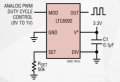
There is about 12 parts under the name "TimeBlox".
This example, set the frequency by Rset and the capacitor is internal.
1655050586454.png
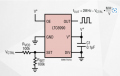
Here is a different version.
1655063632889.png
 

MisterBill2

Joined Jan 23, 2018
28,068
If you are using a microcontroller and it is not a problem with having to connect a computer every time you want to change frequency then that is fine, if the phase noise is not a problem in your application. Also, square waves and pulses do contain a lot of harmonic energy,which may be a problem in many applications.
The fact is that there are many other ways to generate frequencies that are far more stable and have a much easier to use waveform, and are simple to adjust, and do not need a computer to set the frequency.
 

Papabravo

Joined Feb 24, 2006
22,106
If you are using a microcontroller and it is not a problem with having to connect a computer every time you want to change frequency then that is fine, if the phase noise is not a problem in your application. Also, square waves and pulses do contain a lot of harmonic energy,which may be a problem in many applications.
The fact is that there are many other ways to generate frequencies that are far more stable and have a much easier to use waveform, and are simple to adjust, and do not need a computer to set the frequency.
No need for all that nonsense. What makes you think it is even a requirement any more?
 

MisterBill2

Joined Jan 23, 2018
28,068
Unless additional code is included to use additional inputs to implement changing the variables that set frequency, how will the change be implemented? There does need to be some means of control and that always requires additional code to be part of the software that is loaded into the memory. So now a user interface has to be part pf the code.
Certainly a user interface can be included, but now it is more than just an oscillator program. Suddenly there is a lot more code needed. That is the way that avoids needing a computer connection to change the frequency. Move the interface into the code. Now it is not so simple any more. A fair bit of non-volatile memory is required. And all of that code must be loaded into every processor used in the production run.
 

djsfantasi

Joined Apr 11, 2010
9,237
Unless additional code is included to use additional inputs to implement changing the variables that set frequency, how will the change be implemented? There does need to be some means of control and that always requires additional code to be part of the software that is loaded into the memory. So now a user interface has to be part pf the code.
Certainly a user interface can be included, but now it is more than just an oscillator program. Suddenly there is a lot more code needed. That is the way that avoids needing a computer connection to change the frequency. Move the interface into the code. Now it is not so simple any more. A fair bit of non-volatile memory is required. And all of that code must be loaded into every processor used in the production run.
Again, it’s understood that you don’t like microcontrollers. And maybe don’t understand that them. But in any case, you should know what you’re talking about.

No Ui Is necessary. Nor is to there as need to connect to a computer. Varying the output frequency could be done with one additional hardware component and two additional lines of code. Pretty much not complicated, don’t you think?
 

MaxHeadRoom

Joined Jul 18, 2013
30,772
Unless additional code is included to use additional inputs to implement changing the variables that set frequency, how will the change be implemented?
If you have a variable oscillator that is designed using descrete components, then presumably you have some kind of device/component interface in order to manually or otherwise initiate a change in frequency.
The same devices can be used with a Micro in order to achieve the same result.
Maybe a study of simple micro's would help.
 
Last edited:
Top