Triple Power Supply Shortcut Problem

Thread Starter

zaferaltun

Joined Aug 31, 2016
71
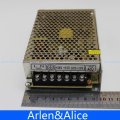
Please post a photo of the power supply connector block showing the labels.
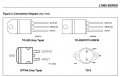
Or a datasheet with the connector pinout.

With the power supply off and disconnected, measure the DC resistance between terminal block pins 5 and 7.

ak
I attached the photo. I calculated the resistance and they are like this:

5v - gnd : 50 ohm
12v - gnd : 266 ohm
24v - gnd : 23.72 k

I have 3 power supply, same model, different sellers. They are same
 

Attachments

AnalogKid

Joined Aug 1, 2013
12,141
I attached the photo. I calculated the resistance and they are like this:
I asked for the measurement because the datasheet I found showed two GND connections, and I wanted to know if they were tied together internally. Your photo shows only one output GND point, so much of the previous discussion does not apply.

ak
 
Last edited:

Thread Starter

zaferaltun

Joined Aug 31, 2016
71
I asked for the measurement because the datasheet I found showed two GND connections, and I wanted to know if they were tied together internally. Your photo shows only one output GND point, so much of the previous discussion does no apply.

ak
Sorry for that, I misunderstood. I connected the gnd pin to com pin. And measured the values between com and positive pins. Is it wrong?
 

AnalogKid

Joined Aug 1, 2013
12,141
I just dont understand why do I need a heat sink becuase of just 80mA,
the simple circuit like this ordered from input to output: 12 dc input, then 22uf b type capacitor, then the regulator,
12 V in, 5 V out = 7 V across the regulator.
7 V x 80 mA = 0.56 W
That is more than enough for a SOT package to get hot. But I'm confused. Since the power supply has a dedicated 5 V output, why do you need an external regulator, let alone one so small? Also, page 5 of the datasheet discusses how to cool the part with pc board foil only.

ak
 

AnalogKid

Joined Aug 1, 2013
12,141
Sorry for that, I misunderstood. I connected the gnd pin to com pin. And measured the values between com and positive pins. Is it wrong?
Depends on the nature of the secret application, any safety agency rules covering the device, etc. Personally, I would not tie the output COM to the AC input GND unless there was a specific reason.

ak
 

Thread Starter

zaferaltun

Joined Aug 31, 2016
71
12 V in, 5 V out = 7 V across the regulator.
7 V x 80 mA = 0.56 W
That is more than enough for a SOT package to get hot. But I'm confused. Since the power supply has a dedicated 5 V output, why do you need an external regulator, let alone one so small? Also, page 5 of the datasheet discusses how to cool the part with pc board foil only.

ak

I checked different datasheets again but could not find any clue about cooling. I have been tried that simple circuit with 0.6A dc motor and it was really hot, you cant touch even bottom side of the circuit board. I m not sure. I mean if it is getting hot wirh just half a watt, how about 3 W? I dont think it is possible to cool it even with aluminium sink instead of just a folio.
 

Thread Starter

zaferaltun

Joined Aug 31, 2016
71
Depends on the nature of the secret application, any safety agency rules covering the device, etc. Personally, I would not tie the output COM to the AC input GND unless there was a specific reason.

ak

You might be right. I have been tried the simple test circuit with stable 12V dc adapter, not with this triple kind of power supply. I think it is regulator's problem
 

dendad

Joined Feb 20, 2016
4,639
How hard is it to modify the board and put a TO220 case regulator on it? Then you could easily add a heat sink, or screw the regulator to a metal case.
Are you familiar with having to electrically insulate the tab of the regulator from the case or heatsink?
If not, have a look at this link. It shows insulated and non insulated mounting.
http://tubelab.com/designs/tubelab-se/manual/semiconductors/
It sounds like the regulator you are using is not able to dissipate the power required.
Just because it says 1Amp does not indicate you can run it at 1Amp under all conditions. The other spec you need to look at is the package power dissipation. It is a compromise between the two. The higher the input voltage the more the power dissipation.
It sounds like you are unable to use the 5V from the switch mode supply so if you are able, at least for as test, remove the on board 5V regulator and just use an L7805 regulator with a heat sink or mounted on the metal case. But electrically insulate it just to me on the safe side.
Note the pinouts are different from the regulator you are using.
AMS1117.jpg
Your existing regulator

L7805.jpg
L7805 regulator.


Also, on your circuit board, is the tab of the regulator soldered to a large area of copper? It does need that to help cool it.
 
Last edited:

Thread Starter

zaferaltun

Joined Aug 31, 2016
71
Yea I think to change the regulator as you suggested. I have T220 7805, I can try to use it. Thanks a lot both of you, really interested even we could not solve why the power supply is shorting yet although the topic was about it :)
 

AnalogKid

Joined Aug 1, 2013
12,141
I have been tried that simple circuit with 0.6A dc motor and it was really hot, you cant touch even bottom side of the circuit board. I m not sure. I mean if it is getting hot wirh just half a watt, how about 3 W?
3 W will destroy the part no matter what you attach to it unless it is liquid coolant. If that is your power level, then you are using the wrong part for the job and it never will be reliable. The part is smaller than a 1/4 W resistor. How long do you think one of those would last at a power dissipation that is 12 times it's maximum rating?

There is nothing magical about ICs compared to resistors; watts is watts. The IC is less than half the size of a small resistor. At 3 W it will unsolder itself from the board right before the case cracks open.

ak
 

dendad

Joined Feb 20, 2016
4,639
Yea I think to change the regulator as you suggested. I have T220 7805, I can try to use it. Thanks a lot both of you, really interested even we could not solve why the power supply is shorting yet although the topic was about it :)
Yes, the shorting is a problem, if it actually is. But without a connection diagram it is a bit hard to figure out what is going on. And you say the volts are ok so it is not shorting else the voltages would be wrong.
 

AnalogKid

Joined Aug 1, 2013
12,141
Thanks a lot both of you, really interested even we could not solve why the power supply is shorting yet although the topic was about it
And we never ever will. This thread was doomed to fail from the start. We are getting 100% of our information from someone who does not know how to troubleshoot electronics. There is nothing wrong with that; it is the nature of a question-answer forum. But you refuse to share even the most rudimentary block diagram or partial wiring diagram, let alone a schematic of any kind, a BOM or even some datasheets. Exactly what kind of results were you expecting?

ak
 

Thread Starter

zaferaltun

Joined Aug 31, 2016
71
And we never ever will. This thread was doomed to fail from the start. We are getting 100% of our information from someone who does not know how to troubleshoot electronics. There is nothing wrong with that; it is the nature of a question-answer forum. But you refuse to share even the most rudimentary block diagram or partial wiring diagram, let alone a schematic of any kind, a BOM or even some datasheets. Exactly what kind of results were you expecting?

ak
I m software engineer, not electric electronic engineer. So I m good at MCUs mostly, my electronic information is enough to do our needs but troubleshooting requires being expert about what you are doing. Electronic was my hobby and now we are trying to do some prototypes around a project idea, finally I m not professional on electronics, thats all.

I will share the diagram, atleast partly, I hope the topic reachs its aim.
 

Thread Starter

zaferaltun

Joined Aug 31, 2016
71
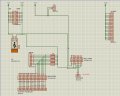
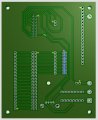
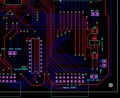
Hi again, I have a middle card to distribute the power and signals for relays etc. I attached its schema and 3d view also.

The cycle like this: Triple power supply outputs to middle card, then middle card to module card. 5V for ULN drivers on the module card, 12 V for both fan and microprocessor (MCU getting 5v from AMS regulator).

I hope it helps and you see my mistake if any.
Best
 

Attachments

dendad

Joined Feb 20, 2016
4,639
The regulator has no big heat sinking pad so it will get hot.
I made some other comments that were wrong so I deleted them. It is after 1AM here and I am mostly asleep ;)
 
Last edited:

Thread Starter

zaferaltun

Joined Aug 31, 2016
71
The fan connector, is that the power in?
You have it connected to the regulator input pins. If that is an output to power the fan, then the reg looks to be reversed. It is 1AM here so I have not yet checked the data but if it is reversed, no wonder the reg is hot. I will look at it in more detail in the morning.
No, not power in. FAN is getting 12V from that pins without regulated, it is a parallel connection. I did not connect a fan yet already, did not try yet.
 

dendad

Joined Feb 20, 2016
4,639
Oops. Yes, I spotted that and edited my comment, sorry. I should be asleep now, and I will try to look closer in the morning. But it is a good idea to have a large as you can copper area on the pcb, both sides connected together if possible, for the regulator tab to solder to. That will give it some heat sinking.
You could try to solder a copper fin onto the reg, just make sure it does not short to anything else on the board.
 

Thread Starter

zaferaltun

Joined Aug 31, 2016
71
Oops. Yes, I spotted that and edited my comment, sorry. I should be asleep now, and I will try to look closer in the morning. But it is a good idea to have a large as you can copper area on the pcb, both sides connected together if possible, for the regulator tab to solder to. That will give it some heat sinking.
You could try to solder a copper fin onto the reg, just make sure it does not short to anything else on the board.
Take your time please, thank you :)
 

ebeowulf17

Joined Aug 12, 2014
3,307
Even with the partial schematics, this isn't making a lot of sense to me. Why are there two separate 5V systems? Why doesn't the mcu run off of the 5V from the triple supply?

Is V5-IN from the triple supply? What, if anything, is the relationship between V5-IN, VCC5, and VCC/VDD? What is the purpose of jumper AM JP V5?

One thing I'm wondering about is the possibility that, with the wrong combination of power supplies and jumper settings, you could have two different 5V regulators both trying to regulate the same 5V bus. If that were to happen, you'd have all sorts of problems while they were fighting each other!
 
Top