Treadmill motor speed controller MC2100 - COMPLETED!

Thread Starter

Tonyr1084

Joined Sep 24, 2015
9,744
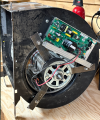
Got my hands on an old treadmill that has the MC2100LS-30 REV -
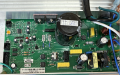
Screenshot 2024-12-02 at 10.03.08 AM.png
The motor had a bad bearing. That has been replaced.
I'm repurposing the motor to replace a Shade Pole Induction motor. This has been an issue before (the shade pole motor). It has three speeds. But the motor itself is way oversized for the fan it's spinning. There's hardly any difference in air flow from low to high. So I'm going hog wild and replacing the motor with the repaired TM Motor. Gaud, I've never heard a more quiet motor. Can barely hear the brushes at all.

All that not withstanding, I tried searching AAC for threads on how to control the speed of this motor. I've seen some YouTube videos on the subject but most of them are qualified YouTube Boobs! They say things that even I know are wrong. So I'm turning to a trusted source - you folks.

The older MC60 controller, the one I use on my bandsaw, only needed a pot across the black, white and red wires. The soft start issue was solved with a momentary open switch that allowed starting the motor without having to adjust the speed all the way to zero. The MC2100 does not have that same control setup. From what I'm seeing on YT it looks like I have to buy a PWM module and set it to the right frequency. I can do that. But I'd first like some qualified information. So: "How do I control the speed using this board?"
 

MaxHeadRoom

Joined Jul 18, 2013
30,557
The MC2100 requires a 20hz PWM signal into pin 4 of HD2, pin 1 being common. also you have to use a series resistor to limit the current into the on board Opto isolator as the one fitted is too low for most PWM signal sources.
There are cheap PWM controllers on the usual sites, I had designed one using a 8pin micro, with stop & start PB's.
 

Thread Starter

Tonyr1084

Joined Sep 24, 2015
9,744
Glad to hear from you MaxHeadRoom. 20Hz PWM on pin 4. Pin 1 is common. I'm going to assume there is a voltage source to run the PWM on that header; right? Also, if I understood correct I need to put a series resistor in line with the pulse. Is that correct as well? If so - can you suggest a value?
 

MaxHeadRoom

Joined Jul 18, 2013
30,557
You need to provide the nature of the PWM output, max vol
Here is an old post that shows an of-the-shelf one, and a 555 version for the PWM.
.https://el34world.com/Misc/Cnc/TreadmillMotor1.htm
 

Thread Starter

Tonyr1084

Joined Sep 24, 2015
9,744
@MaxHeadRoom Your second link shows a 7 pin header. I have 8
1) Black
2) Red
3) Green
4) Blue
5) Orange
6) Yellow
7) Violet
8) White/black stripe

I'm guessing pin 8 is the other "Black" wire. But guessing can lead to cutting the wrong wires and I don't want to get into a point where I regret rushing forward.
 

MaxHeadRoom

Joined Jul 18, 2013
30,557
HD2 is a 8 pin header
1 & 8 are the DC common
2 is LV +ve
4 is PWM input, to U1 via a 22Ω resistor which is too low for the 817 Opto from most PWM inputs.
A meter will verify the connections.
 

MisterBill2

Joined Jan 23, 2018
27,159
An interesting alternative suggestion depends on the rated full speed voltage of that motor. That would be to use an "off the shelf" triac light dimmer feeding a bridge rectifier to control the fan motor speed. If the maximum voltage is high enough that would be reasonable. If not, adding a transformer would seriously boost the cost if it were purchased new.
But since I have no hint about the motor maximum voltage, it might be possible.
The big advantage would be a much smaller package using UL approved hardware.
 

MaxHeadRoom

Joined Jul 18, 2013
30,557
An interesting alternative suggestion depends on the rated full speed voltage of that motor. That would be to use an "off the shelf" triac light dimmer feeding a bridge rectifier to control the fan motor speed. If the maximum voltage is high enough that would be reasonable. If not, adding a transformer would seriously boost the cost if it were purchased new.
But since I have no hint about the motor maximum voltage, it might be possible.
The big advantage would be a much smaller package using UL approved hardware.
That motor should be capable of operating a fan, typically 90VDC, 2hp - 3.5hp.
 

Thread Starter

Tonyr1084

Joined Sep 24, 2015
9,744
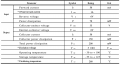
since I have no hint about the motor maximum voltage
Screenshot 2024-12-03 at 3.11.31 PM.png
Waiting on Amazon. Purchased the controller Max suggested. It has fairly good ratings.
use an "off the shelf" triac light dimmer feeding a bridge rectifier to control the fan motor speed.
Don't know off hand how expensive that is. It would save some space. But space is not at a premium. The cabinet the fan goes in is pretty roomy. And I left myself almost 20 inches of wire to make the connections. Honestly I hadn't even thought of that as an option. Don't know if the motor would be noisy that way. As it is now, using the TM Electronics to run the motor - the darn thing is ultra quiet. Can't remember hearing a more quiet motor. After I replaced the main bearing that is. Whomever replaced the belt tensioned it way too tight and that likely is what killed the bearing. The fan end bearing is the same size, and it's in good shape.
 

MisterBill2

Joined Jan 23, 2018
27,159
The least expensive triac dimmers sell for less than $10, (USD), which is quite cheap. And the voltage rating of that particular motor would certainly be adequate. BUT the power rating at full voltage is much greater than the typical 600 watts max of most common dimmers. So there is also a limitation there.
But it is not likely that fan-duty would be as great a load as a treadmill would provide, so a bit of experimenting might provide some useful information. There are also motor speed controls similar to the light dimmers, intended to control induction motors, and possibly an examination of those specifications might reveal greater control capabilities.
Certainly these ideas are based on guesses, and so are not to be taken as suggestions for definite actions.
 

Thread Starter

Tonyr1084

Joined Sep 24, 2015
9,744
Screenshot 2024-12-04 at 7.48.29 AM.png
Should know by Thursday if this is a success.

A decade or more ago I got a bandsaw for cheap. It had a bad motor. Looked into replacing the motor but it was at a cost of $185 (US). Happened to have a few TM Motors and MC60 controllers. The three terminals that read speed command could be bridged by a 10KΩ pot with the wiper on the white lead. To run the TMM you had to set the speed to zero then up to the speed you desired. Don't know how but it turned out that momentarily opening the red wire via a momentary NC switch would start the treadmill. So I could set the speed. Then when the saw was turned on all I had to do was press the button for a second or so, release, and the saw began to run. Having the variability made it possible to cut plastics without burning and melting the plastic. My neighbor now has that saw. I no longer have a variable speed band saw. It's been replaced with a larger machine with a deeper throat.

What gave me the idea of using the TMM was that the pulley was exactly the same as the original motor and pulley. Just had to make a bracket, do a little welding, and Voila'! Variable speed band saw.
 

MaxHeadRoom

Joined Jul 18, 2013
30,557
Happened to have a few TM Motors and MC60 controllers. The three terminals that read speed command could be bridged by a 10KΩ pot with the wiper on the white lead. To run the TMM you had to set the speed to zero then up to the speed you desired. Don't know how but it turned out that momentarily opening the red wire via a momentary NC switch would start the treadmill. band saw.
The MC60 is an older, a little cruder version than the MC2100, the MC60 is a simple SCR bridge, whereas the MC2100 is high frequency PWM control of the motor. Hence very smooth and quiet down to low RPM's.
The MC2100 does not require the control signal at zero on switch on, also built in controlled acceleration up to speed.
 

Thread Starter

Tonyr1084

Joined Sep 24, 2015
9,744
The MC60 is an older, a little cruder version than the MC2100, the MC60 is a simple SCR bridge, whereas the MC2100 is high frequency PWM control of the motor. Hence very smooth and quiet down to low RPM's.
The MC2100 does not require the control signal at zero on switch on, also built in controlled acceleration up to speed.
didn't know about the high frequency thing but I sure did appreciate the quiet startup and running. The MC60 noise didn't matter because the saw itself was also not so quiet. Neither is my new saw. But for a circulating fan that's going to run all day filtering the air as it goes, the quiet operation will be greatly appreciated. And for those particularly dusty times, being able to up the speed will filter dust better.

Mostly in the winter time I want the fan to circulate the air in the shop. Have a split phase AC/Heater and it doesn't do a good job of circulating the air around the room. Hence the fan. Could just use a fan but the unit I've built and am now modifying is used for dust extraction as well.
 

Thread Starter

Tonyr1084

Joined Sep 24, 2015
9,744
Got the motor in and spun it with a 12V battery. Nice.
Screenshot 2024-12-05 at 7.40.05 AM.png
More wiring to be done - but the hard part is done - mounting the motor. If you've noticed the motor is in backwards. That's because the tail shaft is 1/2" whereas the main shaft is tapered from 0.620 to 0.670 inches. The motor will be wired backward intentionally. And spinning at only 12 volts had a good amount of air flow.
 
Last edited:

Thread Starter

Tonyr1084

Joined Sep 24, 2015
9,744
Have everything ready to go. Just have to hook up the PWM module. MaxHeadRoom you mentioned 22Ω is too low for the 817 Opto. I have a data sheet for 'SOMEONE'S' 817 but it says max current through the diode is 50mA.
Screenshot 2024-12-05 at 3.53.47 PM.png
Don't know where I got this idea but I thought Opto's like to run on 4mA. I would assume 50mA is the max.
If I assume the board runs at 5V then with a 22Ω resistor that comes out to 173mA. I KNOW I'm off somewhere. Sure could use a little guidance. Thinking of dropping a 1KΩ resistor between the controller and the 2100. Really need some clear direction here. Would HATE to blow up my equipment because I misunderstood or made a bad assumption.
 

Thread Starter

Tonyr1084

Joined Sep 24, 2015
9,744
13.6VDC between the red wire and black.
(13.6V - 1.2Vf) ÷ 22Ω = 563mA
That's what might be on the Opto. That seems way too high. Need advice before continuing.
If I plan on 20mA through the Opto then (13.6V - 1.2Vf) ÷ 20mA = 620Ω. Will start even higher resistance. As long as it works it doesn't need to be high amperage through the Opto.
 
Top