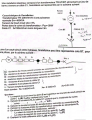
You need the resistivity of the material: I think "cuivre" is "copper". You can easily look up the figure on Google.
It varies with temperature, so you really should also be told the operating temperature.
Multiply by the length and divide by the cross sectional area.
Not sure about Rt - I'd need a better translation of "ramenée au secondaire" than Google gives me before I could help you! I think it means the total resistance seen from the secondary of the transformer. i.e. the real part of the source impedance.
You need the resistivity of the material: I think "cuivre" is "copper". You can easily look up the figure on Google.
It varies with temperature, so you really should also be told the operating temperature.
Multiply by the length and divide by the cross sectional area.
Not sure about Rt - I'd need a better translation of "ramenée au secondaire" than Google gives me before I could help you! I think it means the total resistance seen from the secondary of the transformer. i.e. the real part of the source impedance.
Presumably, you need to understand it, rather than just give a numeric answer.
What do you know about how impedances change with the turns ratio?
Another way of thinking about it: If you are measuring it at the secondary, it doesn't matter a bit what voltage the power is being supplied at the primary, so assume that it is being supplied at the same voltage as the secondary, in other words: how would it behave if it were a 1:1 isolating transformer?
Presumably, you need to understand it, rather than just give a numeric answer.
What do you know about how impedances change with the turns ratio?
Another way of thinking about it: If you are measuring it at the secondary, it doesn't matter a bit what voltage the power is being supplied at the primary, so assume that it is being supplied at the same voltage as the secondary, in other words: how would it behave if it were a 1:1 isolating transformer?
if the turn ratio is 1:1 the impedance will stay the same .
so the issue here is that Ra is already represented in the BT cable
so is Rt calculated as Rt=m.Ra ??
or Rt= R'+mRa
i solved the problem but i need to be sure .
also the same goes for the reactance Xt
The turns ratio is usually called n (I suppose you can call it m if you want to).
So the voltage ratio is also m, and the current ratio is 1/m, but the impedance ratio is NOT m.

 Facebook
 Google
 GitHub
 Linkedin