That's where studying what worked and figuring out how to replicate it comes in. Once that is done it may even be possible to improve on things from there.
I for one am curious as to what stopped the original system from working.
If it was basic chemical/photo breakdown of the plastics the bubbler was made from or from something else like the holes plugging up due to contamination or mineral deposits or some other physical change.
Perhaps a field trip to the local pet store is in order. Either by the TS or one of us helpful assistants.
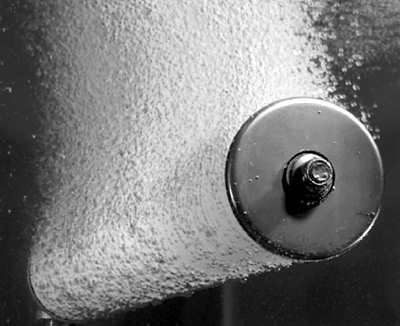
I was researching a similar device, only to provide a wall of water drips. I found in the aquarium section, a device similar to the one being discussed. As I remember, it was about a 2' long, 1/2" diameter plastic tube. Air was center fed. The holes weren't Uber tiny; 1/16" comes to mind. A bit of math said the area of the tube would support 60+ holes to match the 1/2" cross-section. Less than half that would provide 1" spacing, with 1/2 the volume/area providing a buffer to even out the pressure.
When I get home from vacation (holiday), I'll check out the pet store down the street from home.
And that's as it should be. By design I divulge as little personal info as possible, here and anywhere. Not because I care if you know or not, but because it's rarely relevant or interesting. The narcissistic Facebook crowd baffles me. When I think I can help someone with personal anecdotes I won't hesitate but otherwise it's my nature to keep it to myself. Because @GopherT has a technical background closer to mine than most folks here, he quickly picked up on that and whatever breadcrumbs I've scattered were easy for him to collect. I don't expect anyone here for one second to know anything more than my AAC stats.
In this case I only weighed in to reinforce the fact that flow through pipes is the quintessential domain of chemical engineers. Do MEs even learn about Reynolds numbers or Prandtl numbers? Somehow I doubt it. Aeronautical engineers may be the only ones to get more into this than Chem Es.
But we all know the TS needs a fat header with lots of tiny holes. None of us can define fat or tiny. All will be revealed with a handful of simple experiments, with care taken to control pressure and flow.
And that's as it should be. By design I divulge as little personal info as possible, here and anywhere. Not because I care if you know or not, but because it's rarely relevant or interesting. The narcissistic Facebook crowd baffles me. When I think I can help someone with personal anecdotes I won't hesitate but otherwise it's my nature to keep it to myself. Because @GopherT has a technical background closer to mine than most folks here, he quickly picked up on that and whatever breadcrumbs I've scattered were easy for him to collect. I don't expect anyone here for one second to know anything more than my AAC stats.
Yes and thank you! Once again gophert showed his love of pulling nonsensical claims only he is apparently privy (or perceives himself to see) out of his ass.
And personality of every post I have ever sen of gophorts the only chemistry workI would have guess him to dabble in was antipsychotics and general mood stabilizer/ADD/ADHD type medications his doctor prescribed him. (which likely need further refining given what he says and does here so often. )
In this case I only weighed in to reinforce the fact that flow through pipes is the quintessential domain of chemical engineers. Do MEs even learn about Reynolds numbers or Prandtl numbers? Somehow I doubt it. Aeronautical engineers may be the only ones to get more into this than Chem Es.
They typically deal with primary water and fluid flow systems in other sectors of the engineering world. My strong point in fluid dynamics is hydraulic systems as what would be found in machinery and or water transport of various industries ( very much mechanical engineering areas) of which I seriously doubt any chemical engineers deal with to any great degree beyond chemical compatibility effects on the plumbing and components for said systems.
My current experimental lash up will consist of a continuous length of 1/2 PVC pipe with mating end caps. A barb will be inserted and secured into one of the end caps. As I have a bit leftover from the standard length purchased I'll play around a bit with hole size & spacing before committing to the final piece.
This tube itself forms a reservoir of some 40 in^3 so I hope the air pressure doesn't vary from end to end. I have some spare time ATM, but I'm really trying to keep more important items on top of my hot list.
JoeJester: thank you for the practicable suggestions! The 99 cent solution is inadequate. While each length is functional by itself, no two lengths are more than approximately close in performance. Getting four to play well seems to imply they must be constructed out of pure unobtainium.
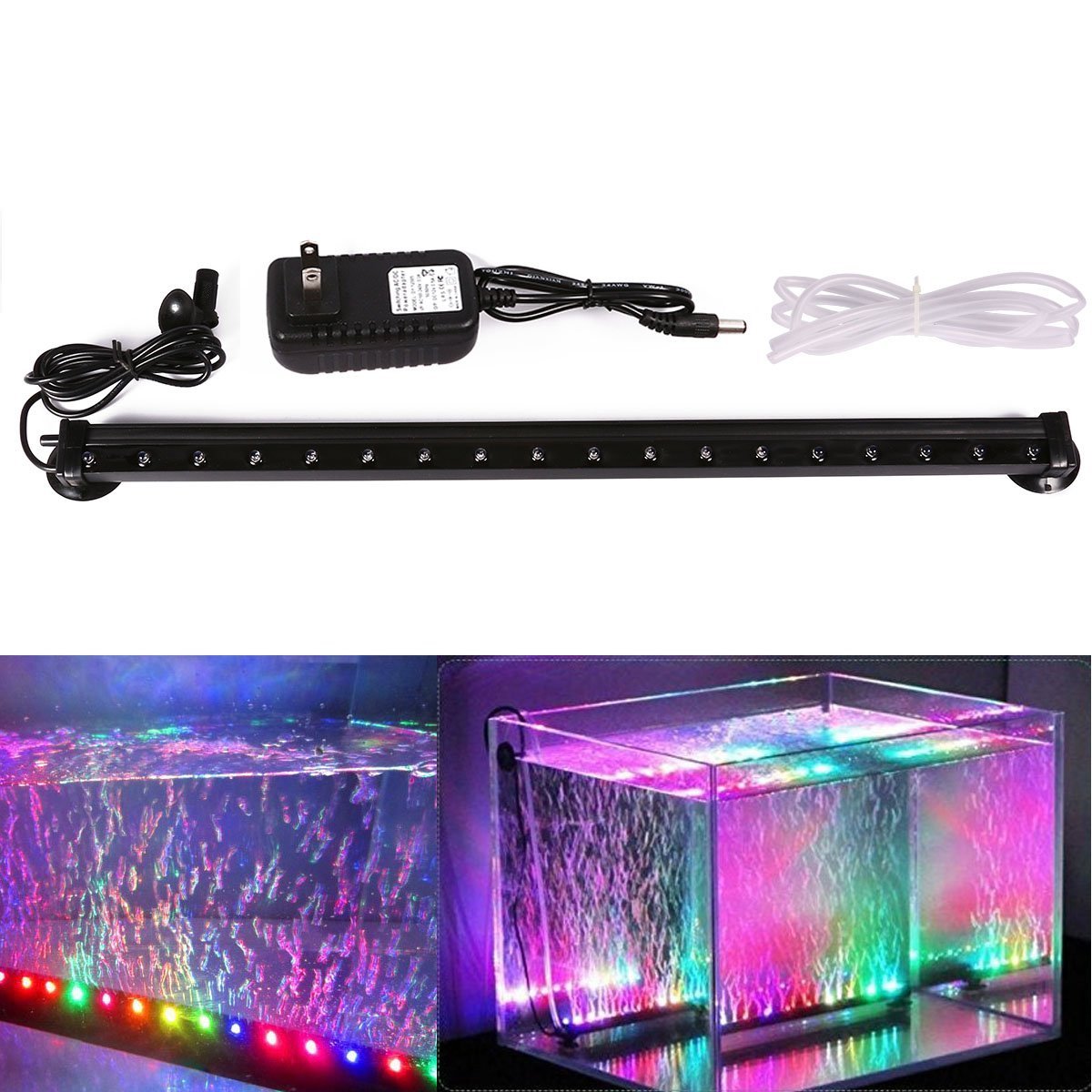
The $15.99 LED "footlights" look great in the pictures, but again I would need to connect several together to fit my tank. Do you have any personal experience with these, or is this just something you have seen online?
If you are limiting to 1/2" pipe, you should use 5 or 6 pieces in parallel (12 to 18" lengths). That way you minimize the pressure drop that would happen across the single type case.
If you are limiting to 1/2" pipe, you should use 5 or 6 pieces in parallel (12 to 18" lengths). That way you minimize the pressure drop that would happen across the single type case.
Really? pressure drop from a .5 - 1.5 CFM 1 - 2 PSI air pump is so great in 1/2" line it may need to have as many as 4 - 5 in parallel to handle it without significant pressure drops occurring?
6 feet of .5" hose @ 2 PSI and 2 CFM input (very big aquarium air pump) is what I went with for numbers. .02 PSI (~.55 inches of water column) pressure drop assuming all 2 CFM was going out one end of the hose and not being equally distributed through many small points along its length.

 Facebook
 Google
 GitHub
 Linkedin