Facebook
 Google
 GitHub
 Linkedin
I have an expensive toaster that will not stay down and after testing found the voltage to the electromagnet does not change. This has led me to believe the pcb component(s) are faulty.
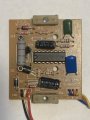
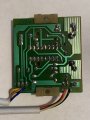
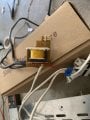
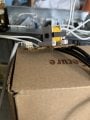
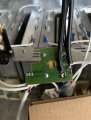
I have done a fair bit of electronics work but this is my first-time attempting PCB repair. My first and foremost question is if I replaced all the components would it be guaranteed to work or is there more to it than that? Second most, I am not sure which are the power pins to the electromagnet, so I just recorded all measurements and found that both DC and AC voltages are read from my multimeter. How/why?
Here is the data I have collected thus far. The following are the voltages for the electromagnet initially and after 5 minutes on the lowest toast setting. I would anticipate the electromagnet to be 12vdc so I am unsure if I am recording what should be the off voltage or on voltage.
Pins 1 and 2: 31.4v AC/0.271v DC -> 31.4v AC/0.276v DC
Pins 2 and 3: 1.92v AC/8.71v DC -> 1.90v AC/8.78v DC
Pins 1 and 3: 29.9v AC/8.80v DC -> 29.9v AC/8.97v DC
The zener diode in the top left of the first image (ZD1) has a 0.512v forward bias and 0.729v reverse bias with my multimeter. Furthermore, the resistor R5 (top right of first image) is reading 0.5 ohms which should be in the megaohms if I read it correctly. This is a 4 slot toaster which has one of these circuits for each two slots. The issue occurs for both with the same faults found. I have not tested the capacitors as I do not have a capacitance test on my multimeter. Likewise, I do not know how to test or read the thermistor; it has 404 written on it and is reading 0.384 megaohms at room temperature.
I have done a fair bit of electronics work but this is my first-time attempting PCB repair. My first and foremost question is if I replaced all the components would it be guaranteed to work or is there more to it than that? Second most, I am not sure which are the power pins to the electromagnet, so I just recorded all measurements and found that both DC and AC voltages are read from my multimeter. How/why?
Here is the data I have collected thus far. The following are the voltages for the electromagnet initially and after 5 minutes on the lowest toast setting. I would anticipate the electromagnet to be 12vdc so I am unsure if I am recording what should be the off voltage or on voltage.
Pins 1 and 2: 31.4v AC/0.271v DC -> 31.4v AC/0.276v DC
Pins 2 and 3: 1.92v AC/8.71v DC -> 1.90v AC/8.78v DC
Pins 1 and 3: 29.9v AC/8.80v DC -> 29.9v AC/8.97v DC
The zener diode in the top left of the first image (ZD1) has a 0.512v forward bias and 0.729v reverse bias with my multimeter. Furthermore, the resistor R5 (top right of first image) is reading 0.5 ohms which should be in the megaohms if I read it correctly. This is a 4 slot toaster which has one of these circuits for each two slots. The issue occurs for both with the same faults found. I have not tested the capacitors as I do not have a capacitance test on my multimeter. Likewise, I do not know how to test or read the thermistor; it has 404 written on it and is reading 0.384 megaohms at room temperature.