The cyclist, who goes by @drivingmzstacey on Twitter, posted a video to the platform Thursday that showed a San Francisco Fire Department ambulance parked in a marked bike lane, inconveniencing her she claimed.
...
"Here's an ambulance in the bike lane. There is a business they can park in. They can block the car lane, they can block the non-existent motorcycle park lane," the woman shouts. "I am not even half a mile from a home on a rainy day. What the f—k. What the f— k."
Seethed with anger, the woman walks over to the ambulance and addresses the driver.
"Get out of the bike lane" the woman tells the driver. "You're killing us. Get out of the bike lane."
The fire department said on Twitter that its crew was "finishing a medical emergency with a patient care document from a call at that location which is why they moved to the other side of the street rather than engage with you. Have a safe day."
Lately, I have been thinking about how people affect our lives. They mold and shape us due to circumstances, and things that have happened, whether they're for the good or the bad. Recently, I've found myself reflecting on the past and looking at people from then and how their lives have turned out, as well as the conversations I've had. It really has me feeling like the villain. I had never seen myself as such, which is part of the problem. I am now too scared to apologize or to ask if they concur that I have indeed been the villain in their story at some point. Also, they are too scared to bring it up in case they too have worked hard to move past those times in life. I'm just trying to be better.
Lately, I have been thinking about how people affect our lives. They mold and shape us due to circumstances, and things that have happened, whether they're for the good or the bad. Recently, I've found myself reflecting on the past and looking at people from then and how their lives have turned out, as well as the conversations I've had. It really has me feeling like the villain. I had never seen myself as such, which is part of the problem. I am now too scared to apologize or to ask if they concur that I have indeed been the villain in their story at some point. Also, they are too scared to bring it up in case they too have worked hard to move past those times in life. I'm just trying to be better.
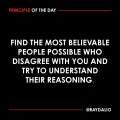
Most people given decision authority just assume (or pretend) nobody is believable. They ignore the key word in the quote - "most" - which forces the action rather than recommends the action.
A while ago, I wrote this for a technical community I for which I was the community advocate. We had trouble with arguments about really unimportant things that often lead to hard feelings. Many people who I spoke with sincerely didn’t understand what might be undesirable or injurious about the flaming and aggressive pseudodebates that often flared up in community chats and forums.
This is an adaptation of what I would call the art of the philosopher. I learned this from Nigel Warburton, an excellent philosopher and interviewer. Listening to him interview other philosophers about their work and beliefs showed me how to “do philosophy”. Once I saw what was going on, I felt compelled to use the method because I want to know what is, as rough an approximation as all that is possible, the “truth”.
Arguing with Sympathy
Arguing about almost anything is a favorite pastime of technical communities everywhere. Some folks seem to treat it as blood sport, some have no intention of hurting others but manage to do it anyway. A great deal of the time people are not arguing to convince, they are arguing to confirm their existing belief, a form of axe-grinding. Many really great people are chased away by a lack of grace and respect in a community's discourse. It needn't be that way. Here is a heuristic approach to arguing in a way that not only mitigates the problem, but improves the outcome for all concerned.
First, listen.
Assume:
This person is intelligent
This person is informed
This person is correct
Analyze the argument in the light of these assumptions.
Find the parts you agree with. Be honest, do not argue against things with which you would agree if they were said by someone else. Do not argue against things on the basis of dogma ("never do this", "always do this"). Dogmatic, rule-based arguments may well be dishonest ones. Exceptions to rules always exist.
Next, reflect.
State, in your own words, what the person is trying to say. Do it sympathetically. That is, try to state it in the most convincing and effective way, as if it was your own argument, and you agree with it completely.
Next, ask questions.
Before you begin to deconstruct the person's argument, give them a chance to fill in the gaps. If you assume what they will answer to the objections and move forward, you are not only ignoring salient information (what they will say) but also their independent humanity.
Ask them to clarify points that seem to lead to a nullification of the argument. Ask, sincerely, that is, assume that you misunderstood, or that they failed to include important details. Avoid rhetorical tricks designed to obviate the need to actually deal with what the person is saying. Doing this is actually a form of arguing, but it can lead to your agreement instead.
Finally, make your own case.
Don't adopt the attitude of your own infallibility. Disagreeing is perfectly OK, but keep foremost in your mind that you might be wrong.
Now, start over.
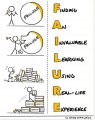
Iterate these steps until your discussion is done. Be prepared to actually change your mind. Be prepared to accept arguments that are counter to your opinions, or call into question dogmatically held beliefs. Be honest, be brave enough to say, "I was wrong" and be made better by your interaction with others.
Great essay, Ya'akov. It's all about keeping an objective mind.
About the last part, "be brave to say 'I was wrong'", unfortunately in our culture (and especially when dealing with politics) narrow-minded people tend to see that as a sign of weakness. And then they proceed to crucify their counterpart when it happens. Instead of celebrating the joyful event of someone getting closer to the Truth.
This idiotic attitude is what keeps a lot of people from even considering taking seriously other people's beliefs. For them, going through the humiliation of publicly admitting a mistake is what keeps them away from making any progress. Be it either spiritual or intellectual.
You couldn't be more right @cmartinez. There seems to be a lack of that lately from all levels of people. Sometimes, they get close - sometimes they stop insisting they are right and blame their previous mis-guided view on someone or something else. Life is so much easier when you just admit your error, learn from it and move on.
According to Peter Schrager of Fox Sports, Kliffsbury is in Thailand right now after buying a one-way ticket there and has informed all teams that have reached out to him regarding offensive coordinator jobs that he’s not interested in any position at this time.
Money isn’t an issue for Kingsbury, he signed an extension with Arizona this past offseason and will continue to get paid by the team that fired him through the 2027 season.

 Facebook
 Google
 GitHub
 Linkedin