The Double Edge of the Internet

Thread Starter

Ya’akov

Joined Jan 27, 2019
10,274
For some, the Internet is an eraser of ignorance, a fantastic resource for information and learning. It’s capacity to grow minds is unprecedented and unexcelled.

For others, it is a quagmire of deception and confirmation bias. It is just as capable of leading people astray or convincing them their error is truth.

For the former to be true, a person needs a foundation of critical thinking and the wisdom of experience, or at least the ability to spot the difference between a teacher and a fool.

For the latter; credulity, avarice, and a lack of mental tools means they can easily be victims of others, or themselves.

Try as I might, I can’t think of a way to change this to any great degree. But, it is like the man walking along the beach tossing beached starfish back into the water. His friend asks him what he expects to accomplish since he can’t possibly return the thousands to the sea. The man pick up a starfish and throwing it back says, “that’s another one”.
 

MrChips

Joined Oct 2, 2009
34,982
Sometimes it works the other way around.
Don't always believe the authoritative source.

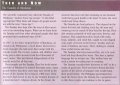
There is the following entry "Then and Now - The Tasaday of Mindanao" in a school textbook from a reputable publisher.
This story sounds amazing until you read the truth on Wikipedia. It turns out that there is a double twist to this story.


Tasaday.jpg
 

Thread Starter

Ya’akov

Joined Jan 27, 2019
10,274
The wisdom I referred to is the ability to vet sources, and know what questions to ask for yourself. Just trusting authority without evidence is an error no matter who the authority is.
 

djsfantasi

Joined Apr 11, 2010
9,237
That is why I never depend on one Internet reference. I’ll compare three or more references. I’ll read them carefully, because within the details any differences are often explained.

This may seem to be a lot of work. But back in the day research meant:
  • taking a train into Boston,
  • transferring to a subway,
  • navigate to the public library,
  • spend possibly hours flipping through a card catalog,
  • manually cross-referencing authors and topics,
  • walk into the stacks,
  • quickly skim the books, and pull those that show promise.
  • If I am in a row where many books on the topic are shelved I’d skim through several books not on my list and
  • pull likely candidates.
  • Then, I’d stagger under the weight of several books and
  • try to find an open desk.

Note that I’ve spent several hours and haven’t even started practical research. Thankfully, library staff would return the books.

Or:
  • perform one or more Google searches (2 minutes)
  • Skim through the articles (1/2 hour)
  • Copy the URL of likely candidates into a note (30 seconds)
  • Go back and review the candidates (10 minutes apiece)
  • Remove bad articles from my list (5 seconds each)
  • Ta dah! I’m done! Probably in an hour... I wouldn't even be at the library.
I’m looking for a majority of articles that confirm each other. I am also looking for articles that refute another article.
 

Thread Starter

Ya’akov

Joined Jan 27, 2019
10,274
My wife worked at the Boston main library in the 80s. I spent a fair bit of time there myself.

I loved libraries. University libraries were the best. Now, they seem to be limited, so slow to access, so frustrating because you know how much is there and how little you can use.
 

nsaspook

Joined Aug 27, 2009
16,405
For some, the Internet is an eraser of ignorance, a fantastic resource for information and learning. It’s capacity to grow minds is unprecedented and unexcelled.

For others, it is a quagmire of deception and confirmation bias. It is just as capable of leading people astray or convincing them their error is truth.

For the former to be true, a person needs a foundation of critical thinking and the wisdom of experience, or at least the ability to spot the difference between a teacher and a fool.

For the latter; credulity, avarice, and a lack of mental tools means they can easily be victims of others, or themselves.

Try as I might, I can’t think of a way to change this to any great degree. But, it is like the man walking along the beach tossing beached starfish back into the water. His friend asks him what he expects to accomplish since he can’t possibly return the thousands to the sea. The man pick up a starfish and throwing it back says, “that’s another one”.
I think there is another edge between truth and deception called the pop-sci hype machine. The blending of scientific articles and Internet marketing. Articles that are scientifically valid, even peer reviewed but are also designed to hype (making it seem capabilities are more useful in the general sense than the current data can justify) something that is very unlikely to be achievable in any practical form for a very long time, if ever. IMO we've had few good examples recently posted here like.

Desktop Fusion.
Desktop VLF transmission system.

Almost any pop-sci article about Deep Learning and/or AI.
https://www.popsci.com/hype-impact-factor-bad-science
 

Thread Starter

Ya’akov

Joined Jan 27, 2019
10,274
Of course, you are really describing a case of credulity. Science as popular religion is no more reliable as a guide to the world than religious texts. The analog is strong.

Science itself isn't a religion, but there is an orthodoxy that claims science as its authority and most people will go through their lives not knowing the difference. That orthodoxy is shaped by popular science, even while using legitimate science as if they were representing it.

Where traditional religion can serve humankind is where is supports ethical behavior and humane principles. Where popular science can serve is where it communicates the legitimate findings of science without selecting for controversy or profit. Most of each will fail to do this.

So, it comes down to the wisdom to ask the cogent questions, and that can be taught. If schools and parents have a primary responsibility it is to pass on the tools of the mind to the children so that can find their way through the world of nonsense.
 

nsaspook

Joined Aug 27, 2009
16,405
So, it comes down to the wisdom to ask the cogent questions, and that can be taught. If schools and parents have a primary responsibility it is to pass on the tools of the mind to the children so that can find their way through the world of nonsense.
I don't really believe that wisdom can be taught directly because it's not a skill, it's characteristic of a person. Wisdom is inherently good judgement that is usually imprinted in our brains by being 'burned' in life so many times we can easily recognize the pattern. A very large percentage will never be able to recognize the pattern because they just don't have the characteristic.

"horse to water"
 
Last edited:

Thread Starter

Ya’akov

Joined Jan 27, 2019
10,274
I use "wisdom" to refer to the result of mindfulness of experience. I believe that for the most part, time brings wisdom in varying degrees, but with mental tools that can be taught, the speed with which it can be acquired and the depth of it can be highly influenced.

It is related to, but not completely dependent upon, native intelligence which is necessary but insufficient.

So when I say "wisdom" I mean "applied experience" and it's an intuitive thing, separate from the calculation we can also do to determine what is right. It provides the impulse to question what doesn't seem right, and to ask the right questions. It's what makes alarm bells go off, and what makes hunches effective.
 

nsaspook

Joined Aug 27, 2009
16,405
So when I say "wisdom" I mean "applied experience" and it's an intuitive thing, separate from the calculation we can also do to determine what is right. It provides the impulse to question what doesn't seem right, and to ask the right questions. It's what makes alarm bells go off, and what makes hunches effective.
I mainly agree but it's been my experience that there is often a inverse relationship of native "technical" intelligence and "operational" wisdom. Really smart people making really dumb decisions.
 

Thread Starter

Ya’akov

Joined Jan 27, 2019
10,274
I mainly agree but it's been my experience that there is often a inverse relationship of native "technical" intelligence and "operational" wisdom. Really smart people making really dumb decisions.
People used to be(liev)ing they are the smartest person in the room have a very hard time knowing how to hear what other people are saying, even when they are the one who is right. Many people, especially younger ones, who work with technical domains get the idea that because they understand something they imagine is purely logical, they can understand anything if they focus on it.

Then they fail to focus on it, giving it short shrift and ignoring the work of others. They mistakenly stretch analogies with what they do know until they break, and they don't listen to learn but to confirm.
 

nsaspook

Joined Aug 27, 2009
16,405
People used to be(liev)ing they are the smartest person in the room have a very hard time knowing how to hear what other people are saying, even when they are the one who is right. Many people, especially younger ones, who work with technical domains get the idea that because they understand something they imagine is purely logical, they can understand anything if they focus on it.

Then they fail to focus on it, giving it short shrift and ignoring the work of others. They mistakenly stretch analogies with what they do know until they break, and they don't listen to learn but to confirm.
This is why it's smart to keep some old people around to say NO. Just recently I had a nice younger principle engineer ask me about a plan to move light machining equipment (grinders, small milling machine and few drill presses) from a general electronics maintenance shop because someone had the brilliant idea that drilling holes and soldering in the same workspace might be a safety problem. My response was the word 'NO' for about 5 minutes until that plan was dead.
 

Thread Starter

Ya’akov

Joined Jan 27, 2019
10,274
People of even moderate native intelligence, will, given time learn the patterns of life on this planet at a level different from direct analysis.

That's why while automatic deference to older folks isn't something that can be logically demanded, listen to what they have to say is.

Even if you are only self-interested, listening to and benefiting from the genuine wisdom of people older than yourself just makes sense. Of course, you can also learn, over time, which ones have something to offer and which don't.
 

narkeleptk

Joined Mar 11, 2019
588
{nsaspook} said:
This is why it's smart to keep some old people around to say NO. Just recently I had a nice younger principle engineer ask me about a plan to move light machining equipment (grinders, small milling machine and few drill presses) from a general electronics maintenance shop because someone had the brilliant idea that drilling holes and soldering in the same workspace might be a safety problem. My response was the word 'NO' for about 5 minutes until that plan was dead.
Depending on how close these items are together it could make sense.

Grinders and milling machines tend to toss around a lot of debry and if your grinding metals close to your open electronics as rare as it may be it is in the realm of possibility to cause some trouble. Hopfully the old guy gave a thought to why the new guy was suggesting it before just saying no repeatedly .
 

Thread Starter

Ya’akov

Joined Jan 27, 2019
10,274
You know, depending on how close these items are together it could make sense.

Grinders and milling machines tend to toss around a lot of debry and if your grinding metals close to your open electronics as rare as it may be it is in the realm of possibility to cause some trouble. Hopfully the old guy gave a thought to why the new guy was suggesting it before just saying no repeatedly .
Of course it could make sense, that's why it was proposed. But if it's been that way for years, and there have been no adverse outcomes, then the old guy who has seen this can point out the lack of benefit that could be the case but isn't.
 

Thread Starter

Ya’akov

Joined Jan 27, 2019
10,274
There are two things that must be true to justify any hierarchical relationship among humans.

1) The person higher on the hierarchy must be more capable of making good decisions, overall, either due to knowledge or wisdom—though preferably both. This means they might be an expert themselves on the subject matter, or be an expert on using other people as consultants and working out the best course.

2) The person higher on the hierarchy must have, as primary motivation, the well-being of people lower down. Ideally, this means they have an inherent interest in service, and act out of ethical imperative. Alternatively, a system the provides external incentives to ensure others are well served can work, though it is fraught with the danger of gaming unlike the internal motivation.

In any case, other hierarchical relationships are immoral, and represent the imposition of the will of those who for whatever reason have power over those who for whatever reason don't. It is the reason that noblesse oblige arises in societies that provide silly things like hereditary nobility.
 

nsaspook

Joined Aug 27, 2009
16,405
Depending on how close these items are together it could make sense.

Grinders and milling machines tend to toss around a lot of debry and if your grinding metals close to your open electronics as rare as it may be it is in the realm of possibility to cause some trouble. Hopfully the old guy gave a thought to why the new guy was suggesting it before just saying no repeatedly .
The old guy knows the real solution is to leave the equipment is the same space (with a simple movable partition for possible contamination issues, and training) so the proper equipment can be safely used instead of under powered hand tools being abused at some random work bench to the point of an actual safety issue. This was not my first rodeo on workshop configurations.
 

bogosort

Joined Sep 24, 2011
696
I don't really believe that wisdom can be taught directly because it's not a skill, it's characteristic of a person. Wisdom is inherently good judgement that is usually imprinted in our brains by being 'burned' in life so many number times we can easily recognize the pattern. A very large percentage will never be able to recognize the pattern because they just don't have the characteristic.
Completely agree that pattern recognition plays a big part, completely disagree that wisdom is an innate characteristic. Wisdom comes with experience; it's the word we give to our accumulation of lessons that were learned for ourselves. You can't teach wisdom precisely because it must be self-learned. The catch is that one needs sufficient experience to develop wisdom. We all know people whom we consider wise in some facet of life, perhaps financially, career-wise, relationships, etc. More rarely, some people are wise across a broad variety of things, invariably because they have lots of experience in lots of things. But it'd be foolish to imagine that a convict serving 20 years in prison -- someone we'd unlikely call wise -- doesn't have a ton of wisdom about prison life.

In line with the OP's double-edged sentiment about the internet, I can't help but blame the pattern recognition machine that is our brain. The tools that allow us to find the patterns that lead to wisdom are the same tools that allow us to find the patterns that lead to deception and self-confirmation. A hundred million years of evolution has made our brains a ruthlessly heuristic data processor, using the minimum amount of energy necessary to present a reasonable facsimile of what's going on around us. Now, however, we have removed the vast majority of immediate life-and-death concerns that lead to our brain's particular formation; we have stocked it with an endless supply of information and content -- much of it specifically manufactured to stimulate and manipulate; and our social interactions have changed dramatically both in size and method of discourse. It's not so surprising that modern humans are a confusing and confused lot; our brains weren't made for this world.

But if you gave me the choice of this or living a simpler life in a hunter-gatherer village 60,000 years ago, I'd choose this without hesitation. In short, I'm very glad to have the internet, double-edged and all. I consider it humanity's greatest invention.
 

Thread Starter

Ya’akov

Joined Jan 27, 2019
10,274
I see the Internet, like pervasive post, telegraph, and telephone before it, as a societal amplifier. Proximity is a rate limiter for all sorts of social effects, and these things un-preferential increase proximity by making communication faster and wider. In doing so, they amplify the good and the bad equally and aren't tools for either thing alone.
 

nsaspook

Joined Aug 27, 2009
16,405
Completely agree that pattern recognition plays a big part, completely disagree that wisdom is an innate characteristic. Wisdom comes with experience; it's the word we give to our accumulation of lessons that were learned for ourselves. You can't teach wisdom precisely because it must be self-learned. The catch is that one needs sufficient experience to develop wisdom. We all know people whom we consider wise in some facet of life, perhaps financially, career-wise, relationships, etc. More rarely, some people are wise across a broad variety of things, invariably because they have lots of experience in lots of things. But it'd be foolish to imagine that a convict serving 20 years in prison -- someone we'd unlikely call wise -- doesn't have a ton of wisdom about prison life.
I don't think you have much experience with actual convicts who have been in prison for 20 years. I've kept in close touch with cousin that did 20 for 2nd degree murder in Texas. He learned the harsh rules of survival in prison not any sort of wisdom about prison life. The lucky with a good heart learn to never go back.
 
Top