Facebook
 Google
 GitHub
 Linkedin

It's a problem. Because many Electronics engineers do not accept the fact that the capacitor heats up.
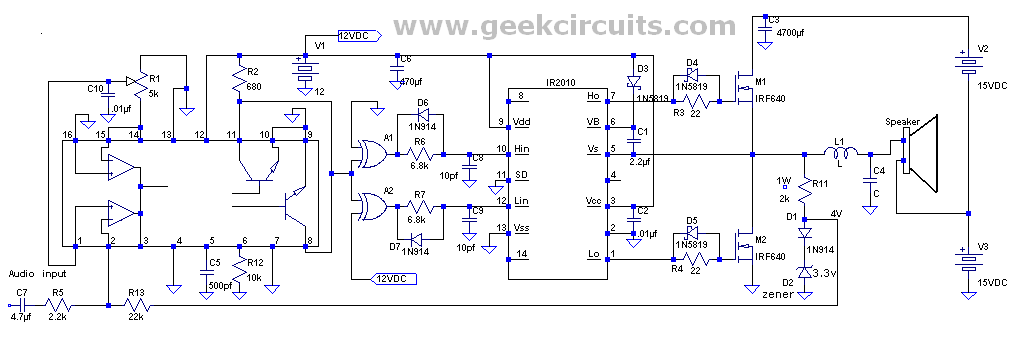
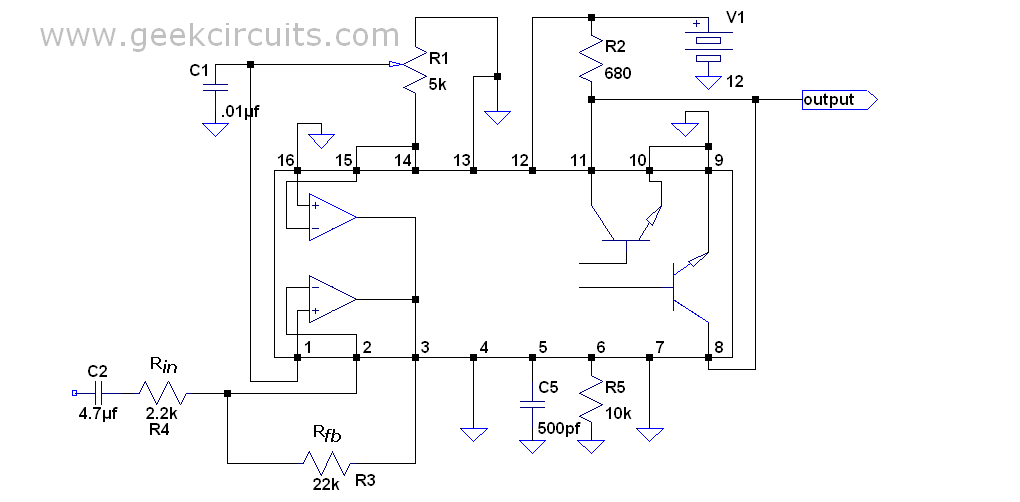
I made a Class D amplifier. PWM Driver ....MOSFET driver IRF2110......MOSFET IRF640.
+/-50V or 0...100V.
I tested it in my room with a laptop adapter (12V and 3A). It worked perfectly.
12V......SMPS +/-50V...audio amplifier.
When I tested it in the car, I had a surprise.
The capacitor in series with the loudspeaker it was hot. Smoke out of it. That in a few seconds.
This capacitor was 470uF / 200V and came from a PC power supply.
I did not use LC filter on out for class D. I want to test it without him. I want to make a robust device. In case of filter capacitor fails, do not have serious problems.
I just do not measure temperature on the capacitor. I have not seen anything like this anywhere.
-.................................................................
Then I removed this capacitor in bserie with the loudspeaker.
Surprize ... other heating capacitors were heating up!!!!!!
..............................................
Now let's talk a little about the capacitor.
At low frequencies we have iron core transformers. At higher frequencies, their core will heat up and should be used ferrite.
Electrolytic capacitors are used for low frequency. At higher frequencies the dipole of the electrolyte can not follow the electric field variation and and warm up(Maxwell). It would have had a ceramic capacitor, but I did not have 47uF ceramic
....................................................................................
What I want?
Help me find a solution to use the amplifier in the car.
However, in case we do not find it, I want to discuss why condensers heat up. That's why we started the last discussion.
But if we find a solution quickly and I listen to the music in the car, I do not need it anymore.
I made a Class D amplifier. PWM Driver ....MOSFET driver IRF2110......MOSFET IRF640.
+/-50V or 0...100V.
I tested it in my room with a laptop adapter (12V and 3A). It worked perfectly.
12V......SMPS +/-50V...audio amplifier.
When I tested it in the car, I had a surprise.
The capacitor in series with the loudspeaker it was hot. Smoke out of it. That in a few seconds.
This capacitor was 470uF / 200V and came from a PC power supply.
I did not use LC filter on out for class D. I want to test it without him. I want to make a robust device. In case of filter capacitor fails, do not have serious problems.
I just do not measure temperature on the capacitor. I have not seen anything like this anywhere.
-.................................................................
Then I removed this capacitor in bserie with the loudspeaker.
Surprize ... other heating capacitors were heating up!!!!!!
..............................................
Now let's talk a little about the capacitor.
At low frequencies we have iron core transformers. At higher frequencies, their core will heat up and should be used ferrite.
Electrolytic capacitors are used for low frequency. At higher frequencies the dipole of the electrolyte can not follow the electric field variation and and warm up(Maxwell). It would have had a ceramic capacitor, but I did not have 47uF ceramic
....................................................................................
What I want?
Help me find a solution to use the amplifier in the car.
However, in case we do not find it, I want to discuss why condensers heat up. That's why we started the last discussion.
But if we find a solution quickly and I listen to the music in the car, I do not need it anymore.