Facebook
 Google
 GitHub
 Linkedin

While microelectronics are now the standard for computing, it's amazing to look back at the world of "macroscopic mechanical" computing.
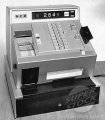
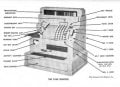
This is a National Cash Register "Class 51" mechanical register built some time in the 1960s:
It took a lot of ingenuity to design a mechanism that could perform the simple functions required by a cash register for a super market. The "Class 6000" was the most complex register that National made and I was very fascinated by watching them in operation at the "Humpty Dumpty" super market in the 1960s.
On one occasion, I was able to see the service man working on one of them and he told me about that the parts were made from heat treated high strength steel to eliminate wear from the 1000s of operations every day. A skilled grocery clerk could perform one operation every second and that could create the potential for a lot of wear and tear on the mechanism.
This is a National Cash Register "Class 51" mechanical register built some time in the 1960s:
It took a lot of ingenuity to design a mechanism that could perform the simple functions required by a cash register for a super market. The "Class 6000" was the most complex register that National made and I was very fascinated by watching them in operation at the "Humpty Dumpty" super market in the 1960s.
On one occasion, I was able to see the service man working on one of them and he told me about that the parts were made from heat treated high strength steel to eliminate wear from the 1000s of operations every day. A skilled grocery clerk could perform one operation every second and that could create the potential for a lot of wear and tear on the mechanism.
Attachments
-
 20.8 KB Views: 9