Facebook
 Google
 GitHub
 Linkedin

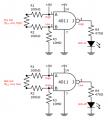
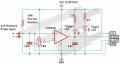
I'm helping my son with a science project, and we're building this Soil Moisture Tester. That portion is pretty straightforward, but an adjustment my son would like to make is to add a way to automatically water the plant when the moister alarm triggers (this will be an additional experiment he'll perform)
After a bunch of googling, it seems that this solenoid should work with a gravity based water source. However, I'm unclear how to adjust the voltage from the experiment to power the solenoid. Perhaps I could use a 9V battery like this, but do I need to change around the various resistors?
Also, to be clear, I'm not planning on doing the experiments for him...and he will build the breadboard with my supervision Much of the point of the experiment is to test his hypothesis and measure plant growth daily, but I do want him to push himself beyond what is required for his grade level...so for this portion of the experiment, he'll need my help, and his teacher is ok with that.
After a bunch of googling, it seems that this solenoid should work with a gravity based water source. However, I'm unclear how to adjust the voltage from the experiment to power the solenoid. Perhaps I could use a 9V battery like this, but do I need to change around the various resistors?
Also, to be clear, I'm not planning on doing the experiments for him...and he will build the breadboard with my supervision
Much of the point of the experiment is to test his hypothesis and measure plant growth daily, but I do want him to push himself beyond what is required for his grade level...so for this portion of the experiment, he'll need my help, and his teacher is ok with that.