Tech Doubt: Function Generator vs Audio Oscillator?

MrChips

Joined Oct 2, 2009
34,829
Okay man, if u just want me to use my house grounding I'll use it, no problem, but I don't really see the explanation behind... What is the difference between grounding to my Psu's negative terminal and a battery powered device negative terminal if that's what you will finally tell me?
You have rightly pointed out two approaches:

1) Doing what you have been told to do,
2) Understanding why you need to do what you have been told to do.

We are not here to tell you one and not the other. We will tell you both.
You need to pay attention and listen up.

You have to use your house grounding. Why?
Because the vast majority of your devices are bonded to earth ground. There is good reason for that.

There are occasions when your device is not grounded.
You need to know when this occasion occurs and how to act accordingly. Therefore you need to know your equipment.

We are not here to keep secrets from you. We are here to correct the misconceptions you have about power supplies, test equipment and how to make proper and safe measurements.

The recall notice by Tektronix was made exactly for this purpose to prevent situations like this from turning into a bad accident!
 

Thread Starter

MarcosKDC

Joined Sep 10, 2021
67
You have to use your house grounding. Why?
Because the vast majority of your devices are bonded to earth ground. There is good reason for that.
Ok. As long as I know they are referenced to ground to avoid electric shock, reduce noise, and some other reasons, maybe I'm wrong.

In this systems I must use the earth ground to also avoid shortcircuiting a low resistance ground loop. I get it.

So finally... What happens when my device is floating and it's outputs are not already grounded? Just like the 6226 PSU I was using and talking about?
Maybe it's not isolated and I'm wrong... I would really aprecciate if you can go deeper into this...
 

MrChips

Joined Oct 2, 2009
34,829
Before I answer your question, let's backup for the moment.

Consider the following:

1) Your oscilloscope is grounded to earth ground through the power cable and your AC wall outlet.
2) Your oscilloscope takes voltage measurements with respect to ground.
3) You do not need to connect the ground clip of the oscilloscope probe anywhere.
(This addresses the concern related to the Tektronix recall notice.)

Why and when would you use the ground clip of the probe?
You would use the ground clip to reduce noise pickup caused by ground loops in both DC and AC measurements.
You would use the ground clip in high frequency measurements.

For simple diagnostic tests on audio amplifiers (for example), the probe tip alone on the DUT will measure signals referenced to GND assuming that the DUT is also grounded.
 

MrChips

Joined Oct 2, 2009
34,829
To answer your question, many laboratory bench PSU are isolated or "floating".

1658065168131.png

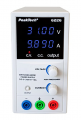
This is a single suppy PSU. It is not a dual supply PSU.
The - sign does not mean that this is a negative voltage.
It means that this terminal is negative with respect to the + terminal.

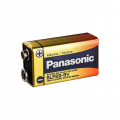
This the same as with a simple 9V battery. The battery is a floating power source.
1658065389360.png

The PeakTeck 6226 bench PSU has a GND terminal. This is bonded to the earth ground via the AC power cord.
This PSU can be used as a positive or negative voltage source (just like any isolated battery source).
In order to use it as a negative voltage source, connect the +ve terminal to GND.
In order to use it as a positive voltage source, connect the -ve terminal to GND.

Some bench PSU manufacturers supply the instrument with a 3/4" jumper for this purpose.
This changes the PSU from an isolated PSU to a non-isolated PSU.

Therefore, ground the PSU + or - terminal to suit your voltage requirements.
The 9V battery has no such GND terminal. Hence when you connect the battery to your DUT, the device is still floating.
You still need to reference a node of the DUT to GND. It is common practice to connect COMMON of the DUT to GND.
You can do this by connecting a grounding wire from COMMON to a known GND reference that in turn is grounded to the AC mains outlet.
You can use the GND terminal of the 6226 power supply as long as the PSU is plugged into the wall. It does not require the PSU AC power to be ON.
You can also use the GND terminal on the front panel of the TDS 210 oscilloscope.
You can also use the ground clip on the probe of the oscilloscope.

This seems like a rather long winded way of telling you what you already know. It is important to know what are all of your options and why we do this.

The bottom line is, do not connect the ground on the probe clip unless you are absolutely certain that you understand what you are doing.
This addresses the issue related to the Tektronix recall notice.
 
Last edited:

Thread Starter

MarcosKDC

Joined Sep 10, 2021
67
1) Your oscilloscope is grounded to earth ground through the power cable and your AC wall outlet.
Yes, it is, the resistance measured is around 2ohm, the dmm was not pushed heavily against the outlet to avoid deforming it.
2) Your oscilloscope takes voltage measurements with respect to ground.
Yes, it takes measurements between the negative and positive of the BNCs, since the negative is bonded to safety earth through th power cord and the outlet, I'm always measuring respect to the safety earth even withouth any extra ground crocodile clip connected, I agree.
3) You do not need to connect the ground clip of the oscilloscope probe anywhere.
(This addresses the concern related to the Tektronix recall notice.)
I agree, as you can see in previous lines. I don't see why you relate this to the Tektronix recall, I guess because you're afraid that I make a shortcircuit in the connection joining the BNC gnd to the safety earth.
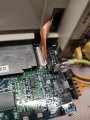
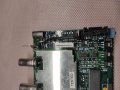
Anyway, this has already been repaired, a thick wire has been soldered between this places to avoid any problems. I upload pic so that you can see it.
pic2.jpegpic1.jpeg
Why and when would you use the ground clip of the probe?
You would use the ground clip to reduce noise pickup caused by ground loops in both DC and AC measurements.
You would use the ground clip in high frequency measurements.
Yes, I agree, in my setup I only had the crocodile connected directly to the negative of the supply trough a cable to the reference signal GND, hence I converted the PSU into non isolated, and then just probed around :) (I think this was the main problem) Oscilloscope GNDs?! I've seen this video which was really clear in this sense in my oppinion, I'm reading Bruce Archambeault presentation right now anyway, it's a really good insight.
For simple diagnostic tests on audio amplifiers (for example), the probe tip alone on the DUT will measure signals referenced to GND assuming that the DUT is also grounded.
Totally agree, I have no doubt on this when the power supply is already non-isolated (or converted to).

This is a single suppy PSU. It is not a dual supply PSU.
The - sign does not mean that this is a negative voltage.
It means that this terminal is negative with respect to the + terminal.
I agree with the first statement and third statement, but not totally agree with the second one.
As I've already told, when the output is left floating, you can measure that ground is the midpoint between both outputs through a symmetric capacitance.
Yes, this voltage does get discharged even with the minimum loading of the DMM, but the main problem, is, if you just don't worry about it, it'll cause the sparks I mentioned before, I've still haven't seen other reason.

This the same as with a simple 9V battery. The battery is a floating power source.
I agree, but there has to be some diference anyway. I haven't tried to do the same procedure I did but with a battery, anyway I'm not expecting the same sparks to happen when referencing the negative* output has it to ground (I mean the one that has a - sign on it, I will never mean it has negative voltage unless I measure it).
Am I wrong?

The PeakTeck 6226 bench PSU has a GND terminal. This is bonded to the earth ground via the AC power cord.
This PSU can be used as a positive or negative voltage source.
In order to use it as a negative voltage source, connect the +ve terminal to GND.
In order to use it as a positive voltage source, connect the -ve terminal to GND.
Totally agree, I would just please like to remember the capacitance I've mentioned. I would expect the same sparks if I connected the scope's gnd to the + terminal. And I can do the same with any point in the circuit, for example, if I want to take a differential measure, I don't have money for an isolated probe, and somehow one of the channels decided to die. Am I wrong? :')

Some bench PSU manufacturers supply the instrument with a 3/4" jumper for this purpose.
This changes the PSU from an isolated PSU to a non-isolated PSU.
I understand this is what I should have done. I want to understand that if the capacitances I mentioned exist, the supplier already has this into account, therefore adding something to limit the current on the discharge? I haven't tried since I still haven't made the banana to banana cable.
This is one of the main worries I'd have before doing the differential measurement aforementioned.

Not that I want to do it know, but just want to know when could it be possible to do it WITHOUT unearthing the scope. Some people do this and I find it dangerous af, so that's why I WOULD LIKE TO DO IT THE SAFE WAY but isolated equipment is way more expensive than normal one :/ I preffer to know what I'm doing :)

I hope you give me a pass at least xD
 

KeithWalker

Joined Jul 10, 2017
3,607
POWER SUPPLY:
There has been a lot said about grounding your ATX power supply but here is what no one mentioned:
The ATX supply outputs +3.3V / +5V / +12V1 / -12V / +5Vsb. These voltages are all with respect to the supply common which is usually connected to earth ground.
If you do not connect the supply common to earth ground, you can safely connect any one of the other outputs to ground.
You then have a problem: If -12V is connected to ground, there will be 24 volts between the +12V output and ground which is not what you want. The -12V output is NOT the negative side of the +12V supply. It is a -12V supply with respect to common.

OSCILLOSCOPE:
Your oscilloscope is 60MHz, dual channel. You can make differential measurements by using both probes. Connect both ground clips to ground and a probe to each side of the differential signal. For the scope differential measurement settings, see your manual.
 

KeithWalker

Joined Jul 10, 2017
3,607
JUST A NOTE ON GROUNDING:
The spark you see when you connect any terminal of your floating supply to ground is caused by the discharge of the electrical charge that the supply acquired with respect to ground while it was floating. To avoid that, make the ground connection before turning on the supply.
 

Thread Starter

MarcosKDC

Joined Sep 10, 2021
67
POWER SUPPLY:
There has been a lot said about grounding your ATX power supply but here is what no one mentioned:
The ATX supply outputs +3.3V / +5V / +12V1 / -12V / +5Vsb. These voltages are all with respect to the supply common which is usually connected to earth ground.
If you do not connect the supply common to earth ground, you can safely connect any one of the other outputs to ground.
You then have a problem: If -12V is connected to ground, there will be 24 volts between the +12V output and ground which is not what you want. The -12V output is NOT the negative side of the +12V supply. It is a -12V supply with respect to common.
Yes, I do understand this. Anyway I understand that I should keep the metal casing grounded by any other means.
OSCILLOSCOPE:
Your oscilloscope is 60MHz, dual channel. You can make differential measurements by using both probes. Connect both ground clips to ground and a probe to each side of the differential signal. For the scope differential measurement settings, see your manual.
I agree, I must RTFM.

JUST A NOTE ON GROUNDING:
The spark you see when you connect any terminal of your floating supply to ground is caused by the discharge of the electrical charge that the supply acquired with respect to ground while it was floating. To avoid that, make the ground connection before turning on the supply.
Yes, that was the main thing. Does it matter doing it with the scopes earth or the own supply earth? As long as I understand, there should be no current loop else than the one able to flow through the stray capacitances...
What resulted interesting for me, was that the capacitance measured with the DMM between safety earth and both outputs was symmetric, is this forced somehow or is it just luck?
 

MrChips

Joined Oct 2, 2009
34,829
My comments:

1) Let's keep differential measurements off the table for now. I am trying to get the TS to fully understand how to use the oscilloscope to take single point measurements referenced to GND.

2) TS keeps bringing back internal capacitance. This is a non-issue.

3) You should never see sparks when you make a connection with a DMM or oscilloscope. If you do then you are doing something wrong.

4) My reference to the Tektronix TDS 210 (recalled or not) applies to any oscilloscope. This is a discussion about proper grounding and how to avoid making a wrong and dangerous connection.

5) I do not understand your comment about "symmetry" and should be off the table, same about stray capacitance.
 

KeithWalker

Joined Jul 10, 2017
3,607
Yes, I do understand this. Anyway I understand that I should keep the metal casing grounded by any other means.

I agree, I must RTFM.

Yes, that was the main thing. Does it matter doing it with the scopes earth or the own supply earth? As long as I understand, there should be no current loop else than the one able to flow through the stray capacitances...
Yes, the metal casing is connected internally to the common of all the supplies. The safest way to use it is by connecting it to the ground pin of the power cable.

What resulted interesting for me, was that the capacitance measured with the DMM between safety earth and both outputs was symmetric, is this forced somehow or is it just luck?
Before you make a capacitance measurement with your DMM, you are supposed to discharge whatever you are measuring. The readings you got were invalid.You are lucky you did not blow the capacitance function right out of your DMM!
 

Thread Starter

MarcosKDC

Joined Sep 10, 2021
67
Yes, the metal casing is connected internally to the common of all the supplies. The safest way to use it is by connecting it to the ground pin of the power cable.


Before you make a capacitance measurement with your DMM, you are supposed to discharge whatever you are measuring. The readings you got were invalid.You are lucky you did not blow the capacitance function right out of your DMM!
Yes, I did measure this with everything powered off and discharged.
 

Thread Starter

MarcosKDC

Joined Sep 10, 2021
67
My comments:

1) Let's keep differential measurements off the table for now. I am trying to get the TS to fully understand how to use the oscilloscope to take single point measurements referenced to GND.

2) TS keeps bringing back internal capacitance. This is a non-issue.

3) You should never see sparks when you make a connection with a DMM or oscilloscope. If you do then you are doing something wrong.

4) My reference to the Tektronix TDS 210 (recalled or not) applies to any oscilloscope. This is a discussion about proper grounding and how to avoid making a wrong and dangerous connection.

5) I do not understand your comment about "symmetry" and should be off the table, same about stray capacitance.
If internal capacitance is not an issue, I should not see sparks, as KeithWalker said, it must be that I need to gnd before powerup.
 

MrChips

Joined Oct 2, 2009
34,829
My main doubt, was, what would happen when I do put this negative floating voltage of the power supply on the scope, and as I can see, I get a discharge due to some capacitance if I'm not wrong. Somebody out of the forum told me this is not capacitance, but the fact that this and most isolated power supplys have their isolated output both positive and negative referenced to ground via HV caps, so I guess that's why I was able to measure around 235nF from both outputs to ground.
Capacitors from output to ground are always installed on any decent power supply.
This is not to create a reference to ground. This is a low-pass filter to remove high frequencies at the output terminal. This is to attenuate high frequency signal and noise and to prevent HF oscillation.

235nF will not hold enough charge to give you a spark.
 

LesJones

Joined Jan 8, 2017
4,511
As you are using an ATX power supply the 0 volt (Common.) rail will be connected to mains ground. The the input ground on the scope will also be connected to mains ground. So when you connect the scope ground clip to the negative (Or any other rail than ground.) on the power supply you are shorting out that output from the power supply via the mains ground connections.

Les.
 

MrChips

Joined Oct 2, 2009
34,829
Now that you fully understand the difference between an isolated PSU and a non-isolated PSU, hopefully you understand the significance of proper grounds.

Let us now look at the situation of when circuits are isolated.
You come with the experience of using a DSO150 portable oscilloscope. This is a floating oscilloscope.

In a typical test scenario, both the DUT and the test equipment might be floating.
For example, one may be testing an Arduino circuit powered by a 9V battery or an isolated wall adapter.

The DSO150 is floating and has no connection to ground. This is no different from when using a handheld DMM.
There is no ground terminal on the DSO150 as with the TDS210 or the PeakTech 6226 PSU.

The DSO150 comes with a BNC cable than ends with two alligator clips, red and black, or maybe an oscilloscope probe. The DSO150 measures the voltage difference placed across the two alligator clips.

Since both DSO150 and the DUT are floating you can connect the alligator clips wherever you choose so long as you do not exceed the maximum voltage input allowed on the DSO150. It is more common practice, more practical and makes more sense to connect the black alligator clip to a COMMON node on your DUT. Very often (but not always) this is the return current path to the power source, in other words, the negative terminal of the power supply.

DMM and oscilloscopes have high input impedances, 1MΩ and perhaps 10MΩ. With any floating test setup there should be very little current flowing in the test leads. You should never see a spark when making any test connections.

[Never use a capacitance meter (or DMM) to measure capacitance on the output of a power supply (power or not powered). This is simply a stupid thing to do and is asking for trouble.]
 

MrChips

Joined Oct 2, 2009
34,829
Now if you wish we can briefly discuss taking differential voltage measurements, for example, measuring the voltage drop across a pass transistor on the high side of the supply.

Intentionally isolating the DUT and the oscilloscope on AC mains powered equipment is not advisable.

One solution is to use the isolated DSO150 to make the measurement provided that the oscilloscope is designed to withstand the high voltages present.

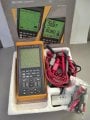
I personally use a Fluke battery powered oscilloscope in such situations.
 

Thread Starter

MarcosKDC

Joined Sep 10, 2021
67
Capacitors from output to ground are always installed on any decent power supply.
This is not to create a reference to ground. This is a low-pass filter to remove high frequencies at the output terminal. This is to attenuate high frequency signal and noise and to prevent HF oscillation.

235nF will not hold enough charge to give you a spark.
I understand the LPF thing :) but I can see what I said as a side consecuence, and it makes sense, right?
I will have to check the capacitance between the oscilloscopes earthing and the negative output... I'm not sure bout the reason, just could measure and see that, but hoped you could explain. I think you already understood what I did finally, and from what you've been saying I think it was not that wrong.

Since both DSO150 and the DUT are floating you can connect the alligator clips wherever you choose so long as you do not exceed the maximum voltage input allowed on the DSO150. It is more common practice, more practical and makes more sense to connect the black alligator clip to a COMMON node on your DUT. Very often (but not always) this is the return current path to the power source, in other words, the negative terminal of the power supply.
1658082538998.png
I've been using the DSO 150, I agree, but I'm sorry to say that if you decide to power it from the same source as the load, they will no longer be isolated. this was my case when having to measure output voltages on my car, powering via lighter connection, I had to take ground loops into account anyway, since this is a really simple scope and didn't have all the features needed.

I also had to modify the probes with in series resistors to avoid high current flow when conmutating SW1B, since there was not enough clearance or resistance avoiding current flowing onto the probes and blowing the trace going from the positive input onto the switch...

DMM and oscilloscopes have high input impedances, 1MΩ and perhaps 10MΩ. With any floating test setup there should be very little current flowing in the test leads. You should never see a spark when making any test connections.
The capacitor is directly shortcircuited via ground loop... I guess it's not the capacitance but the inductance what will cause the spark? I will try to use the psu gnd output, this loop is way smaller and should not cause the same problem I guess...

[Never use a capacitance meter (or DMM) to measure capacitance on the output of a power supply (power or not powered). This is simply a stupid thing to do and is asking for trouble.]
Because the multimeter acts as another power supply and putting them in parallel could result in bad things I guess?

Now if you wish we can briefly discuss taking differential voltage measurements, for example, measuring the voltage drop across a pass transistor on the high side of the supply.
Thanks, that's a very good example

One solution is to use the isolated DSO150 to make the measurement provided that the oscilloscope is designed to withstand the high voltages present.

I personally use a Fluke battery powered oscilloscope in such situations.
Yes, I guess that might be good, but the DSO is not an oscilloscope I would use for a serious measurement, I can just trust him to show me clipping at low frequencies when adjusting the amps.

Would the solution I propposed be a bad one?

The seller i got the TDS210 from, offered me this one

flukeport.jpeg
 

MrChips

Joined Oct 2, 2009
34,829
The capacitor is directly shortcircuited via ground loop... I guess it's not the capacitance but the inductance what will cause the spark? I will try to use the psu gnd output, this loop is way smaller and should not cause the same problem I guess...
That makes no sense whatsoever. Stop talking about capacitance and inductance causing a spark.
Because the multimeter acts as another power supply and putting them in parallel could result in bad things I guess?
Your multimeter is not a power source except when making continuity, resistance and capacitance measure measurements.
In such cases (continuity, resistance and capacitance measurements) whatever you are measuring must be completely discharged and not powered. There is no reason to attempt to measure resistance and capacitance across a power supply output terminals. You only end up with readings that are meaningless.
 

MrChips

Joined Oct 2, 2009
34,829
There are spark generating circumstances that involve inductance and capacitance, for example, the spark plug ignition system used in distributor contacts in old model automobiles.

This is not present in the PSU to oscilloscope ground connection.

Please stop bringing this up.
 
Top