Tech Doubt: Function Generator vs Audio Oscillator?

Thread Starter

MarcosKDC

Joined Sep 10, 2021
67
There are spark generating circumstances that involve inductance and capacitance, for example, the spark plug ignition system used in distributor contacts in old model automobiles.

This is not present in the PSU to oscilloscope ground connection.

Please stop bringing this up.
Could you please explain me what's causing them then?
 

KeithWalker

Joined Jul 10, 2017
3,607
Could you please explain me what's causing them then?
As I mentioned above, the spark was caused by the static charge on the floating supply -12V terminal.There can also be an AC voltage between a floating chassis and ground caused by a small amount of leakage through transformers and capacitors. I suggest that you should look up "floating ground" on the internet for more information.
 

Thread Starter

MarcosKDC

Joined Sep 10, 2021
67
As I mentioned above, the spark was caused by the static charge on the floating supply -12V terminal.There can also be an AC voltage between a floating chassis and ground caused by a small amount of leakage through transformers and capacitors. I suggest that you should look up "floating ground" on the internet for more information.
Thanks Keith, I agree with you, I just wanna clarify that I don't think that the negative output has -12V, I remark that I'm not using an ATX supply, but mainly the peaktech PSU with 14V config.

I suggest that while this supply is floating, I have -7V+7V electrostatic charge, which is what I'm able to measure, on the terminals with respect to safety earth, but for this to be possible, this charge has to be stored in some sort of capacitor, this has to be made either by construction (e.g. LPF topology MrChips talked about) and/or due to stray capacitances. If I disconnect the supply, this charge should be fastly dissipated via bleeder resistors if I'm not wrong, so then I can earth safely, and power it up. As both sides of the capacitor mentioned will be connected to the same node (ideally, with no more than few kHz) the static has no chance to build up in there. The capacitor between GND and the positive rail, will now have all the voltage of the output across it.

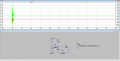
I think if you see the schematic I've drawn it makes sense...
 

Thread Starter

MarcosKDC

Joined Sep 10, 2021
67
I don't know. I was not there to see what you did to make this happen.
I can try to do a video, I don't like the idea of creating sparks again,
Thanks Keith, I agree with you, I just wanna clarify that I don't think that the negative output has -12V, I remark that I'm not using an ATX supply, but mainly the peaktech PSU with 14V config.

I suggest that while this supply is floating, I have -7V+7V electrostatic charge, which is what I'm able to measure, on the terminals with respect to safety earth, but for this to be possible, this charge has to be stored in some sort of capacitor, this has to be made either by construction (e.g. LPF topology MrChips talked about) and/or due to stray capacitances. If I disconnect the supply, this charge should be fastly dissipated via bleeder resistors if I'm not wrong, so then I can earth safely, and power it up. As both sides of the capacitor mentioned will be connected to the same node (ideally, with no more than few kHz) the static has no chance to build up in there. The capacitor between GND and the positive rail, will now have all the voltage of the output across it.

I think if you see the schematic I've drawn it makes sense...
IMG_20220718_183825.jpg
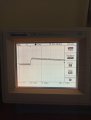
IMG_20220718_183840.jpgThere you can see what happens when probing the floating positive output. The opposite is happening when measuring the negative.
 

MrChips

Joined Oct 2, 2009
34,829
Wrong.
What you are seeing on the oscilloscope has nothing to do with sparking.
What you are seeing is the fact that the oscilloscope is not DC coupled to the power supply. This is just a transient signal which is of no concern. If the power supply is isolated there is no sustained current between the PSU and the oscilloscope.

Here is another example.
Touch the tip of the oscilloscope probe with your finger. Record the voltage that is measure by the oscilloscope.
Where is this signal coming from? What is the significance of this signal?
 

Thread Starter

MarcosKDC

Joined Sep 10, 2021
67
Wrong.
What you are seeing on the oscilloscope has nothing to do with sparking.
What you are seeing is the fact that the oscilloscope is not DC coupled to the power supply. This is just a transient signal which is of no concern. If the power supply is isolated there is no sustained current between the PSU and the oscilloscope.

Here is another example.
Touch the tip of the oscilloscope probe with your finger. Record the voltage that is measure by the oscilloscope.
Where is this signal coming from? What is the significance of this signal?
It's the measurement you get... It jumps to 7V and the charge gets dissipated by the scopes input resistance. That's it's not useful or that it can be neglected, doesn't mean it's not there in my oppinion...
 

MrChips

Joined Oct 2, 2009
34,829
It's the measurement you get... It jumps to 7V and the charge gets dissipated by the scopes input resistance. That's it's not useful or that it can be neglected, doesn't mean it's not there in my oppinion...
I am not saying it is not there. I am saying that this does not create a spark.
Let's do the math.
From the oscilloscope display the initial 7V spike decays to about 30% in 2.5 seconds.

time constant tau = R x C
R = 10MΩ
C = 250nF
tau = 2.5 seconds

The initial current is I = V / R = 7V / 10MΩ = 0.7μA
This is not enough to create a spark.
 

BobTPH

Joined Jun 5, 2013
11,526
Which is a fine calculation, but he never said he got a spark when connecting the probe.

The spark occurs when he connects the scope ground to the isolated supply minus output. There is no telling what the potential difference is, since the power supply is isolated. If he does get a spark it is not likely 7V.
 

Thread Starter

MarcosKDC

Joined Sep 10, 2021
67
I am not saying it is not there. I am saying that this does not create a spark.
Let's do the math.
From the oscilloscope display the initial 7V spike decays to about 30% in 2.5 seconds.

time constant tau = R x C
R = 10MΩ
C = 250nF
tau = 2.5 seconds

The initial current is I = V / R = 7V / 10MΩ = 0.7μA
This is not enough to create a spark.
Yes, but the resistance is way lower when connecting through the scope's gnd, and the inductance due by the ground loop is quite high I guess, since the power cords are quite long.
I haven't measured if the capacitance is bigger when measuring between scope's gnd and the negative of the supply, I did this measurements directly on the supply. But I don't see any other way this could be happening other than the RC circuit stepping up the voltage. The current might be minimal but if you see a spark, the voltage has gone up...
I finally made a simulation with a random inductance to proof this, and I can see you're right... So I guess something else might be happening...

1658219209295.png
 

Thread Starter

MarcosKDC

Joined Sep 10, 2021
67
To the TS.
I get a spark just stepping out of my car. What does that mean?
It has build up electrostatic charge with respect to ground due to the triboelectric effect.

Electrostatic discharges (other than lightning which comes from triboelectric charging of ice and water droplets within clouds) cause minimal harm because the energy of the spark is very small, being typically several tens of micro joules in cold dry weather, and much less than that in humid conditions; however, such sparks can ignite flammable vapors . This is not the case when the capacitance of one of the objects is very large. Wikipedia
So even with small capacitances there may be sparks...

Maybe there's water flowing through my supply Wet sparks
 
Last edited:

Thread Starter

MarcosKDC

Joined Sep 10, 2021
67
@MrChips Finally, I've tried again to see if sparks appeared. They wre caused by bad contact on the load, since i connected and disconnected the negative from the load at the same time...
 

KeithWalker

Joined Jul 10, 2017
3,607
Last edited:

MrChips

Joined Oct 2, 2009
34,829
Good point.

However I would have said rather than taking anything for granted, why not use theory, logic, knowledge, measurement, and intuition to analyze a situation in order to come up with plausible answers.

230nF would not cause a spark.
Certainly connecting a substantial load can cause a spark.

Take away: Turn off power before making connections.
 

Thread Starter

MarcosKDC

Joined Sep 10, 2021
67
Why are you still pursuing these pointless experiments? Electrostatic discharge (ESD) is a very real problem that we make great efforts to avoid. It damages electronic components, especially semiconductor devices.
My advice is to satisfy your curiosity by reading about it rather than risking destroying your test equipment.

https://www.newequipment.com/plant-...0171/how-to-eliminate-electrostatic-discharge
Well, I've been trying to ask which was the reason for the sparks, but finally found that there was not other way to really be able to explain what was happening than try again to come up with new conclusions...
Ofc I was worried about the sparks and had been searching info here and there since then, as u can see, I've even done a simulation to see what could happen.

Good point.

However I would have said rather than taking anything for granted, why not use theory, logic, knowledge, measurement, and intuition to analyze a situation in order to come up with plausible answers.

230nF would not cause a spark.
Certainly connecting a substantial load can cause a spark.

Take away: Turn off power before making connections.
I've tried, but I did not remember that there was also a load connected when I did this test.

Why is this spark/light hapenning? just because of the resistance of the contact? Yesterday I've tried to do some dupont wire burning by limiting the current with my power resistors. I could see that 10A give a bigger spark that 5A when loosly connected, but i'm not sure if this is because the power dissipated on the connection. Mainly I want to think that this is due to the stray inductance of my circuit, since the spark appears mainly when disconnecting the load.

I really liked burning dupont wire, is there something wrong with this?
 
Top