Facebook
 Google
 GitHub
 Linkedin

Here are reasons why the preferred setting of the oscilloscope probe is 10x.
1) With 1x setting, the input impedance of the probe and scope is 1MΩ. This puts a 1MΩ load on the circuit you are measuring.
With 10x setting, the input impedance of the probe and scope is 10MΩ. Like your DMM, a 10MΩ load reduces the current taken from the circuit you are testing.
2) The bandwidth of the oscilloscope is spec'd with 10x probe. With 1x probe the bandwidth is much reduced.
3) You are now able to measure voltages that are 10 times higher than before.
When the 10x probe setting is used, the signal input is attenuated by a factor of 10.
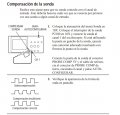
Use the CH1 and CH2 settings to set the oscilloscope probe setting 10x. This will allow to oscilloscope to give the proper voltage readings.
Do you have the User Manual of the TDS 210 oscilloscope?
1) With 1x setting, the input impedance of the probe and scope is 1MΩ. This puts a 1MΩ load on the circuit you are measuring.
With 10x setting, the input impedance of the probe and scope is 10MΩ. Like your DMM, a 10MΩ load reduces the current taken from the circuit you are testing.
2) The bandwidth of the oscilloscope is spec'd with 10x probe. With 1x probe the bandwidth is much reduced.
3) You are now able to measure voltages that are 10 times higher than before.
When the 10x probe setting is used, the signal input is attenuated by a factor of 10.
Use the CH1 and CH2 settings to set the oscilloscope probe setting 10x. This will allow to oscilloscope to give the proper voltage readings.
Do you have the User Manual of the TDS 210 oscilloscope?