Tech Doubt: Function Generator vs Audio Oscillator?

MrChips

Joined Oct 2, 2009
34,829
Here are reasons why the preferred setting of the oscilloscope probe is 10x.

1) With 1x setting, the input impedance of the probe and scope is 1MΩ. This puts a 1MΩ load on the circuit you are measuring.
With 10x setting, the input impedance of the probe and scope is 10MΩ. Like your DMM, a 10MΩ load reduces the current taken from the circuit you are testing.

2) The bandwidth of the oscilloscope is spec'd with 10x probe. With 1x probe the bandwidth is much reduced.

3) You are now able to measure voltages that are 10 times higher than before.

When the 10x probe setting is used, the signal input is attenuated by a factor of 10.
Use the CH1 and CH2 settings to set the oscilloscope probe setting 10x. This will allow to oscilloscope to give the proper voltage readings.

Do you have the User Manual of the TDS 210 oscilloscope?
 

MrChips

Joined Oct 2, 2009
34,829
Post a photo of the back of the oscilloscope where the serial number is shown.
If there is a PS MOD SUP 40-003 sticker that is where it would be placed.
 

MrChips

Joined Oct 2, 2009
34,829
See reply #3
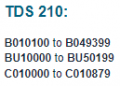
Ok. Serial Number is B039296 and falls in the range of those in the recall notice.

1657793072305.png

I suppose you and @tautech have confirmed that the ground is intact.
You can take the chance that the oscilloscope is ok to use in future.

But you now need a lesson on how to properly use the ground clip on the probe.
 

tautech

Joined Oct 8, 2019
498
But you now need a lesson on how to properly use the ground clip on the probe.
I'm not sure the OP has got this just yet or how to properly set the input attenuation so to match the settings on a 1x and 10x probe.
However I did link the TDS210 TekWiki page so it's up to him to download and RTFM.
 

MrChips

Joined Oct 2, 2009
34,829
Where and how you use your test equipment is vitally important.
You have indicated that you are interested in setting up a repair bench for servicing automotive audio equipment.
We will focus on this application.

In good time, we will assess each one of your devices, oscilloscope, PSU, function generator, smart phone, etc. even your mains AC power connection.

We will show you how to play safe and protect yourself and your equipment.
As I said before, we will take one step at a time, so be patient.
 

Thread Starter

MarcosKDC

Joined Sep 10, 2021
67
Post a photo of the back of the oscilloscope where the serial number is shown.
If there is a PS MOD SUP 40-003 sticker that is where it would be placed.
Yes!! I've read that, and nope, there isn't any sticker, the serial number is between those affected... I've contacted tektronix to see what they can do, and I've also seen what was the problem in this video (TDS210 REPAIR) just in case.
I'm not sure the OP has got this just yet or how to properly set the input attenuation so to match the settings on a 1x and 10x probe.
However I did link the TDS210 TekWiki page so it's up to him to download and RTFM.
RTFM IS DA WAE! XD
I'm not sure what you mean with the attenuation thingy, I hope you are reffering to compensating the probes as they've told me before... Otherwise I'm quite lost :')
Where and how you use your test equipment is vitally important.
You have indicated that you are interested in setting up a repair bench for servicing automotive audio equipment.
We will focus on this application.

In good time, we will assess each one of your devices, oscilloscope, PSU, function generator, smart phone, etc. even your mains AC power connection.

We will show you how to play safe and protect yourself and your equipment.
As I said before, we will take one step at a time, so be patient.
Yes, I've been checking how should I do the connection with the bnc gnd. The main doubt is... ¿what happens with the capacitances between my house's GND and the isolated PSU output? I've seen that I cannot directly short gnd with negative, otherwise I get ugly sparks due to this capacitance, I can discharge it through a resistor, and then connect... I've also seen, that I can try to measure the negative output of the supply floating voltage by touching with the positive of the scope's probe before connecting the scope's negative... If the DC component is 0, the capacitance is discharged, if it wasn't, it should get discharged via pulldown resistor, so it should be okay to connect the negative there... Anyway, I can see that this is not straightforward... As if I connect the other channel's tip, to the positive input, the floating DC voltage on the negative output goes to -7V, and the positive jumps to +7. I think this is because as there's 14V between both channel inputs, a voltage divider is created within them, with ground on the center point, if both inputs Resistance is equal, the ground's voltage referenced to the negative output of the supply, must be -7V. Could someone confirm me I'm right?

I think the main problem will come when I try to measure high frequency AC waveforms... Since they'll cause current to flow through the parasitics capacitance, I guess...
 

MrChips

Joined Oct 2, 2009
34,829
No. We will get to answer your questions in time.
You have some misconceptions of resistors, capacitors, DC, AC, etc.

Let us fix the oscilloscope probe adjustment.
Then we will cover proper grounding of all your devices.

RTFM stands for = Read The Fine Manual

Download the User Manual of the TDS 210. There are a lot of new things in there for you to learn.

En español:
http://www.labc.usb.ve/paginas/mgimenez/Ec1181ele/Material/ Equipos/tds 200 manual usuario.pdf

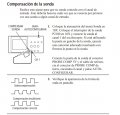
Probe compensation is covered on page 18.

Probe compensation es.jpg
 

Thread Starter

MarcosKDC

Joined Sep 10, 2021
67
No. We will get to answer your questions in time.
You have some misconceptions of resistors, capacitors, DC, AC, etc.

Let us fix the oscilloscope probe adjustment.
Then we will cover proper grounding of all your devices.

RTFM stands for = Read The Fine Manual

Download the User Manual of the TDS 210. There are a lot of new things in there for you to learn.

En español:
http://www.labc.usb.ve/paginas/mgimenez/Ec1181ele/Material/ Equipos/tds 200 manual usuario.pdf
Thanks man, I've seen the very first pages, need time to check the rest, I'll tell you when I have the probes correctly configured, i guess with a pic of the settings for ch1 while probing the test output is OK :)
Wow! Man, thanks a lot for giving me the exact info!! But you don't really need to do all that work for me :) Anyway I really aprecciate it, thanks!!!
 

Thread Starter

MarcosKDC

Joined Sep 10, 2021
67
UPDATE:
Finally got the scope today after work, just came home, compensated the probes, and started troubleshooting my amp, after correctly connecting the ground to the negative. First connect then power, otherwise sparks happens due to the isolation.

After some time... Found that a cap in parallel with the termistor was heavily leaking, turning the protection on (by diminishing the value seen by voltage divider in the input the opamp)
Changed it, turned amp on, all channels work like a charm... Perfect...

Ungratefully, it was the first amp I bought, and already has some scars made by learning how to solder and which are the actual items needed... but today's cap came out just like butter hahahahah

I'm just happy boys, want to share the feeling with you, thanks for your help you'll be hearing from me soon :)

If you want more info about the trouble just feel free to ask :D
 

MrChips

Joined Oct 2, 2009
34,829
If you have the scope probe compensation correctly adjusted then that's great.

Now let's talk about grounding.

Firstly, show us a photo of the scope AC power cord plug that goes into the wall outlet.
Show us a photo of the AC wall outlet. You need to confirm that the wall outlet is properly grounded. (That is another matter to be discussed.)

With the oscilloscope unplugged, measure the resistance with the DMM on lowest resistance range between the ground pin of the AC power plug and
1) the GND on the oscilloscope front panel
2) each of the grounding clips on the oscilloscope probes.

For audio work, you do not always have to use the grounding clip. It would be safer not to connect the ground clip
if your DUT (device under test) is already grounded.

If you need to connect the ground clip then there is only one place that you can connect it to, and that is another confirmed ground in the DUT.

There should/must be no sparks when you connect the scope probe tip or ground.

(You mentioned something about stray capacitances. No, this has nothing to do with this. There should/must never be any sparks!)
 

Thread Starter

MarcosKDC

Joined Sep 10, 2021
67
If you have the scope probe compensation correctly adjusted then that's great.

Now let's talk about grounding.

Firstly, show us a photo of the scope AC power cord plug that goes into the wall outlet.
Show us a photo of the AC wall outlet. You need to confirm that the wall outlet is properly grounded. (That is another matter to be discussed.)

With the oscilloscope unplugged, measure the resistance with the DMM on lowest resistance range between the ground pin of the AC power plug and
1) the GND on the oscilloscope front panel
2) each of the grounding clips on the oscilloscope probes.

For audio work, you do not always have to use the grounding clip. It would be safer not to connect the ground clip
if your DUT (device under test) is already grounded.

If you need to connect the ground clip then there is only one place that you can connect it to, and that is another confirmed ground in the DUT.

There should/must be not sparks when you connect the scope probe tip or ground.

(You mentioned something about stray capacitances. No, this has nothing to do with this. There should/must never be any sparks!)
Hello sir, i think the supply i use is isolated as most are, it has the 3 outputs, positive ,negative and ground, maybe I'm wrong...

I already did the ground tests, and then connected the negative of the psu to the osciloscope ground connection
 

MrChips

Joined Oct 2, 2009
34,829
Why would you want to connect the PSU negative to the oscilloscope ground?

I think you are in danger zone!
These are the exact things that the Tektronix recall notice was addressing.

You really need some lessons on grounding and how to use the oscilloscope.
 

Thread Starter

MarcosKDC

Joined Sep 10, 2021
67
Why would you want to connect the PSU negative to the oscilloscope ground?

I think you are in danger zone!
These are the exact things that the Tektronix recall notice was addressing.

You really need some lessons on grounding and how to use the oscilloscope.
I guess you mean I should ground the psu via its own ground? and after that connect the ground of the scope? If I want to measure any voltage i need to have the same reference in scope and circuit
 

atferrari

Joined Jan 6, 2004
5,012
I guess you mean I should ground the psu via its own ground? and after that connect the ground of the scope? If I want to measure any voltage i need to have the same reference in scope and circuit
Hola Marcos

Instead of trying anything further, take the time to watch the video by Dave
Jones where he explains all the basics.
It is quite long but worth the time spent.
He uses graphics while he speaks.
 

Thread Starter

MarcosKDC

Joined Sep 10, 2021
67
Hola Marcos

Instead of trying anything further, take the time to watch the video by Dave
Jones where he explains all the basics.
It is quite long but worth the time spent.
He uses graphics while he speaks.
I guess you mean this one, I watched it like 5 times before doing anything, I would be in case 2, I plugged the scope gnd on the negative to be able to probe the amp... I think i did it correctly but I don't get your point :/
 
Top