Tech Doubt: Function Generator vs Audio Oscillator?

MrChips

Joined Oct 2, 2009
34,828
What you want to see? They're standard schuko 16A earthed plugs and sockets
Maybe standard for you but not for someone in a different part of the world.
Have you confirmed that the cord and outlet is properly bonded to earth ground?
Is there continuity from the oscilloscope ground to earth ground?

1657991983791.png
 

Thread Starter

MarcosKDC

Joined Sep 10, 2021
67
Maybe standard for you but not for someone in a different part of the world.
Have you confirmed that the cord and outlet is properly bonded to earth ground?
Is there continuity from the oscilloscope ground to earth ground?

View attachment 271565
Yes, I've checked it 3 times, first one, when i just received the scope, second when I heard about the recall, and third, after I received it back from the seller, obtaining first around 5ohm and after the repair it dropped to about 2 ohms.
Did the same with the function generator, and the oscillator while I had em.
Anyway I don't usually touch any bare metals at home if I can't assure they're either completely disconnected from any electrical supply, or grounded :)

If I search schuko 16A grounded plug/outlet I just get one result, when I say standard, I mean it's the typical white outlet and the typical black cable, as I can see the picture u sent is correct so I think you understood me
 

KeithWalker

Joined Jul 10, 2017
3,607
I am puzzled by your statement that you connected the -12V output of your ATX power supply to ground. I am not at all surprised that you got sparks when you did that. I am surprised that you didn't destroy the power supply! All the outputs on the ATX are referenced to the output 0V which is what should be grounded. Your scope measures between ground and the probe input..
I find a function generator to be a very useful and versatile source of signals. I am retired, so, like you, I am on a limited budget. I built my own 20Hz to 20KHz function generator using the ICL8038 signal synthesizer chip and a 50K Ohm, ten turn potentiometer, using the circuit shown in the datasheet. I added a simple frequency display using an ATMEGA386 chip. The whole thing cost me less than $30.00 CDN. If you have time on your hands, I would recommend that you build one to expand your capabilities.
This is it an top of my home made wien bridge oscillator:
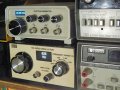
Oscillators.jpg
 

Thread Starter

MarcosKDC

Joined Sep 10, 2021
67
I am puzzled by your statement that you connected the -12V output of your ATX power supply to ground. I am not at all surprised that you got sparks when you did that. I am surprised that you didn't destroy the power supply! All the outputs on the ATX are referenced to the output 0V which is what should be grounded. Your scope measures between ground and the probe input..
I find a function generator to be a very useful and versatile source of signals. I am retired, so, like you, I am on a limited budget. I built my own 20Hz to 20KHz function generator using the ICL8038 signal synthesizer chip and a 50K Ohm, ten turn potentiometer, using the circuit shown in the datasheet. I added a simple frequency display using an ATMEGA386 chip. The whole thing cost me less than $30.00 CDN. If you have time on your hands, I would recommend that you build one to expand your capabilities.
This is it an top of my home made wien bridge oscillator:
View attachment 271566
No no no!!! You misunderstood the statement, I guess I explained myself badly asf, so that's why you are all afraid...

As you have just said, the atx ground supply is grounded to 0V, that's one of the things I learnt when checking continuity of the differents between the different negative outputs of the equipment and ground. I have done this before connecting anything to the scope.

What I actually meant, is that, after checking that the negative output of the peaktech PSU was isolated from ground, I connected it so as to be able to measure, but if I do this connection with the power supply powered up I get sparks, could avoid them by first connecting a resistor.

One of the things I thought I could do to check if there was any voltage where I want to connect ground, was to probe first with the positive without any ground connection, if should read 0 if that's grounded... Anyway I got some strange results when trying to do this, I finally made a lil schematic and think I understood it, but that'll be in another chapter.

Yes, I do already already crystal clear that I cannot plug the negative (tied to mains ground) of the scope on non-ground voltages on systems that are mains referenced.

My main doubt, was, what would happen when I do put this negative floating voltage of the power supply on the scope, and as I can see, I get a discharge due to some capacitance if I'm not wrong. Somebody out of the forum told me this is not capacitance, but the fact that this and most isolated power supplys have their isolated output both positive and negative referenced to ground via HV caps, so I guess that's why I was able to measure around 235nF from both outputs to ground.

The oscillator project seems dope!! Do you have any schematics or resources? I still don't know how to mess with mcus :/
 

MrChips

Joined Oct 2, 2009
34,828
No.
We keep saying, forget the capacitance thing.

Know your grounds!

If your PSU outputs both positive and negative voltages do not connect the scope ground until you are certain that you know what you are doing.

For audio testing you don’t need to connect the scope ground. (Of course this needs clarification because you can be sure that someone is going to jump on me for saying this.)
 

MrChips

Joined Oct 2, 2009
34,828
Let's get down to ground basics.

(We are assuming that the following statements are verified to be correct.)

1) Your AC wall outlet has a ground connection that is bonded to earth ground.
2) Your oscilloscope is connected to the AC wall outlet ground via the grounded power cable.
3) Your oscilloscope probe ground clip is connected to the oscilloscope ground via the shielded coax cable.
4) Your oscilloscope and probe measures voltages with reverence to oscilloscope ground.
5) If you connect the probe ground to some point that is not already at earth ground then you can potentially create a short circuit which can result in damaged equipment.

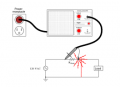
Perhaps a drawing would help:

1657996822398.png

1657996731031.png
 

Thread Starter

MarcosKDC

Joined Sep 10, 2021
67
No.
We keep saying, forget the capacitance thing.

Know your grounds!

If your PSU outputs both positive and negative voltages do not connect the scope ground until you are certain that you know what you are doing.

For audio testing you don’t need to connect the scope ground. (Of course this needs clarification because you can be sure that someone is going to jump on me for saying this.)
Man I can't know the real ground path without unmounting the equipment or undoing the schematic... Unless I force it to ground...

I know that when I have an isolated circuit, if I connect ground to any part, that will be ground referenced, anyway no current should flow other than high frequency one as long as I understand, this is done in the output of microwaves transformers
 

Thread Starter

MarcosKDC

Joined Sep 10, 2021
67
Let's get down to ground basics.

(We are assuming that the following statements are verified to be correct.)

1) Your AC wall outlet has a ground connection that is bonded to earth ground.
2) Your oscilloscope is connected to the AC wall outlet ground via the grounded power cable.
3) Your oscilloscope probe ground clip is connected to the oscilloscope ground via the shielded coax cable.
4) Your oscilloscope and probe measures voltages with reverence to oscilloscope ground.
5) If you connect the probe ground to some point that is not already at earth ground then you can potentially create a short circuit which can result in damaged equipment.

Perhaps a drawing would help:

View attachment 271568

View attachment 271569
Thanks man, I knew it since I've seen Dave's video. At work we already have isolated tps2000 series
 

Thread Starter

MarcosKDC

Joined Sep 10, 2021
67
If you see a spark when you connect the ground something is wrong.
Do you understand this?
I understand that there's some capacitance there if you please explain that i'll be grateful.
Most commercial power supplys negative output is isolated unless you tie it to ground. I guess that you mean that I should ground it in some other way but not through the scope.
 

MrChips

Joined Oct 2, 2009
34,828
I understand that there's some capacitance there if you please explain that i'll be grateful.
There is capacitance everywhere.
But this has nothing to do with whether or not you see a spark.
When you connect the ground of the scope probe to your circuit there should be no spark. If there is then there is something wrong.
Most commercial power supplys negative output is isolated unless you tie it to ground. I guess that you mean that I should ground it in some other way but not through the scope.
You have a huge misunderstanding about power supplies.

Let us begin with a laboratory bench power supply.
A bench power supply can be "isolated" or "non-isolated" or what we say "floating" or "non-floating".
Know your power supply.

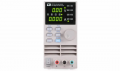
1658003395562.png

Many power supplies have three terminals marked +, - and GND.
Negative sign does not mean that this is a negative voltage.
This is a single output power supply.
The positive terminal has a positive voltage with respect to the negative terminal.
The negative terminal has a negative voltage with respect to the positive terminal.

You need to check and confirm that the PSU is a floating PSU!

As another member said, if you connected the ground clip of the probe to the negative output of your ATX PSU you will see sparks and something will blow.

(Still to come. We will show you how to ground your power supply.)
 

Thread Starter

MarcosKDC

Joined Sep 10, 2021
67
There is capacitance everywhere.
But this has nothing to do with whether or not you see a spark.
When you connect the ground of the scope probe to your circuit there should be no spark. If there is then there is something wrong.

You have a huge misunderstanding about power supplies.

Let us begin with a laboratory bench power supply.
A bench power supply can be "isolated" or "non-isolated" or what we say "floating" or "non-floating".
Know your power supply.

View attachment 271571

Many power supplies have three terminals marked +, - and GND.
Negative sign does not mean that this is a negative voltage.
This is a single output power supply.
The positive terminal has a positive voltage with respect to the negative terminal.
The negative terminal has a negative voltage with respect to the positive terminal.

You need to check and confirm that the PSU is a floating PSU!

As another member said, if you connected the ground clip of the probe to the negative output of your ATX PSU you will see sparks and something will blow.

(Still to come. We will show you how to ground your power supply.)
I think I explained myself enough, thanks for your help but I don't see this is getting anywhere
 

MrChips

Joined Oct 2, 2009
34,828
Do you understand that your ATX power supply is non-isolated?
Do you understand that you cannot connect the probe ground to the negative output of the power supply?
 

Thread Starter

MarcosKDC

Joined Sep 10, 2021
67
Do you understand that your ATX power supply is non-isolated?
Do you understand that you cannot connect the probe ground to the negative output of the power supply?
I do, I don't understand why most of you understood that I've been connecting the scope to the -12V output of the PSU... I didn't.

When I said I'm grounding the negative output of my (I THINK) isolated psu I mean that I'm grounding the blue output of my Peaktech 6226 Lab PSU with a minus sign on it.

Even though you say there's isn't negative voltage present on the negative output of the psu I could measure -7V "unloaded" (they rapidly fall when I connect my dmm due to it's internal resistance)

I think this is like this because I could measure that ground is the midpoint of positive and negative through the 230nF capacitances I mentioned before.

I guess sparks happen due to the discharge of the capacitance when connecting the grounf of the scope to the negative output of the psu as the output voltage will be shared by both capacitances when turned on...

I think the problem is that I have to ground that ouput via the ground connector of the psu, not the ground of the osciloscope... But I think there might be some sparks anyway...

I guess the solution is either one of this or both:

1-Ground the psu with it's own connector instead of the scope's gnd crocodile. I thought this was bad and didn't do it in first tries because of dave's video. But I guess this is only if you want to do differential measures with normal probes... I've been already told that with High frequencies that would not work that well due to the capacitances present everywhere.

2-ONLY VALID IF PSU IS ISOLATED (IF IT ISN'T WOULD JUST PROBE ON A GROUND REFERENCED CONDUCTOR ) Discharge the capacitance mentioned, between scope's gnd and the point you want to use as reference.

I also directly probed without connecting the scope's ground to check which was the floating voltage on the outputs, first I got 0V by only probing negative, and as soon I connect positive the output voltage is shared between both, this is also forzed by the voltage divider made inside the scope. I guess the reading of the negative output goes to 0 due to the loading caused by the scope, but when connected to both outputs the actual power supply sees the oscope input resistances in series (with gnd in the middle) as a load... Am I wrong?
 

tautech

Joined Oct 8, 2019
498
Man I can't know the real ground path without unmounting the equipment or undoing the schematic... Unless I force it to ground...
STOP, think and apply what you see with just a DMM. Circuit GND to Mains Gnd do you have any difference ?
Connecting a scope probe reference lead to an elevated circuit GND is a GND loop and can fuse stuff !
A-B differential probing can work around this as can purchasing a differential probe.
 

MrChips

Joined Oct 2, 2009
34,828
Yes, you are wrong in so many ways.

I have repeatedly said, ignore capacitance and resistance for the moment.
Focus on the difference between isolated and non-isolated circuits.

Forget about differential voltage measurements for the moment.

You need a solid grounding (pun intended) on what is ground.
Don't make the mistake of thinking that you know everything. That is why you are here.
We are here to explain everything as clearly as possible. You need to be patient and take one step at a time.

If you don't understand we can modify the discussion in order to make sure that you have no misunderstanding.

Maybe we can take a step back and review the proper application of a DMM.
 

Thread Starter

MarcosKDC

Joined Sep 10, 2021
67
STOP, think and apply what you see with just a DMM. Circuit GND to Mains Gnd do you have any difference ?
Connecting a scope probe reference lead to an elevated circuit GND is a GND loop and can fuse stuff !
A-B differential probing can work around this as can purchasing a differential probe.
Yes, I'm doing what you tell me, and I get the ground loop thing, I've seen some videos it what The main problem is that so many people telling me different but similar things is getting me confused...

Instead of buying a differential probe (which is quite expensive for me now), would it be wrong if I do the isolated supply thing if I'm working with frequencies <100kHz? Always discharging the measured capacitances first? I guess I can calculate the current leak by knowing the capacitance voltage and frequency there, right? I'm just confused because dave says that's ok in the video but I'm not getting the same oppinion by the people in here...
I think I'm explaining myself as correctly as I can and that I know what I'm doing, but seeing so much many people worried makes me scared
 

Thread Starter

MarcosKDC

Joined Sep 10, 2021
67
Yes, you are wrong in so many ways.

I have repeatedly said, ignore capacitance and resistance for the moment.
Focus on the difference between isolated and non-isolated circuits.

Forget about differential voltage measurements for the moment.

You need a solid grounding (pun intended) on what is ground.
Don't make the mistake of thinking that you know everything. That is why you are here.
We are here to explain everything as clearly as possible. You need to be patient and take one step at a time.

If you don't understand we can modify the discussion in order to make sure that you have no misunderstanding.

Maybe we can take a step back and review the proper application of a DMM.
Okay man, if u just want me to use my house grounding I'll use it, no problem, but I don't really see the explanation behind... What is the difference between grounding to my Psu's negative terminal and a battery powered device negative terminal if that's what you will finally tell me?
 

tautech

Joined Oct 8, 2019
498
Yes, I'm doing what you tell me, and I get the ground loop thing, I've seen some videos it what The main problem is that so many people telling me different but similar things is getting me confused...

Instead of buying a differential probe (which is quite expensive for me now), would it be wrong if I do the isolated supply thing if I'm working with frequencies <100kHz? Always discharging the measured capacitances first? I guess I can calculate the current leak by knowing the capacitance voltage and frequency there, right? I'm just confused because dave says that's ok in the video but I'm not getting the same oppinion by the people in here...
I think I'm explaining myself as correctly as I can and that I know what I'm doing, but seeing so much many people worried makes me scared
STOP and listen to all us experienced are telling you !
You mention this capacitance thing, throw this misunderstanding away !
Trust your DMM, DC and AC measurements.

If you cannot afford a differential probe at least learn how to use 2 channels with a A minus B differential measurement.
There are 3 issues here, your life, your equipment and your DUT.
 

Thread Starter

MarcosKDC

Joined Sep 10, 2021
67
STOP and listen to all us experienced are telling you !
You mention this capacitance thing, throw this misunderstanding away !
Trust your DMM, DC and AC measurements.

If you cannot afford a differential probe at least learn how to use 2 channels with a A minus B differential measurement.
There are 3 issues here, your life, your equipment and your DUT.
I am listening to you but I keep not getting the point of all the warnings without explaining why or what's behind...
I can throw it away the misunderstanding if you explain, but for the moment I have that or nothing...
 
Top