Facebook
 Google
 GitHub
 Linkedin

Hi,
I have recently purchased an amplifier module based on the TDA8950 device from eBay and am experiencing distortion at all output levels.
(eBay: http://www.ebay.co.uk/itm/252534422644)
The module includes a bridge rectifier and smoothing caps and only requires a (stated) 22V-0-22V AC supply.
The circuit board does not appear to have any form of voltage regulation and according to the NXP spec sheet the device can handle a wide range of supply voltages from ±12.5 (min) ±35 (typ) ±40 (max).
(NXP spec sheet here: http://www.nxp.com/documents/data_sheet/TDA8950.pdf
I have a been powering it with a toroidal transformer supplying ±30V AC.
When I first set it up on the bench I connected it to a small set of 4.8Ω speakers and fed it with a line level signal from a CD player. At all volume levels there is distortion.
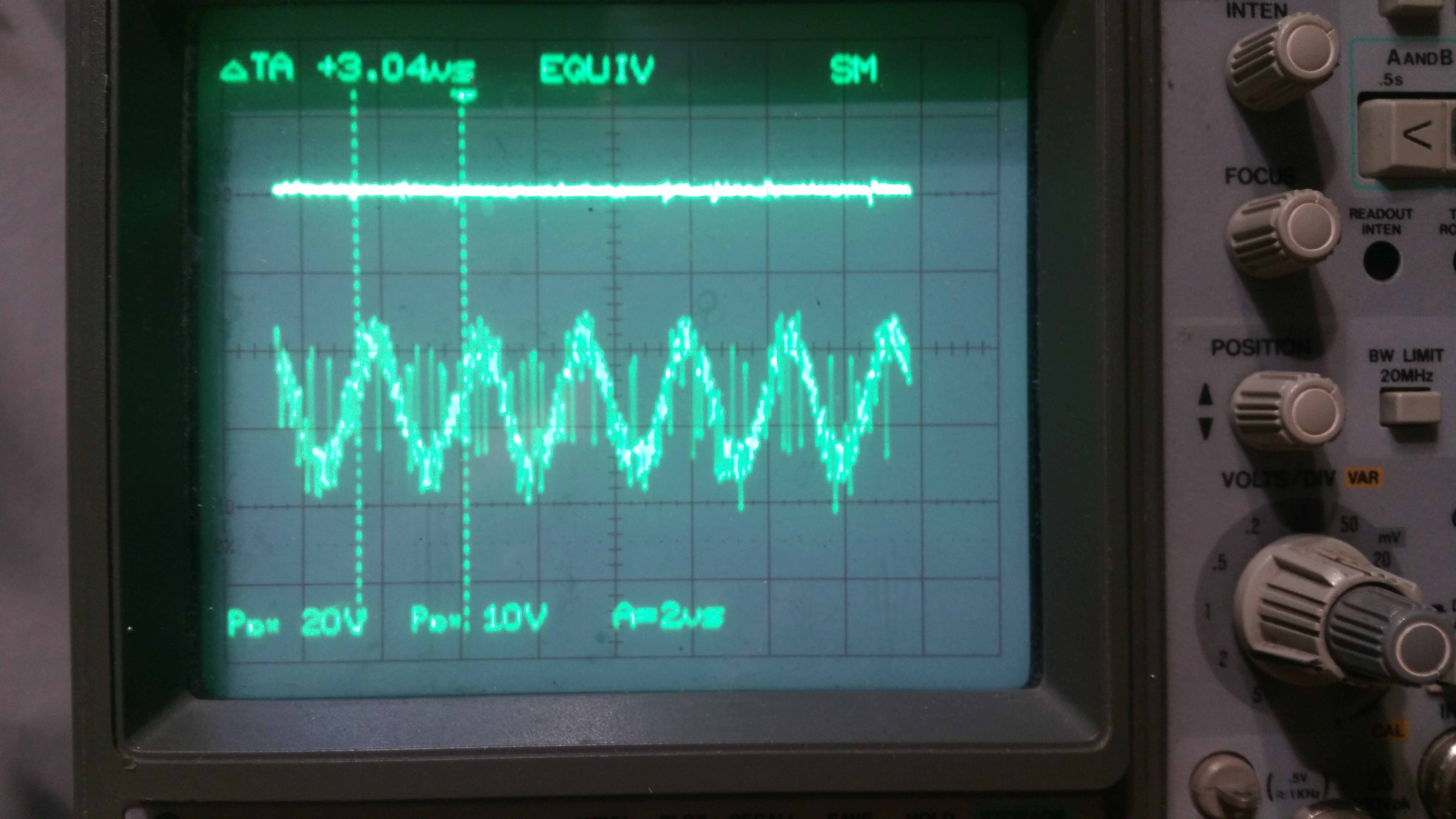
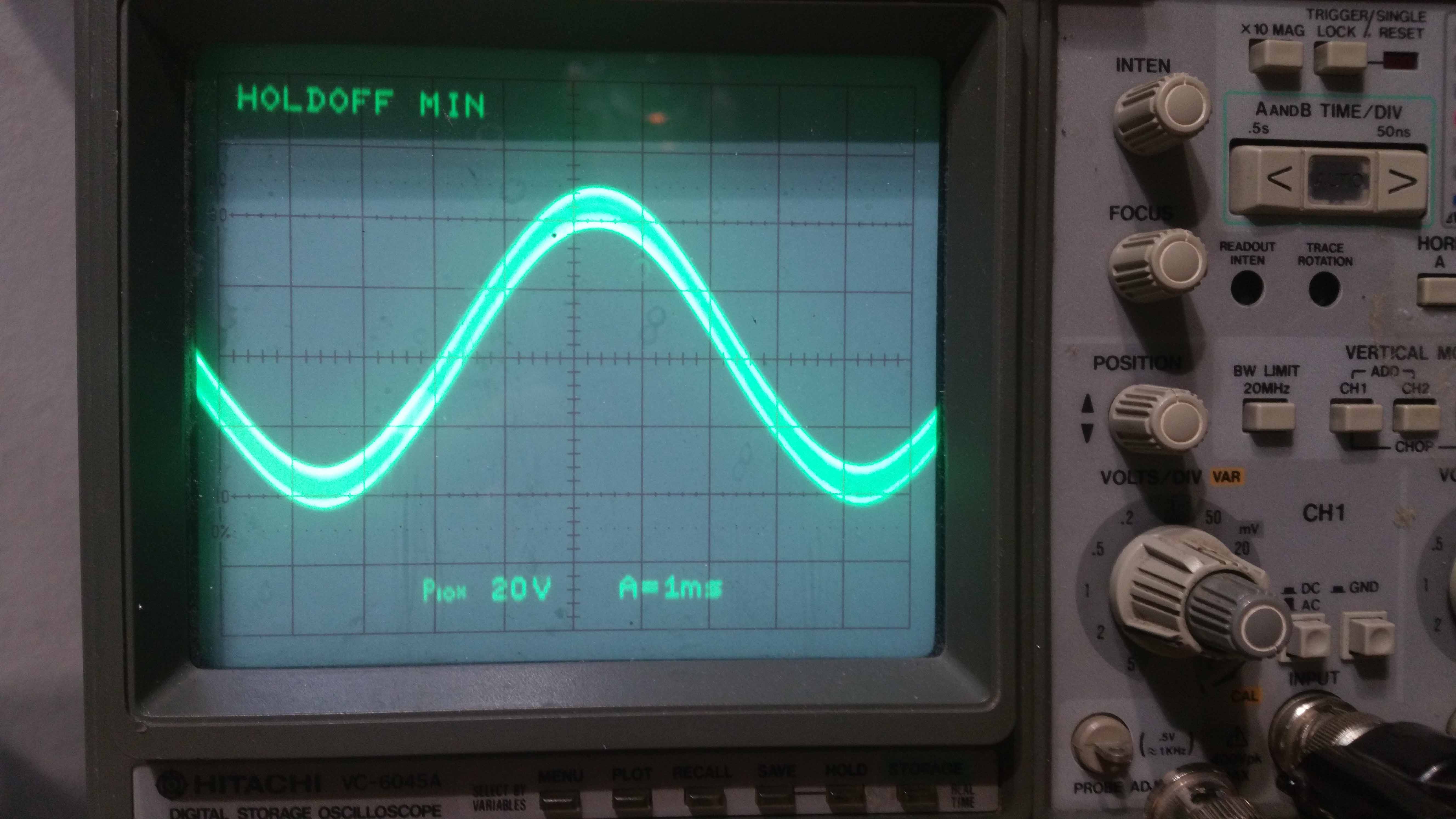
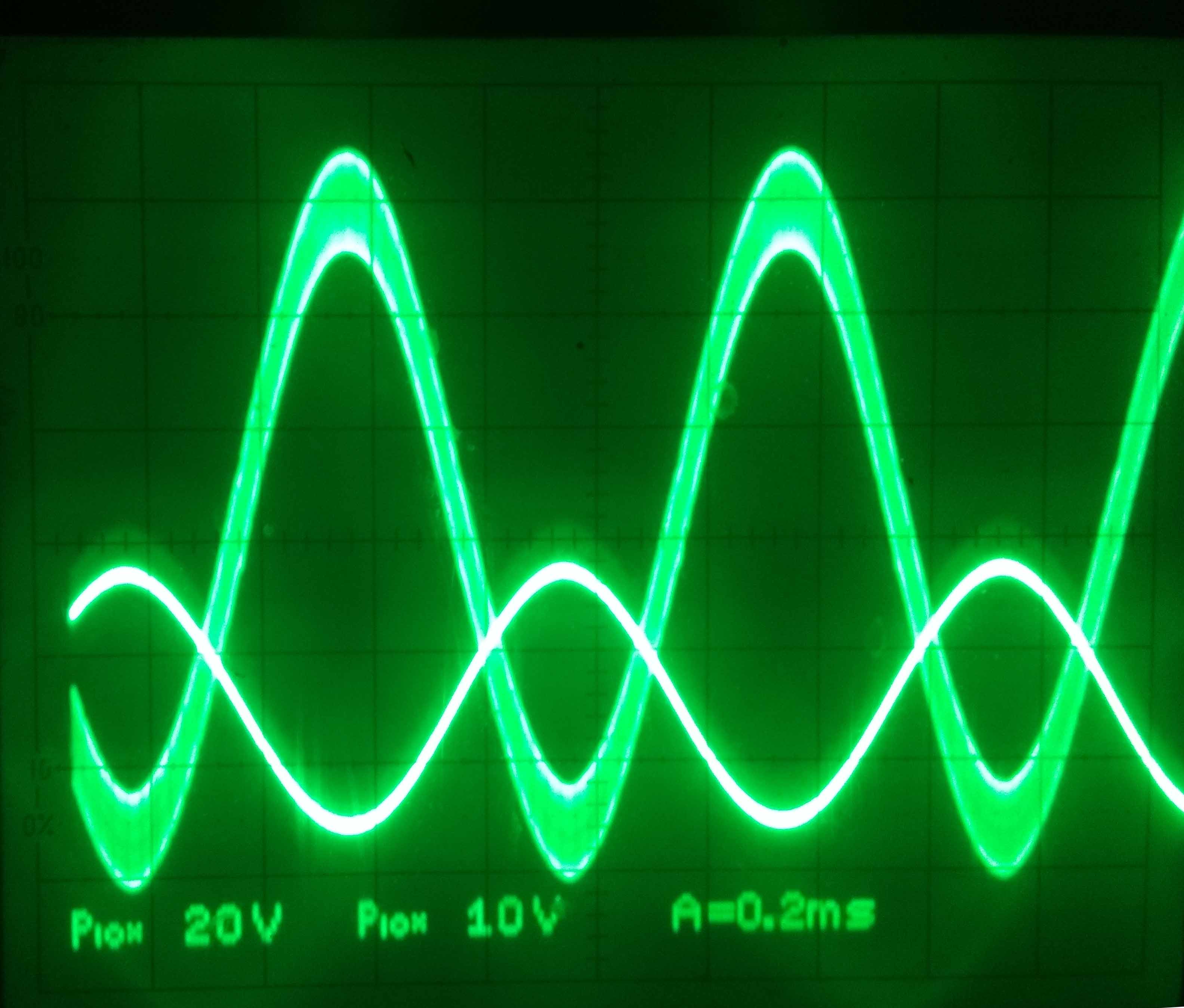
If I set up the amplifier with a signal generator producing a 1KHz test tone at 0.4V and drive 4.7Ω power resistors (or the speakers) and look at the input and output signals on an oscilloscope the output trace apears ‘fat’ when compared to the input. The output is not clipping - although that can be achieved.
The user connections on the board are:
AC Power In: 22V-0-22V AC
Signal Input: (via what looks like a JST type connector) Left-Ground-Right
Outputs: Out-L+GND & Out-R+GND
There was no supporting paperwork supplied with the module. (I have briefly described the problem to the Chinese supplier and their brief response was “friend, could you check your connect and try it again”)
Any ideas and thoughts would be most welcome.
Thanks
Mods: Please forgive me if this thread is in the wrong forum - please move if required.
I have recently purchased an amplifier module based on the TDA8950 device from eBay and am experiencing distortion at all output levels.
(eBay: http://www.ebay.co.uk/itm/252534422644)
The module includes a bridge rectifier and smoothing caps and only requires a (stated) 22V-0-22V AC supply.
The circuit board does not appear to have any form of voltage regulation and according to the NXP spec sheet the device can handle a wide range of supply voltages from ±12.5 (min) ±35 (typ) ±40 (max).
(NXP spec sheet here: http://www.nxp.com/documents/data_sheet/TDA8950.pdf
I have a been powering it with a toroidal transformer supplying ±30V AC.
When I first set it up on the bench I connected it to a small set of 4.8Ω speakers and fed it with a line level signal from a CD player. At all volume levels there is distortion.
If I set up the amplifier with a signal generator producing a 1KHz test tone at 0.4V and drive 4.7Ω power resistors (or the speakers) and look at the input and output signals on an oscilloscope the output trace apears ‘fat’ when compared to the input. The output is not clipping - although that can be achieved.
The user connections on the board are:
AC Power In: 22V-0-22V AC
Signal Input: (via what looks like a JST type connector) Left-Ground-Right
Outputs: Out-L+GND & Out-R+GND
There was no supporting paperwork supplied with the module. (I have briefly described the problem to the Chinese supplier and their brief response was “friend, could you check your connect and try it again”)
Any ideas and thoughts would be most welcome.
Thanks
Mods: Please forgive me if this thread is in the wrong forum - please move if required.