Facebook
 Google
 GitHub
 Linkedin


Your accused, because many of your objections are.I’ve tried explaining why it’s not as simple as you seem to think it is but get accused of bringing up straw man arguments.
And I've explained why it's not a complex as you seem to think it is,
I believe I've answered all your other straw-man objections.
Yes, there are expensive track sensors, and naturally your example uses the most expensive, but the TS wanted cheap and that's what I am proposing.One track sensor is available commercially for $15-$20.
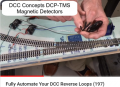
Inexpensive, small reed switches laid below the track (which can be covered by a thin layer of ballasting to hide them) along with a strong magnet glued to the bottom of the engine are being used (as in the YouTube video below).
It's simple and requires no additional circuitry to interface to my circuit.
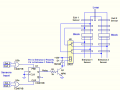
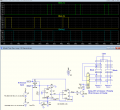
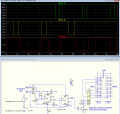
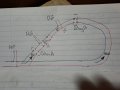
So, for a one-way loop, it requires a magnet per locomotive, two reed switches, one cheap IC, and a DPDT relay with a one-transistor driver.
For a two-way loop it requires two more reed switches and an additional cheap IC.
Perhaps that seems too crude for your model railroader sensibilities, and it hasn't been designed by one of your model railroader EE's, but it's a valid option for a low cost sensor and controller for a reversing loop.
It the TS doesn't want to use it, I'm fine with that, but let's hear from him before you continue in you dogged attempts to pour cold water on the concept.