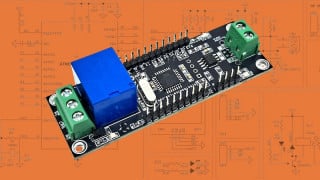
I bought a new L298N module to drive my stepper motor and after running(only around 10rpm) for 10 seconds, 12V Power, i smelled the magic smoke out of the L298N IC and the IC is burning hot .
I think i'll give up on this stepper motor and look for spare dc motors instead.... BTW i am making an electric turntable for my wife .
haha
I bought a new L298N module to drive my stepper motor and after running(only around 10rpm) for 10 seconds, 12V Power, i smelled the magic smoke out of the L298N IC and the IC is burning hot .
I think i'll give up on this stepper motor and look for spare dc motors instead.... BTW i am making an electric turntable for my wife .
haha
I suggested the solution back in post #14.
The unfortunate reality is that the driver you have is not able to be set to the low current that the motor should have.
"Wishing it did have that ability will not make it so!! No matter how hard you wish!!
If the 24 volts is from an external power supply, then put the resistor in series with the 24 volt positive.
If the 24 volts is from a supply in the driver, put a resistor in series with each of the two motor windings.
MAX can wish for the required setting to be available on the driver, but that will not cause it to be available.
I am using an arduino to move the stepper, and i am using a stepper library which is PWM, i am confused because using the DQ860HA @24V will make the stepper motor overheat but if i use the L298N module at @12V , the L298N IC overheats.
Both drivers are PWM.
I suggested the solution back in post #14.
The unfortunate reality is that the driver you have is not able to be set to the low current that the motor should have.
"Wishing it did have that ability will not make it so!! No matter how hard you wish!!
If the 24 volts is from an external power supply, then put the resistor in series with the 24 volt positive.
If the 24 volts is from a supply in the driver, put a resistor in series with each of the two motor windings.
MAX can wish for the required setting to be available on the driver, but that will not cause it to be available.
I bought a new L298N module to drive my stepper motor and after running(only around 10rpm) for 10 seconds, 12V Power, i smelled the magic smoke out of the L298N IC and the IC is burning hot .
I think i'll give up on this stepper motor and look for spare dc motors instead.... BTW i am making an electric turntable for my wife .
haha
It can be done quite easily with the L298, but in conjunction with a L297 translator IC This way you can set the correct motor current for NEMA17 size, and also juse use simple single pulse control for RPM.
See L297 spec sheet.
You will not need PWM, just a pulse.
BTW, the popular board sold with the L2898 mounted, does not have the output for the current monitoring resistors that are need when using the L297, it can be modified with care however.
If you need the circuit. let me know.
Trouble with the L297 is that it's hellishly expensive now unless you're willing to risk buying from eBay. You can get 3 or more A4988 or TMC2208 driver modules, for the price of one legit L297 from Mouser! And you don't need the L298 module or the ancilliary parts!

 Facebook
 Google
 GitHub
 Linkedin