Facebook
 Google
 GitHub
 Linkedin
Hello ST Community,
I am working on a commercial vending machine controller and would like to get feedback from ST engineers and experienced STM32 designers regarding a system architecture change.
Problem Statement
The current single-MCU design is constrained by:
These constraints are no longer addressable through software optimization alone and are limiting both scalability and reliability. This has led us to consider a multi-MCU architecture.
Proposed Architecture
Master MCU
Inter-MCU Communication
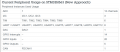
A block-level architecture diagram has been attached for reference.
Points for Discussion
I would appreciate feedback from:
Developers with multi-MCU STM32 designs
Anyone with experience in CAN-based industrial / appliance systems
Thank you in advance for your insights.
Best regards,
Praveen Kumar G,
Boatload Minds Pvt Ltd.
I am working on a commercial vending machine controller and would like to get feedback from ST engineers and experienced STM32 designers regarding a system architecture change.
Problem Statement
The current single-MCU design is constrained by:
- Timer availability, particularly for stepper and DC motor control
- GPIO interrupt count, driven by sensors and safety inputs
- GPIO pin availability, limiting further expansion
- Increasing real-time jitter when multiple loads operate simultaneously
These constraints are no longer addressable through software optimization alone and are limiting both scalability and reliability. This has led us to consider a multi-MCU architecture.
Proposed Architecture
Master MCU
- Device: STM32H563ZIT6
- Responsibilities:
- All sensor acquisition (ADC and digital)
- Control logic and system state machine
- Recipe execution and sequencing
- Safety checks and fault handling
- Communication with UI/HMI
- The master MCU does not generate direct motor timing signals.
- Dedicated load-handling controllers
- One MCU for stepper motor control
- One MCU for DC motor / PWM-based load control
- Slave MCUs perform only deterministic actuation
- No sensor acquisition and no business logic are implemented on slaves
Inter-MCU Communication
- Primary option: CAN (FDCAN), chosen for arbitration, fault handling, and robustness
- Secondary option: RS485, considered for lower-priority or legacy expansion
A block-level architecture diagram has been attached for reference.
Points for Discussion
- Is this master + load-slave MCU architecture a suitable long-term solution for vending machine or appliance-class products?
- From an STM32 architectural perspective, are there recommended design patterns for systems with heavy timer and interrupt usage?
- CAN vs RS485 for multi-MCU control:
- CAN appears preferable for arbitration and fault handling
- Are there any STM32H5-specific considerations or limitations?
- What are the common pitfalls in such systems (boot sequencing, synchronization, fault recovery, debugging) that should be addressed early?
- From a product lifetime perspective (8–10 years), does this architecture appear robust and maintainable?
I would appreciate feedback from:
Developers with multi-MCU STM32 designs
Anyone with experience in CAN-based industrial / appliance systems
Thank you in advance for your insights.
Best regards,
Praveen Kumar G,
Boatload Minds Pvt Ltd.