Steampunk Nixie Tube Clock Help with meter face

Thread Starter

daddyfredregill

Joined Mar 29, 2017
31
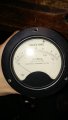
I am in the process of making a steampunk nixie tube clock. I am brainstorming ideas. I found a really cool old analog meter face that i would love to use. I would love it if the needle would go up and down randomly like power surging and dropping. I have no experience in this. So this is totally up to the people on this forum. I can make the neddle go up and stay. The meter face range is -5 to 5v. It is wierd though, if i set my dc power supply to 5v it pegs the needle. It has a very low short range where you can adjust it up and down. The range is .4v to .8v. Again I have no clue how this could work, i leave it up to the community. I will try to leave some pics of it. Thanks again to anyone that can help.
20170329_144143.jpg
20170329_144151.jpg
 
Your meter is for AC voltages, like that which comes in from you electrical outlets, not DC voltages. That is why it shows RMS.

Also, the range is from 0.5 - 5 V rms. There is another scale just below the first that gives readings in a different unit all together, - 5 to +15 dB, or deciBels.
 

Thread Starter

daddyfredregill

Joined Mar 29, 2017
31
Your meter is for AC voltages, like that which comes in from you electrical outlets, not DC voltages. That is why it shows RMS.

Also, the range is from 0.5 - 5 V rms. There is another scale just below the first that gives readings in a different unit all together, - 5 to +15 dB, or deciBels.
I saw that but when i put it on AC it pegs the needle and the neddle vibratez back and forth really fast. Does not look right.
 

Travm

Joined Aug 16, 2016
363
I am in the process of making a steampunk nixie tube clock. I am brainstorming ideas. I found a really cool old analog meter face that i would love to use. I would love it if the needle would go up and down randomly like power surging and dropping. I have no experience in this. So this is totally up to the people on this forum. I can make the neddle go up and stay. The meter face range is -5 to 5v. It is wierd though, if i set my dc power supply to 5v it pegs the needle. It has a very low short range where you can adjust it up and down. The range is .4v to .8v. Again I have no clue how this could work, i leave it up to the community. I will try to leave some pics of it. Thanks again to anyone that can help.
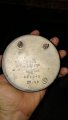
View attachment 123627
View attachment 123626
This reminds me of a project i'm working on where i'm trying to read the current in a system. I'm actually reading the voltage drop across a resistor which varies based on voltage and is related to the current in the circuit.
I've run a 2 ohm resistor in series with my load then connected either end of this to a general purpose opamp which amplifies the difference and outputs to an analogue input on my MCU.

If you do something like this, and just have your MCU output a PWM signal, through an RC filter, into a resistor to ground then connect your meter in front of the resistor, other end to ground and use the MCU pwm signal to make the needle move around. You can do the math or just simulate it in LTspice to get your component values. For added effect hook up some LED's to this pwm circuit as well tuned to dim and brighten as the needle bounces around.
 

Thread Starter

daddyfredregill

Joined Mar 29, 2017
31
This reminds me of a project i'm working on where i'm trying to read the current in a system. I'm actually reading the voltage drop across a resistor which varies based on voltage and is related to the current in the circuit.
I've run a 2 ohm resistor in series with my load then connected either end of this to a general purpose opamp which amplifies the difference and outputs to an analogue input on my MCU.

If you do something like this, and just have your MCU output a PWM signal, through an RC filter, into a resistor to ground then connect your meter in front of the resistor, other end to ground and use the MCU pwm signal to make the needle move around. You can do the math or just simulate it in LTspice to get your component values. For added effect hook up some LED's to this pwm circuit as well tuned to dim and brighten as the needle bounces around.
I kind of get some of this, but again like i said in the post i am not very circuit smart i get some basic stuff but i will have to leave it to the community. If you would go into mote detail that would be awsome. But if not thanks for the input
 

Thread Starter

daddyfredregill

Joined Mar 29, 2017
31
R
This reminds me of a project i'm working on where i'm trying to read the current in a system. I'm actually reading the voltage drop across a resistor which varies based on voltage and is related to the current in the circuit.
I've run a 2 ohm resistor in series with my load then connected either end of this to a general purpose opamp which amplifies the difference and outputs to an analogue input on my MCU.

If you do something like this, and just have your MCU output a PWM signal, through an RC filter, into a resistor to ground then connect your meter in front of the resistor, other end to ground and use the MCU pwm signal to make the needle move around. You can do the math or just simulate it in LTspice to get your component values. For added effect hook up some LED's to this pwm circuit as well tuned to dim and brighten as the needle bounces around.
Really like the idea though
 

Travm

Joined Aug 16, 2016
363
I kind of get some of this, but again like i said in the post i am not very circuit smart i get some basic stuff but i will have to leave it to the community. If you would go into mote detail that would be awsome. But if not thanks for the input
are you using a microcontroller?

Probably an Arduino, which unfortunately i have 0 experience with. But if you know how to make a PWM output that would be a start.
 

Thread Starter

daddyfredregill

Joined Mar 29, 2017
31
are you using a microcontroller?

Probably an Arduino, which unfortunately i have 0 experience with. But if you know how to make a PWM output that would be a start.
I am not using anything for the meter face just a variable power supply. I know nothing about the noxie clock i bought. It has no instructions. I know it is using a pic16f chip
 

Travm

Joined Aug 16, 2016
363
I am not using anything for the meter face just a variable power supply. I know nothing about the noxie clock i bought. It has no instructions. I know it is using a pic16f chip
Is the pic pre-programmed?

If you can modify the programming and have an available PWM output on the pic the circuit wouldnt be very difficult.

You could also make a more complicated circuit with a 555 timer, but that is somewhat beyond me at this point.
 

Thread Starter

daddyfredregill

Joined Mar 29, 2017
31
Is the pic pre-programmed?

If you can modify the programming and have an available PWM output on the pic the circuit wouldnt be very difficult.

You could also make a more complicated circuit with a 555 timer, but that is somewhat beyond me at this point.
Yes it is preprogrammed pic for the clock and i dont know if it has a pwm output on it. I have no way of programming it
 

Thread Starter

daddyfredregill

Joined Mar 29, 2017
31
I
Is the pic pre-programmed?

If you can modify the programming and have an available PWM output on the pic the circuit wouldnt be very difficult.

You could also make a more complicated circuit with a 555 timer, but that is somewhat beyond me at this point.
Found an easy circuit for pwm using a 555 timer and a potentiometer.
 

Travm

Joined Aug 16, 2016
363
I

Found an easy circuit for pwm using a 555 timer and a potentiometer.
I expect there is a way to modify it so rather than use a potentiometer it varies the PWM signal in some pattern that might appear as though it is randomly moving around. 555 timers are not something i have ever used.

have you ever used LTspice?
 

Thread Starter

daddyfredregill

Joined Mar 29, 2017
31
I expect there is a way to modify it so rather than use a potentiometer it varies the PWM signal in some pattern that might appear as though it is randomly moving around. 555 timers are not something i have ever used.

have you ever used LTspice?
No i have not used it
 

Travm

Joined Aug 16, 2016
363
No i have not used it
If you attempt the PWM route, you should download it and play around. It lets you simulate your circuit, and change values of components.
You want a variable voltage output between .4 and .8.
I expect you can simulate the 555 timer circuit also, which will help you find the correct schematic.
Maybe someone else with more time could help you try to simulate this, as i'm not familiar with 555's I wont likely be able to find the time to sort that all out and simulate it for you.
 

Thread Starter

daddyfredregill

Joined Mar 29, 2017
31
If you attempt the PWM route, you should download it and play around. It lets you simulate your circuit, and change values of components.
You want a variable voltage output between .4 and .8.
I expect you can simulate the 555 timer circuit also, which will help you find the correct schematic.
Maybe someone else with more time could help you try to simulate this, as i'm not familiar with 555's I wont likely be able to find the time to sort that all out and simulate it for you.
Thanks for your help, so does anybody else have any ideas how i could make this work without programmig a pic or arduino? Just with 555 timers?
 

marcf

Joined Dec 29, 2014
299
There is an excellent tutorial in ACC about milliammeters


This on has an extra 'h' for some reason
https://www.allaboutcircuits.com/textbook/direct-current/chhpt-8/ammeter-design/

All ammeters of this type only measure DC. The original installation (nice meter by the way) no doubt included a series resistance, and a diode.

In the above tutorial, you can find out how to measure the internal resistance of the meter and how to use it to measure either AC or DC volts or amps.

If the internal resistance of your meter is, say 600 ohms and its full scale deflection occurs with 1 ma flowing thru it, according to Mr Ohm and his famous law, if 0.6VDC is applied, 0.6v divided by 600 ohms should result in 1ma of current thru the meter, resulting in a full scale deflection of the meter.

Further if 0db into 600 ohms (1mw) is equal to 0.776 Vrms, you should be able to work out how much voltage (with the appropriate series resistance needs to be applied for the meter to deflect to the 0db point.

Applying 5.0v dc is about 10 times too much, and could result in destroying the meter.

Also applying an AC voltage to the meter would cause it to try and deflect one way and then the other. In the case of 60 Hz, a current reversal of 60 times per second.

Please review the excellent tutorial referenced above, it will tell you everything you need to know.

Do you know anything more about this meter? When was it made, by who?
 
Last edited:

AnalogKid

Joined Aug 1, 2013
12,050
I found a really cool old analog meter face that i would love to use.
Been a looooong time since I've seen a meter with a linear dB scale. You have a rare, classic part.

With a battery and some resistors you can figure out what it takes to drive the meter within its normal range. Next, look into an LFSR - Linear Feedback Shift Register. This is a relatively simple circuit for generating random bit patterns. With a 555 clock (or a 1-second tick from the clock circuit) and the right resistors, your meter will step around randomly.

ak
 
Last edited:

Thread Starter

daddyfredregill

Joined Mar 29, 2017
31
Been a looooong time since I've seen a meter with a linear dB scale. You have a rare, classic part.

With a battery and some resistors you can figure out what it takes to drive the meter within its normal range. Next, look into an LFSR - Linear Feedback Shift Register. This is a relatively simple circuit for generating random bit patterns. With a 555 clock (or a 1-second tick from the clock circuit) and the right resistors, your meter will step around

randomly.


sk
Thanks
 

Thread Starter

daddyfredregill

Joined Mar 29, 2017
31
There is an excellent tutorial in ACC about milliammeters

https://www.allaboutcircuits.com/textbook/direct-current/chhpt-8/ammeter-design/

All ammeters of this type only measure DC. The original installation (nice meter by the way) no doubt included a series resistance, and a diode.

In the above tutorial, you can find out how to measure the internal resistance of the meter and how to use it to measure either AC or DC volts or amps.

If the internal resistance of your meter is, say 600 ohms and its full scale deflection occurs with 1 ma flowing thru it, according to Mr Ohm and his famous law, if 0.6VDC is applied, 0.6v divided by 600 ohms should result in 1ma of current thru the meter, resulting in a full scale deflection of the meter.

Further if 0db into 600 ohms (1mw) is equal to 0.776 Vrms, you should be able to work out how much voltage (with the appropriate series resistance needs to be applied for the meter to deflect to the 0db point.

Applying 5.0v dc is about 10 times too much, and could result in destroying the meter.

Also applying an AC voltage to the meter would cause it to try and deflect one way and then the other. In the case of 60 Hz, a current reversal of 60 times per second.

Please review the excellent tutorial referenced above, it will tell you everything you need to know.

Do you know anything more about this meter? When was it made, by who?
Thanks for the info. The link you provided seems to be broken. I have decided to buy an arduino and use the pwm ouput, run a series resistor with the meter and write a random script program. Hope that works. I would like to read that thread you posted. Could you link it again?
 

marcf

Joined Dec 29, 2014
299
Try this one:
https://www.allaboutcircuits.com/textbook/direct-current/chpt-8/ammeter-design/
Thanks for the info. The link you provided seems to be broken. I have decided to buy an arduino and use the pwm ouput, run a series resistor with the meter and write a random script program. Hope that works. I would like to read that thread you posted. Could you link it again?


Try this one:
https://www.allaboutcircuits.com/textbook/direct-current/chpt-8/ammeter-design/
 
Top