Facebook
 Google
 GitHub
 Linkedin
170v SUPPLY FOR NIXIE TUBES - How to use this circuit to supply Incandescent Bulb?
How to open MOSFET transistor more?
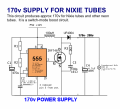
It is NE555 THE ASTABLE (or FREE RUNNING) MULTIVIBRATOR used in this
circuit.
https://drive.google.com/file/d/1z4E-Hyh9ck2qWItH1X43xpZRKHtxjQuB/view?usp=drive_link
I don't have the exact 2n2 valued capacitor.
By calculation from the original diagram the frequency should be:
F = 30.303 kHz
R1 = 1K Fixed
R2 = 10K
C1, 222, 2n2 = 2200 pF
F = 30.303 kHz
I used this values of resistors and capacitor I have:
R1 = 1K Fixed
R2 = 18K
C1, 102K, = 1.000 pF
F = 30.303 kHz
I used this formula for frequency calculation:
frequency = 1.4/((R1 + 2R2) x C)
https://drive.google.com/file/d/1mlZ8Qw2mFXQ1fgaJbM8BiflNYbliF_vf/view?usp=drive_link
And I set the exact frequency at:
F = 30.303 kHz
If I use a smaller inductor The Incandescent Bulb shines weakly.
https://drive.google.com/file/d/1elfc_k5bttXwH3uVDK8gOCsOn8bbfFwE/view?usp=drive_link
Transformer whire width
https://drive.google.com/file/d/1rBEiBCUOaaValxUO8qC7ldYAR2FNrAsu/view?usp=drive_link
I didn't measured the ferrite core dimensions I it is necessary I will
send them to the forum.
I didn't count number of windings I it is necessary I will send it to
the forum.
The Incandescent Bulb light intensity
https://drive.google.com/file/d/1bYZW2hd1Hf5zhdfAt1elBcBwm1FIOLH5/view?usp=drive_link
If I use an inductor that I winded manualy The Incandescent Bulb shines
weakly but more brightly.
https://drive.google.com/file/d/1O-y0z0G8UU3I76Wydo4vHX_ZzPjpFpSs/view?usp=drive_link
https://drive.google.com/file/d/1AIOMn07a6ptJP66nXtHlmxXpWumd6DvT/view?usp=drive_link
Transformer whire width
https://drive.google.com/file/d/1fky25SQLJCLrlLTyIRgWR1ESm_QAY_Hk/view?usp=drive_link
I didn't measured the ferrite core dimensions I it is necessary I will
send them to the forum.
I didn't count number of windings I it is necessary I will send it to
the forum.
The Incandescent Bulb light intensity is a little greater.
https://drive.google.com/file/d/1tXbkMEVEfPEMYe8HIGlPhzrU1En_zJSm/view?usp=drive_link
If I try to connect more windings from the inductor that I winded
manualy the Incandescent Bulb light starts to shine at lower and lower
intensity.
I do not know the exact power of The Incandescent Bulb it should be
about 75W or 85W or 100W. It is not written on the product.
If I try to mesure the voltage for DC output for The Incandescent Bulb,
my Multimeter shows irregular unstable value of over 1000 Volts.
My Multimeter maximum value for DC voltage measurement is until 1000V.
My Multimeter maximum value for AC voltage measurement is until 750V.
I understand that this circuit is for Nixie Tube and
a Nixie Tube is smaller power consumer then this The Incandescent Bulb.
Is it possible to modify this circuit to supply this The Incandescent
Bulb?
https://drive.google.com/file/d/1tXbkMEVEfPEMYe8HIGlPhzrU1En_zJSm/view?usp=drive_link
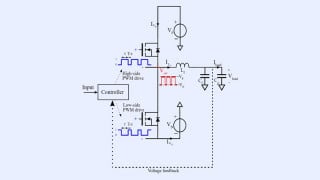
I think this is a simple form of a Switched-mode power supply like
it is used for PC Computer chase power supply? I am not sure.
This circuit diagram is taken from:
https://drive.google.com/file/d/1GI4AKGPGHgZM-80P_qdI6icKrk-_YFFn/view?usp=drive_link
How to open MOSFET transistor more?
It is NE555 THE ASTABLE (or FREE RUNNING) MULTIVIBRATOR used in this
circuit.
https://drive.google.com/file/d/1z4E-Hyh9ck2qWItH1X43xpZRKHtxjQuB/view?usp=drive_link
I don't have the exact 2n2 valued capacitor.
By calculation from the original diagram the frequency should be:
F = 30.303 kHz
R1 = 1K Fixed
R2 = 10K
C1, 222, 2n2 = 2200 pF
F = 30.303 kHz
I used this values of resistors and capacitor I have:
R1 = 1K Fixed
R2 = 18K
C1, 102K, = 1.000 pF
F = 30.303 kHz
I used this formula for frequency calculation:
frequency = 1.4/((R1 + 2R2) x C)
https://drive.google.com/file/d/1mlZ8Qw2mFXQ1fgaJbM8BiflNYbliF_vf/view?usp=drive_link
And I set the exact frequency at:
F = 30.303 kHz
If I use a smaller inductor The Incandescent Bulb shines weakly.
https://drive.google.com/file/d/1elfc_k5bttXwH3uVDK8gOCsOn8bbfFwE/view?usp=drive_link
Transformer whire width
https://drive.google.com/file/d/1rBEiBCUOaaValxUO8qC7ldYAR2FNrAsu/view?usp=drive_link
I didn't measured the ferrite core dimensions I it is necessary I will
send them to the forum.
I didn't count number of windings I it is necessary I will send it to
the forum.
The Incandescent Bulb light intensity
https://drive.google.com/file/d/1bYZW2hd1Hf5zhdfAt1elBcBwm1FIOLH5/view?usp=drive_link
If I use an inductor that I winded manualy The Incandescent Bulb shines
weakly but more brightly.
https://drive.google.com/file/d/1O-y0z0G8UU3I76Wydo4vHX_ZzPjpFpSs/view?usp=drive_link
https://drive.google.com/file/d/1AIOMn07a6ptJP66nXtHlmxXpWumd6DvT/view?usp=drive_link
Transformer whire width
https://drive.google.com/file/d/1fky25SQLJCLrlLTyIRgWR1ESm_QAY_Hk/view?usp=drive_link
I didn't measured the ferrite core dimensions I it is necessary I will
send them to the forum.
I didn't count number of windings I it is necessary I will send it to
the forum.
The Incandescent Bulb light intensity is a little greater.
https://drive.google.com/file/d/1tXbkMEVEfPEMYe8HIGlPhzrU1En_zJSm/view?usp=drive_link
If I try to connect more windings from the inductor that I winded
manualy the Incandescent Bulb light starts to shine at lower and lower
intensity.
I do not know the exact power of The Incandescent Bulb it should be
about 75W or 85W or 100W. It is not written on the product.
If I try to mesure the voltage for DC output for The Incandescent Bulb,
my Multimeter shows irregular unstable value of over 1000 Volts.
My Multimeter maximum value for DC voltage measurement is until 1000V.
My Multimeter maximum value for AC voltage measurement is until 750V.
I understand that this circuit is for Nixie Tube and
a Nixie Tube is smaller power consumer then this The Incandescent Bulb.
Is it possible to modify this circuit to supply this The Incandescent
Bulb?
https://drive.google.com/file/d/1tXbkMEVEfPEMYe8HIGlPhzrU1En_zJSm/view?usp=drive_link
I think this is a simple form of a Switched-mode power supply like
it is used for PC Computer chase power supply? I am not sure.
This circuit diagram is taken from:
https://drive.google.com/file/d/1GI4AKGPGHgZM-80P_qdI6icKrk-_YFFn/view?usp=drive_link