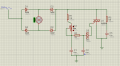
Three methods using SCR (or Triac) .
The phase angle control is not shown, but just requires a fairly simple R/C circuit.
The triac circuit would place a Triac on the AC side and then into a simple bridge rectifier befor the motor.
Three methods using SCR (or Triac) .
The phase angle control is not shown, but just requires a fairly simple R/C circuit.
The triac circuit would place a Triac on the AC side and then into a simple bridge rectifier befor the motor.
It's quite strange because he said that he want to using the pwm to control the DC motor, but you told him something that the parts using with the AC motor?
It's quite strange because he said that he want to using the pwm to control the DC motor, but you told him something that the parts using with the AC motor?
I did without looking close! But it can be done with (a) & also (c) can be used by moving the motor to the SCR1 position and using a triac on the AC side.
I will post some better (DC) examples.
Max.
I did without looking close! But it can be done with (a) & also (c) can be used by moving the motor to the SCR1 position and using a triac on the AC side.
I will post some better (DC) examples.
Max.
I think you should google the key words from you as pwm dc motor, and to pick up some circuit or theory, and make your own, and then if you have any questions just post here again.
I think you should google the key words from you as pwm dc motor, and to pick up some circuit or theory, and make your own, and then if you have any questions just post here again.
The pwm is adjust the duty cycle to reducing the voltage and also reducing the current, if the resistance of load is fixed then I=V/R.
As above theory, so you can reducing the power as to using LM317 to adjust the voltage, and you can also reducing the current to slow down the speed, as to using the bjt to reducing the base and then the c current will be going down.
The one down side to SCR 60hz control is switching noise at lower rpm.
For many years before the now popular PWM, industrial servo drives were 3 phase full wave SCR control which were very smooth in operation due to the <30% ripple of the rectified DC.
Max.
Most of the methods today use PWM because the power requirement is reduced. With analog, the power wasted as heat could be much larger. For smaller motors however, the analog method works good and doesnt make any noise.
The idea with the analog method is to measure the back emf of the motor and use that to control the speed. This works because there is a unique relationship between the back emf and the motor speed. With a small analog control circuit you can regulate the speed of the motor, so it's not just a control it's actually a speed regulator too.
Years ago they used a small transistor circuit to measure the back emf and drive the small motors like that found on small cassette tape recorders. Maybe two transistors. Today we can use an op amp and get very good regulation.
To find out how to do it this way you can probably look it up on the web, or we could discuss it further here.
If i remember right, the back emf is simply the motor voltage minus the motor current times a constant. This emf varies in proportion to the speed of the shaft so can be used to regulate the speed (as well as control the speed).
The one down side to SCR 60hz control is switching noise at lower rpm.
For many years before the now popular PWM, industrial servo drives were 3 phase full wave SCR control which were very smooth in operation due to the <30% ripple of the rectified DC.
Max.
The one down side to SCR 60hz control is switching noise at lower rpm.
For many years before the now popular PWM, industrial servo drives were 3 phase full wave SCR control which were very smooth in operation due to the <30% ripple of the rectified DC.
Max.
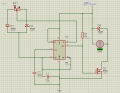
I drew the circuit on Proteus and after i simulated it the motor instantly went to full speed and would not change with the varying of the potentiometer. Here is the circuit, what did i miss?
Most of the methods today use PWM because the power requirement is reduced. With analog, the power wasted as heat could be much larger. For smaller motors however, the analog method works good and doesnt make any noise.
The idea with the analog method is to measure the back emf of the motor and use that to control the speed. This works because there is a unique relationship between the back emf and the motor speed. With a small analog control circuit you can regulate the speed of the motor, so it's not just a control it's actually a speed regulator too.
Years ago they used a small transistor circuit to measure the back emf and drive the small motors like that found on small cassette tape recorders. Maybe two transistors. Today we can use an op amp and get very good regulation.
To find out how to do it this way you can probably look it up on the web, or we could discuss it further here.
If i remember right, the back emf is simply the motor voltage minus the motor current times a constant. This emf varies in proportion to the speed of the shaft so can be used to regulate the speed (as well as control the speed).
I red about this relationship in electric machinery fundamentals - 5th ed (chapman) but i am not able to find a method to manipulate this value experimentally and thus control the speed of the motor.
As post #12, they do exhibit some switching noise on the lower rpm's, OK for simple average tasks.
There is a little more detail as to signal etc, in the Fairchild app note AN-3006.
Max.
As post #12, they do exhibit some switching noise on the lower rpm's, OK for simple average tasks.
There is a little more detail as to signal etc, in the Fairchild app note AN-3006.
Max.
Thanks, I will check the app note AN-3006.
I saw the similar circuit before and they used MOC3020, but there is no similar circuit as you attached in #12.

 Facebook
 Google
 GitHub
 Linkedin