PID curve for Motor Speed Control

Thread Starter

kalemaxon89

Joined Oct 12, 2022
389
A few months ago I was using Texas Instruments sensorless algorithm to control the motor speed.
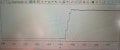
Looking back over some notes I found this picture I took of the speed during startup.

The PID parameters are set automatically and the target speed is reached almost immediately, without any problems. The speed error is almost 0 rpm.
speed.jpg

Why do you think the "rising" has steps?
What can this be due to?
Has it ever happened to you?

I can't post on the TI.com forum because I don't have a corporate account and unfortunately I no longer have access to the engine and the algorithm that I was using.
I can't figure out what it is due to, though.

P.S.: there is NOT derivative action in the algorithm
 
Last edited:

Thread Starter

kalemaxon89

Joined Oct 12, 2022
389
S
hi k89,
The response plot depends upon the Kp, Ki, and Kd of the PID equations.
The plot can show steps.
Which equation are you using?
E
See Chapter 11 Tuning Regulators.
There is no derivative term (I think)
As I said, it's a project I was working on months ago, and now I accidentally found in the phone gallery that picture of the PI control (I mean speed plot)
I remember that x and y axis of the graph could not be changed. I attached the pdf and I was using universal motor control lab from TI
It was a speed control with field oriented control
 

ericgibbs

Joined Jan 29, 2010
21,390
hi k89,
This PID video explains how the Kp and Ki are derived for a motor PID speed controller.
Skip to about 9 minutes from the start of the video for the PID.

It may help with your controller K? Values.
E
 

MisterBill2

Joined Jan 23, 2018
27,164
BOB's response in post #8 would be my first guess, since the control is implemented in a digital computing system. Some digital feedback algorithms even allow setting the the integration time. In addition, none of those parameters are done in an analog method in a digital control system. so there is no way the control can be smooth. There are schemes to make it less jumpy, though.
 

MisterBill2

Joined Jan 23, 2018
27,164
In addition, because it is a digital feedback system,it must set an output and then stop and calculate if that result is correct, or does it need to make a change and check again. THAT is how feedback works!! Most digital feedback is not as smooth as linear systems.
 

MaxHeadRoom

Joined Jul 18, 2013
30,557
In addition, because it is a digital feedback system,it must set an output and then stop and calculate if that result is correct, or does it need to make a change and check again. THAT is how feedback works!! Most digital feedback is not as smooth as linear systems.
I have been using a PC - DIY based motion card made by Galil Co, since the late '80's these used PID analogue to digital (trans-conductance|) drives.
40 μs command duration, These have been in use world wide by many develoers and DIY users. Due to ease of use, simplicity, speed and also flexibility in the make of the drive etc.
Just tune the PID loop.
.
 

nsaspook

Joined Aug 27, 2009
16,250
In addition, because it is a digital feedback system,it must set an output and then stop and calculate if that result is correct, or does it need to make a change and check again. THAT is how feedback works!! Most digital feedback is not as smooth as linear systems.
Quaint ideas about modern digital control. We replaced all of the old analog direct drives systems years ago. The digital control is much more smooth, precise and much easier to tune. The original encoder and sin/cosine resolvers are still being used with the signals digitized to 16-bit values for computation of the three phase drive signals. The equivalent analog control of speed, indexing and acceleration was impossible with the old analog drives.


MisterBill2

Joined Jan 23, 2018
27,164
So modern stuff works much faster now. But in ALL DIGITAL FEEDBACK systems there has to be a bit of delay. Just because you do not see it does not mean it is not there. Certainly things happen faster, but delays are still there. They might be a challenge to measure, though.
 

nsaspook

Joined Aug 27, 2009
16,250
So modern stuff works much faster now. But in ALL DIGITAL FEEDBACK systems there has to be a bit of delay. Just because you do not see it does not mean it is not there. Certainly things happen faster, but delays are still there. They might be a challenge to measure, though.
Faster than a speeding bullet buddy, I can calculate double-precision floats and 64-bit integers at the GHz rate on a $30 Soc. The best analog system ever made can't even come close to the type of real-time processing we can do today with motor control. A delay you can't see or measure as a nonlinear (every real process isn't perfectly linear or instantaneous) motion step is a none issue.

The real challenge is keeping up with modern technology. That's why I build things, to explore what's new, what's fun for me and don't live in the past but always use the past as a guide for improvement.
 
Last edited:
Top