speculative technology space tubes

Thread Starter

tsmspace

Joined Mar 16, 2026
35
Ok how about this:

Tubes couldn't be made smaller because of hardware limitations of the day, there are problems that are described with making smaller tubes that should be easy to overcome today. (For example, making them in a vacuum)

Between 3d printing, materials engineering, and the expectation that a vacuum should be available for tiny components, couldn't tiny tiny tubes be made today? Like, 3d printed itty bitty tubes. Initially I was like, well they could be printed in space, to have a genuine space vacuum, which might also help them be printed as tiny fragile parts since gravity would not pull on them while hot, but probably this could be done on earth anyway, just in a vacuum chamber with modern robotics to handle the printing.

Would there be any benefit? How small could they get? What could they do that would make them special? I do see that distortion in transistors is a one-way trip, distortion is fully lost information, while with tubes distortion is more gradual, with much of the distortion still carrying some information, perhaps enough to "see what you needed to see", could this have applications in sensors used in space, for extreme ranges?
 

nsaspook

Joined Aug 27, 2009
16,249
Ok how about this:

Tubes couldn't be made smaller because of hardware limitations of the day, there are problems that are described with making smaller tubes that should be easy to overcome today. (For example, making them in a vacuum)

Between 3d printing, materials engineering, and the expectation that a vacuum should be available for tiny components, couldn't tiny tiny tubes be made today? Like, 3d printed itty bitty tubes. Initially I was like, well they could be printed in space, to have a genuine space vacuum, which might also help them be printed as tiny fragile parts since gravity would not pull on them while hot, but probably this could be done on earth anyway, just in a vacuum chamber with modern robotics to handle the printing.

Would there be any benefit? How small could they get? What could they do that would make them special? I do see that distortion in transistors is a one-way trip, distortion is fully lost information, while with tubes distortion is more gradual, with much of the distortion still carrying some information, perhaps enough to "see what you needed to see", could this have applications in sensors used in space, for extreme ranges?
If you make the 'tubes' so small that the odds of a emission electron will not hit or be affected by the atoms in air, this makes an 'effective vacuum for a tube type device.

https://en.wikipedia.org/wiki/Nanoscale_vacuum-channel_transistor

https://www.nature.com/articles/s41928-019-0289-z
Abstract
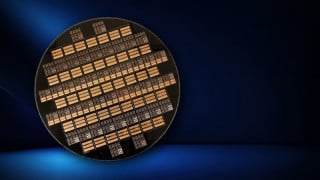
Vacuum tubes were central to the early development of electronics, but were replaced, decades ago, by semiconductor transistors. Vacuum channel devices, however, offer inherently faster operation and better noise immunity due to the nature of their channel. They are also stable in harsh environments such as radiation and high temperature. However, to be a plausible alternative to solid-state electronics, nanoscale vacuum channel devices need to be fabricated on the wafer scale using established integrated circuit manufacturing techniques. Here, we show that nanoscale vacuum channel transistors can be fabricated on 150 mm silicon carbide wafers. Our devices have a vertical surround-gate configuration and we show that their drive current scales linearly with the number of emitters on the source pad. The silicon carbide vacuum devices are also compared to identically sized silicon vacuum channel transistors, which reveals that the silicon carbide devices offer superior long-term stability.


Thread Starter

tsmspace

Joined Mar 16, 2026
35
If you make the 'tubes' so small that the odds of a emission electron will not hit or be affected by the atoms in air, this makes an 'effective vacuum for a tube type device.

https://en.wikipedia.org/wiki/Nanoscale_vacuum-channel_transistor

https://www.nature.com/articles/s41928-019-0289-z
Abstract
Vacuum tubes were central to the early development of electronics, but were replaced, decades ago, by semiconductor transistors. Vacuum channel devices, however, offer inherently faster operation and better noise immunity due to the nature of their channel. They are also stable in harsh environments such as radiation and high temperature. However, to be a plausible alternative to solid-state electronics, nanoscale vacuum channel devices need to be fabricated on the wafer scale using established integrated circuit manufacturing techniques. Here, we show that nanoscale vacuum channel transistors can be fabricated on 150 mm silicon carbide wafers. Our devices have a vertical surround-gate configuration and we show that their drive current scales linearly with the number of emitters on the source pad. The silicon carbide vacuum devices are also compared to identically sized silicon vacuum channel transistors, which reveals that the silicon carbide devices offer superior long-term stability.


I guess, just on the surface with a quick look at the wiki, this does possibly count as exactly what I'm talking about, since the operating principle is the same as a vacuum tube, where electrons are excited from a cathode in field emission and captured by an anode with the rate controlled by a gate. Also, it is interesting that the wiki notes that the electrons actually travel faster across the vacuum channel than they do through a semiconductor, meaning that the signal can travel through this "vacuum channel device" actually faster than through a semiconductor, as well as this device having all of the "tube relevant" characteristics such as resistance to radiation and high temperature operation.

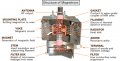
Could this device be used to make a magnetron to produce microwaves? Somewhere someone told me that an FET was an adequate replacement for tubes when relating to having a more gentle distortion and preserving some information at lighter distortion, but could not produce microwaves.
 

nsaspook

Joined Aug 27, 2009
16,249
I guess, just on the surface with a quick look at the wiki, this does possibly count as exactly what I'm talking about, since the operating principle is the same as a vacuum tube, where electrons are excited from a cathode in field emission and captured by an anode with the rate controlled by a gate. Also, it is interesting that the wiki notes that the electrons actually travel faster across the vacuum channel than they do through a semiconductor, meaning that the signal can travel through this "vacuum channel device" actually faster than through a semiconductor, as well as this device having all of the "tube relevant" characteristics such as resistance to radiation and high temperature operation.

Could this device be used to make a magnetron to produce microwaves? Somewhere someone told me that an FET was an adequate replacement for tubes when relating to having a more gentle distortion and preserving some information at lighter distortion, but could not produce microwaves.
A nanoscale magnetron, the basic theory doesn't change but the scale (of the needed RF chambers and magnets) changes the possible frequency into to something impractical IMO
1775434655713.png


Somewhere Someone has been telling you tall tales about several things.
 

Thread Starter

tsmspace

Joined Mar 16, 2026
35
A nanoscale magnetron, the basic theory doesn't change but the scale (of the needed RF chambers and magnets) changes the possible frequency into to something impractical IMO
View attachment 365647


Somewhere Someone has been telling you tall tales about several things.
do they sell a "vacuum channel transistor radio" ??
you know for the novelty?
 

cmartinez

Joined Jan 17, 2007
8,722
Tubes went the way of the dinosaurs for many applications not just because of their size, but also because they were energy guzzlers. And even if you were to find a way to miniaturize them the laws of thermodynamics would kick in. Heat dissipation is a huge issue.
 
Ok how about this:

Tubes couldn't be made smaller because of hardware limitations of the day, there are problems that are described with making smaller tubes that should be easy to overcome today. (For example, making them in a vacuum)

Between 3d printing, materials engineering, and the expectation that a vacuum should be available for tiny components, couldn't tiny tiny tubes be made today? Like, 3d printed itty bitty tubes. Initially I was like, well they could be printed in space, to have a genuine space vacuum, which might also help them be printed as tiny fragile parts since gravity would not pull on them while hot, but probably this could be done on earth anyway, just in a vacuum chamber with modern robotics to handle the printing.

Would there be any benefit? How small could they get? What could they do that would make them special? I do see that distortion in transistors is a one-way trip, distortion is fully lost information, while with tubes distortion is more gradual, with much of the distortion still carrying some information, perhaps enough to "see what you needed to see", could this have applications in sensors used in space, for extreme ranges?
In consultation with ChatGPT. I’ve crafted with ChatGPT a clear response that seems to fit a more well rounded reply. Very informative….

“Interesting question—and yes, vacuum tube performance can exhibit high Q in both audio and radio frequency applications. As others have mentioned, scaling tubes down introduces limitations, particularly at higher frequencies. While reduced geometry can improve speed, electron transit time between elements eventually becomes comparable to the signal period, limiting high-frequency response and bandwidth.

Inter-electrode parasitic capacitance and coupling also become more significant at small scales, affecting gain, bandwidth, and stability. Additionally, reduced electrode size limits emission current, which can impact signal-to-noise ratio. Ultimately, performance comes down to bandwidth and power constraints.

A notable development is the emergence of vacuum MEMS transistors capable of operating into the THz range. These devices are inherently radiation-hardened and resistant to EMP, making them well-suited for space and other harsh, high-temperature environments.”

Thanks for the question. It was fun.
 

bpark1000

Joined Jan 26, 2013
2
Ok how about this:

Tubes couldn't be made smaller because of hardware limitations of the day, there are problems that are described with making smaller tubes that should be easy to overcome today. (For example, making them in a vacuum)

Between 3d printing, materials engineering, and the expectation that a vacuum should be available for tiny components, couldn't tiny tiny tubes be made today? Like, 3d printed itty bitty tubes. Initially I was like, well they could be printed in space, to have a genuine space vacuum, which might also help them be printed as tiny fragile parts since gravity would not pull on them while hot, but probably this could be done on earth anyway, just in a vacuum chamber with modern robotics to handle the printing.

Would there be any benefit? How small could they get? What could they do that would make them special? I do see that distortion in transistors is a one-way trip, distortion is fully lost information, while with tubes distortion is more gradual, with much of the distortion still carrying some information, perhaps enough to "see what you needed to see", could this have applications in sensors used in space, for extreme ranges?
There is an elephant in the room. The hard part is achieving electron emission into the vacuum. Present technology employs the brute-force technique of cooking the electrons out of the cathode. This requires temperatures above red-heat, even with high-emission oxide coatings or thoriated tungsten. These cathodes have a VERY limited lifetime. If you remember the days of tube TVs & radios, & the local drugstore tube tester, (with USERS performing the maintenance) 99% of the reason for all this is cathode emission failure. The amount of power required for all this cathode heating usually exceeds by orders of magnitude the power handled by the tube, especially in signal circuits. The other problem is voltage. Whereas solid-state electronics runs well as 1 volt with low impedance, tubes operate optimally at 100's of volts at high impedance. To drive something as simple as a loudspeaker, a matching transformer is required, a heavy, bulky, & expensive component.
There were attempts to address the cathode problem. There were point-source emitters (which quickly eroded) & light-activated photocathodes (which sputtered away). Because of this, tube designs put all the cathode in one place. This is not conducive to integrated circuits, where millions of discrete cathodes would be required.
 
Top