Special led driver design advice

Thread Starter

gaber2611

Joined Mar 14, 2013
324
A microcontroller would be simplest.

Otherwise you need an up / down counter a digital potentiometer, and a PWM dimmer. The micro would do all of these functions plus debouncing the switches. And would replace your 4017 as well.
This circuit worked, but have problems
I've read that the capacitor should be ac capacitor, so will try and see
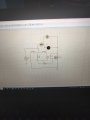
IMG_20241129_024644.jpg
 

sghioto

Joined Dec 31, 2017
8,634
The circuit works and is easy to adjust but it's operating the mosfet in a linear mode which dissipates more heat then if using PWM.
The type and quality of the capacitor is important.
 

D_racon

Joined Oct 4, 2021
18
Hello

Need drive and dim led strips, each 12v, 22w/m, 3 strips are cold and 3 warm As shown in attached photo
The dimming im willing to do with 555 ic by pwm signal and Potentiometer for increase dimming and decrease
Need buttons to control cold and warm led strip
When click a push button the cold led strip light, when press again or press different button warm strip light, and same for each strip
This battery powered project, 12v 30000mah lithium battery

Anyway to do this project without using microcontroller, arduino, esp, etc?
Any chip can do this control?
Please suggest
Regards
for the leds, as mentioned above, such a constant current module is a good option for simplicity.
the other option is PWM indeed which might be better in dimming in some cases(and often equal in the others assuming the input voltage doesn't change a lot).
however the 555 timer isn't optimal for this, it can do it, but it either would only allow 50% pwm, or it would require complex cirquitry and many extra parts.

so for led dimming, I would recommend using a schmitt-trigger inverter instead.
for example the
74HC14 Hex inverter Schmitt Trigger
you can very easily make a frequency generator using them, as well as a pwm generator, the output on it's own isn't a perfect square wave, however such a hex inverter has 6 schmit trigger inverters, so you can just link the output to one of the 5 free inverters to convert it into a square wave.
schmit trigger inverters are often cheaper, as well as faster, and much more suited for your speciffic task, they also are much more easy to use for that use case.

as for the buttons you can use a counter. the
CD4017 decoded counter (or CD4022(8 outputs/states instead of 10))
would be very usefull for your use case as it automatically divides it into 10 seperate outputs/states and you can easily make it stop, they also automatically start and are super cheap as well. I used that chip to make a super cheap RC receiver(based on the worlds first(documented) rc device which used the same principle of working but electro mechanical instead of fully electrical).
ofcource any comparable parts will also work, but for counters try to make sure it has decoded outputs, undecoded outputs also work but are more complex to use and often require extra parts to decode it.

so go for a 74HC14 Schmitt-trigger Hex inverter, for the pwm generator.
and a CD4017 decouded output counter(or CD4022) for the state mashine(buttons, etc).

next to that you need some supporting parts like a potentiometer(dual channel is most easy(like the ones in old amplifiers)), some safety resistors, small capacitor, diodes.
and ofcource some general purpose transistors and buttons might be usefull for the state mashine to give it more advanced behaviour freedom. and more importantly some mosfets or powerfull transistors for driving the leds.
you probably can't just directly drive the led with the pwm signal and should instead drive a mosfet or such with it,
depending on the type of led you might get away with most mosfets including the super cheap weak ones.

ofcource parts of this can easily be replaced, any other pwm generator will also work, the dual channel potentiometer for the schmitt trigger inverter pwm generator is the most rare/expensive component unless salvaged from old electronics, that one is combined with 2 diodes to make it act like 2 seperate resistors with changing values, so that around 100% pwm can be reached(not exactly 100% since you need to limit the current for safety reasons with a small resistor).
but even with a normal potentiometer you can get the same range as a single 555 timer in the way it is typically used as a pwm generator.
ofcource you can also look at chips intended for pwm generation instead, there are quite a few, I just don't know them well enough to name one which would need few parts by name.
however looking at https://nl.farnell.com/c/semiconductors-ics/power-management-ics-pmic/pwm-controllers I see many options. ofcource you can look at whatever place you get your parts from, this was just the first result I got when searching for pwm ic.
I also just looked on some other sites and seems like some of them support enough output current that you might not even need to add a mosfet at all.
 

MisterBill2

Joined Jan 23, 2018
27,552
Years ago I came across a timer scheme using a 556 dual timer to deliver zero to 100% with a PWM arrangement. The first timer was used to produce a triangle wave and the second timer was used as a comparator to provide the PWM signal that was used to drive a two stage amplifier to control a DC fuel pump motor. It worked very well. It is not quite as simple as a single 555 circuit but it provides much better performance.
Given that description, I am sure that some of the brilliant minds participating can produce the circuit.
 
Top