Sound from ultrasound (no sound)

k1ng 1337

Joined Sep 11, 2020
1,038
While the tuning fork‘s resonance will help to make a smaller signal more obvious, you shouldn’t need it to hear the 440Hz sound. Any non-linear medium should cause an audible sound. Of course, you might be able to make the resulting interference so low energy it is not audible but still excites the fork, which is interesting…
I'm going to try building an "Ultrasonic Guitar Tuner" haha. The use of a fork is two fold. It is already an ideal receiver for my application due the band pass effect. Most guitars are tuned to 440Hz A so this is exactly that I need.

The fork will also serve to calibrate my oscillators. If the fork produces a steady A note, I'll know the beat frequency is really 440Hz A hitting its surface. If the mixing is mismatched, I'll hear a beat frequency within the 440Hz beat itself which I'll perceive as a kind of siren effect. I'll probably end up needing a high Q crystal circuit for this. There is a lot to consider but the implications of this project are very cool.

I saw the transducers they sell on the internet (Amazon), those with a few watts, but they are very small in terms of power, do you know any others that are more powerful?
Not sure, this will be my first project with higher power transducers. I would take Yaakov's advice if I were you because I think you are getting ahead of yourself. You can always return to this project when you have more theory under your belt. I barely think my version of the project will work.
 

Thread Starter

Drellk

Joined Nov 30, 2023
24
I'm going to try building an "Ultrasonic Guitar Tuner" haha. The use of a fork is two fold. It is already an ideal receiver for my application due the band pass effect. Most guitars are tuned to 440Hz A so this is exactly that I need.

The fork will also serve to calibrate my oscillators. If the fork produces a steady A note, I'll know the beat frequency is really 440Hz A hitting its surface. If the mixing is mismatched, I'll hear a beat frequency within the 440Hz beat itself which I'll perceive as a kind of siren effect. I'll probably end up needing a high Q crystal circuit for this. There is a lot to consider but the implications of this project are very cool.


Not sure, this will be my first project with higher power transducers. I would take Yaakov's advice if I were you because I think you are getting ahead of yourself. You can always return to this project when you have more theory under your belt. I barely think my version of the project will work.
so if I understand correctly you are also building this project together wow k1ng 1337 you are legendary . Yes I'm sure the 440Hz frequency will come out. And then you could point the two ultrasound beams directly at the A string so that if it's in tune it vibrates. however for my project there is nothing very different, the frequency changes because it is 10 Hz lower. but you know some links to very powerful ultrasonic transducers, so I too will start the construction
 

Thread Starter

Drellk

Joined Nov 30, 2023
24
I'm going to try building an "Ultrasonic Guitar Tuner" haha. The use of a fork is two fold. It is already an ideal receiver for my application due the band pass effect. Most guitars are tuned to 440Hz A so this is exactly that I need.

The fork will also serve to calibrate my oscillators. If the fork produces a steady A note, I'll know the beat frequency is really 440Hz A hitting its surface. If the mixing is mismatched, I'll hear a beat frequency within the 440Hz beat itself which I'll perceive as a kind of siren effect. I'll probably end up needing a high Q crystal circuit for this. There is a lot to consider but the implications of this project are very cool.


Not sure, this will be my first project with higher power transducers. I would take Yaakov's advice if I were you because I think you are getting ahead of yourself. You can always return to this project when you have more theory under your belt. I barely think my version of the project will work.
k1ng 1337 did you buy the ultrasonic transducers?
 

camerart

Joined Feb 25, 2013
3,853
Welcome to AAC.

This doesn’t seem to be a practical project for a neophyte DIY maker.
Hi Y,
I had to look up neophyte, and now know a new word.
I've been a neophyte at many of the things I do, and for someone of my temperament and skills, this has lead me to learn a lot, in order to finish the project.
I'm sure your comment wasn't to put the Op off, though :)
C
 

Thread Starter

Drellk

Joined Nov 30, 2023
24
Ciao Y,
Ho dovuto cercare neofita e ora conosco una nuova parola.
Sono stato un neofita in molte delle cose che faccio e, per qualcuno del mio temperamento e delle mie capacità, questo mi ha portato a imparare molto, per poter portare a termine il progetto.
Sono sicuro che il tuo commento non era per rimandare l'operazione, però :)
C
[/CITAZIONE]
thanks camerart for your comment, yes in fact yakoov said that it is very difficult but not impossible, now I don't know which transducers powerful enough to buy, but as soon as I have them I will get to work, in any case do you know some powerful transducers that I can use for this project?
 

Thread Starter

Drellk

Joined Nov 30, 2023
24
Hi,
I had a tape recorder with a tone that I'm sure I could hear of 400Hz, am I remembering correctly?
http://www.naks.com/products/nakamichi_550.html
C
no no camerart I need ultrasonic transducers from 20,000 kHz up, quite powerful, which demodulate in the air to create a difference frequency of 10 hz, I had already written about it in this thread, so you know some transducers that do in my case?
 

camerart

Joined Feb 25, 2013
3,853
no no camerart I need ultrasonic transducers from 20,000 kHz up, quite powerful, which demodulate in the air to create a difference frequency of 10 hz, I had already written about it in this thread, so you know some transducers that do in my case?
Hi D,
I see! I misunderstood the previous references to 440Hz, which is not quite what I thought.
Sorry, I don't know tranducers, but I'll try to follow this thread.
C
 

Thread Starter

Drellk

Joined Nov 30, 2023
24
Hi D,
I see! I misunderstood the previous references to 440Hz, which is not quite what I thought.
Sorry, I don't know tranducers, but I'll try to follow this thread.
C
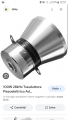
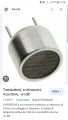
camerart ultrasonic transducers are piezos, i.e. those components that produce an ultrasonic frequency, I attach some examples belowScreenshot_20231202-125708.pngScreenshot_20231202-125648.png
 

k1ng 1337

Joined Sep 11, 2020
1,038
k1ng 1337 did you buy the ultrasonic transducers?
No, I haven't started looking yet. In my opinion, this project requires very careful consideration at each stage.

Also, I'm having trouble understanding why you are trying to achieve a 10Hz audio signal. Do you understand why this is impractical?
 

Thread Starter

Drellk

Joined Nov 30, 2023
24
No, I haven't started looking yet. In my opinion, this project requires very careful consideration at each stage.

Also, I'm having trouble understanding why you are trying to achieve a 10Hz audio signal. Do you understand why this is impractical?
hi k1ng 1337 yes then I looked for something and as you can see from the images I posted, I saw some 100w titanate ones. however, on the subject of practicality, the 10 Hz wave is concentrated at the meeting point of the interference of the 2 waves as an addition, so there will not be a lot of movement of air as happens with subwoofers and then for example the tuning fork which vibrates at 440 hz, even those 440 hz have a high length but the tuning fork vibrates the same, precisely because it is localized. I need it because to produce those very low frequencies I need very large tubes and they are difficult to create. However, I want to at least do some tests, so if you know of any transducers, could you send me some links, perhaps from Amazon
 

Thread Starter

Drellk

Joined Nov 30, 2023
24
No, I haven't started looking yet. In my opinion, this project requires very careful consideration at each stage.

Also, I'm having trouble understanding why you are trying to achieve a 10Hz audio signal. Do you understand why this is impractical?
I'm also aware that it's quite difficult but at least I want to try to do it and then you want to do it too so we can join forces.
 

Thread Starter

Drellk

Joined Nov 30, 2023
24
Hi D,
Ok, thanks.
I would like to make an ultrasonic cleaning tank, where these will work for that I think.
C
hi camerart then ultrasonic cleaning tanks usually use a tank containing water in order to conduct the vibrations more efficiently, then a plate with many titanate piezos inside is placed on the bottom of the tank, as frequently MHz. However, there are already assembled kits, if you are interested in having the complete kit I can suggest an Italian supplier, but in case you would like to do it yourself I don't know where you could get them individually, given that I created this thread precisely to find powerful piezos
 

Audioguru again

Joined Oct 21, 2019
6,826
Hello Drellk.
Maybe you want to make an "audio spotlight" that uses ultrasonics and the interference of two ultrasonic beams striking you or striking an object near you. Their interference causes you to hear audio that was modulating one ultrasonic beam.

Expensive sound systems use this method in a huge conference room to beam a different language to a group of people while everybody else hear the original language.

You tube is a cartoons channel with many Fake Circuits but maybe this one about a audio spotlight is genuine:
 

Thread Starter

Drellk

Joined Nov 30, 2023
24
Hello Drellk.
Maybe you want to make an "audio spotlight" that uses ultrasonics and the interference of two ultrasonic beams striking you or striking an object near you. Their interference causes you to hear audio that was modulating one ultrasonic beam.

Expensive sound systems use this method in a huge conference room to beam a different language to a group of people while everybody else hear the original language.

You tube is a cartoons channel with many Fake Circuits but maybe this one about a audio spotlight is genuine:
no no audioguru, thanks for your answer, but I don't have to listen to audio, and the two waves are "fixed" that is, they are not modulated either in amplitude or even in frequency, they simply have to interfere to produce a difference frequency of 10 Hz locally , therefore very simple. I would just like to know which ultrasonic (piezo) transducers to use since I need power. and then how to solve low frequency problems as Yakoov says, but if I don't start I'll never be able to do the tests, I hope you can help me
 

Audioguru again

Joined Oct 21, 2019
6,826
I never use piezo transducers, never use ultrasonic transducers and never use high power piezo ultrasonic transducers used for cleaning things in a fluid.

The high power "audio spotlight" uses many piezo ultrasonic transducers in an array for high power.
 

MisterBill2

Joined Jan 23, 2018
28,508
You really do need to understand what you are doing prior to doing it. High powered ultrasonic fields can cause injuries that take time to appear. So the permanent damage is done before you are aware that it is happening. Not the best situation.
 

Thread Starter

Drellk

Joined Nov 30, 2023
24
I never use piezo transducers, never use ultrasonic transducers and never use high power piezo ultrasonic transducers used for cleaning things in a fluid.

The high power "audio spotlight" uses many piezo ultrasonic transducers in an array for high power.
hi audioguru so the powers I require are only to be able to penetrate the layers of soil (20cm) but there is nothing dangerous in any case
 

Thread Starter

Drellk

Joined Nov 30, 2023
24
You really do need to understand what you are doing prior to doing it. High powered ultrasonic fields can cause injuries that take time to appear. So the permanent damage is done before you are aware that it is happening. Not the best situation.
yes misterbill2 I know that high power ultrasound can change the conformation of the material but this won't happen I will be very careful, but if I don't start how can I do the tests?
 
Top