soldering with hot air gun

Thread Starter

xchcui

Joined May 12, 2014
309
Hi.
I need to solder a new brushes to an electric motor(car-starter).
Since i don't have the proper high watt soldering iron to make the task,
i am considering to use my standard(300°C/600°C)air hot gun.
Is it a good/bad idea to use the air hot gun to solder the starter-brushes?
Is it at all possible and efficient ?or i might risk of melting the lacquer
or even the wires themself?
Thanks.
 

Irving

Joined Jan 30, 2016
5,139
It can be done, but will be much harder as you don't have the thermal mass of the soldering iron to help focus the heat on the joint. If you decide to attempt it, try to screen off other parts of the motor with foil or kapton tape but be wary of some cheap, thin aluminum alloy foils which melt at relatively low temperatures.
 

MisterBill2

Joined Jan 23, 2018
27,645
Ido not predict success because the hot air gun will apply heat allover, not just where you want it. Exactly which part are you intending to solder? Brus to flex wire? flex wire to brush holder, or flex wire to terminal?Or some other portion of the connection? Soldering to the flex wire runs the serious risk of solder getting into the wire and making the connection stiff.
 

AlbertHall

Joined Jun 4, 2014
12,629
You might use the hot air to preheat the parts to solder and then the iron may be able to supply enough extra heat to make a good joint.
You might need four arms for this though.
 

Thread Starter

xchcui

Joined May 12, 2014
309
Thanks for all the replies.
It can be done, but will be much harder as you don't have the thermal mass of the soldering iron to help focus the heat on the joint. If you decide to attempt it, try to screen off other parts of the motor with foil or kapton tape but be wary of some cheap, thin aluminum alloy foils which melt at relatively low temperatures.
Can i use the standard aluminum foil that is used for baking for the
screen porpuse?
Ido not predict success because the hot air gun will apply heat allover, not just where you want it. Exactly which part are you intending to solder? Brus to flex wire? flex wire to brush holder, or flex wire to terminal?Or some other portion of the connection? Soldering to the flex wire runs the serious risk of solder getting into the wire and making the connection stiff.
The negative brushes:flex wire to brush holder.
Positive brushes:brush to flex wire.
Any tip,how to prevent the solder to get into the wire strands?
You might use the hot air to preheat the parts to solder and then the iron may be able to supply enough extra heat to make a good joint.
You might need four arms for this though.
I have only 30W soldering iron,will it be enough after i will preheat the parts?
 

Ya’akov

Joined Jan 27, 2019
10,258
Hi.
I need to solder a new brushes to an electric motor(car-starter).
Since i don't have the proper high watt soldering iron to make the task,
i am considering to use my standard(300°C/600°C)air hot gun.
Is it a good/bad idea to use the air hot gun to solder the starter-brushes?
Is it at all possible and efficient ?or i might risk of melting the lacquer
or even the wires themself?
Thanks.
One thing you might try is to preheat the part with the hot air then use the iron to finish the joint. It would help if two people did it so you could minimize the time you are applying heat from the gun.
 

MisterBill2

Joined Jan 23, 2018
27,645
I suggest that you use your solder iron to tin the part of the flexible wire that will be soldered before doing anything else. Then, when you do the soldering, apply the heat to brush holder, and feed the solder onto the brush holder portion of the joint. That will reduce wicking the solder up the flex lead.
For attaching the copper brush, tin the end of the wire that will go into the brush first. Then put the heat on the brush.
 

shortbus

Joined Sep 30, 2009
10,049
I need to solder a new brushes to an electric motor(car-starter).
Seems like members missed that part of the question. Any car engine starter I've ever worked on the leads to the brushes were spot welded, NOT soldered. I don't think solder will hold up over time. I'd use a crimp connector leaving the original lead spot welded where it is and crimp the new lead to it.

When a starter motor is so bad the brushes need replaced, your better off getting a new starter.
 

MisterBill2

Joined Jan 23, 2018
27,645
Seems like members missed that part of the question. Any car engine starter I've ever worked on the leads to the brushes were spot welded, NOT soldered. I don't think solder will hold up over time. I'd use a crimp connector leaving the original lead spot welded where it is and crimp the new lead to it.

When a starter motor is so bad the brushes need replaced, your better off getting a new starter.
Certainly SB makes a very valid point, which I overlooked. If you get thebrush leads soldered and the fix lasts, I will very much want to hear about it though. I did solder some welding cables at one job, and the copper was about a half-inch diameter. That was done with an oxy-acetlyne torch. AND a LOT of solder. That repair job worked, at least the whole rest of the time I was there.
 

Thread Starter

xchcui

Joined May 12, 2014
309
I suggest that you use your solder iron to tin the part of the flexible wire that will be soldered before doing anything else. Then, when you do the soldering, apply the heat to brush holder, and feed the solder onto the brush holder portion of the joint. That will reduce wicking the solder up the flex lead.
For attaching the copper brush, tin the end of the wire that will go into the brush first. Then put the heat on the brush.
Thanks for those tips,MisterBill2.
I was thinking to choose the method that you mentioned,but after SB shared his thought and after you said that SB makes a very valid point,i am now thinking to go,maybe,with the crimp connector method.(though,i am still undecided).
May someone upload a photo/link of the connector crimp type,that is proper for this task,please?(size/amperage etc).
Thanks.
 

MisterBill2

Joined Jan 23, 2018
27,645
Possibly crimp and then solder, with the solder portion bonding those conductors that are not caught with the crimp. A weld is best, if it s done correctly. The challenge in connections of a starter motor is that there is a very large surge as it first engages. I have seen momentary surges of 1000 amps cold cranking a V8 engine. Usually cranking runs about 100 to 150 amps fir a few seconds on a V8 engine.
 

shortbus

Joined Sep 30, 2009
10,049
May someone upload a photo/link of the connector crimp type,that is proper for this task,please?(size/amperage etc).
Like I said in my post when starter motor brushes are worn to the place where they need replacing the whole motor will soon need replacing. I've worked on cars for 60 years now, started around 14yrs and just turned 74. And in that time I've repaired a lot of starters and generators back in the day. And never in those years found a set of brushes that were worn out. Commutators wear and need turned but brushes???

So why are you replacing the brushes?
 

Thread Starter

xchcui

Joined May 12, 2014
309
Possibly crimp and then solder, with the solder portion bonding those conductors that are not caught with the crimp. A weld is best, if it s done correctly. The challenge in connections of a starter motor is that there is a very large surge as it first engages. I have seen momentary surges of 1000 amps cold cranking a V8 engine. Usually cranking runs about 100 to 150 amps fir a few seconds on a V8 engine.
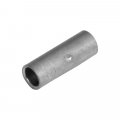
Are you talking about this type of crimp termina?
butt connector.jpg


Like I said in my post when starter motor brushes are worn to the place where they need replacing the whole motor will soon need replacing. I've worked on cars for 60 years now, started around 14yrs and just turned 74. And in that time I've repaired a lot of starters and generators back in the day. And never in those years found a set of brushes that were worn out. Commutators wear and need turned but brushes???

So why are you replacing the brushes?
Since the starter had some issues,i decided first to dismantle it,
clean it and renew the brushes(the least i can do).If it won't help,i assume that,as you said,i will need to replace the all unit.
Am i just wasting my time?
 

shortbus

Joined Sep 30, 2009
10,049
Am i just wasting my time?
Yes in my opinion. A rebuilt starter is usually your best bet, if money is a problem. If the brushes have failed I'd think that your not far from the solenoid or starter drive going next. Since most times they are all of the same age. But these thoughts are just my opinions based on years of working on cars.
 

MisterBill2

Joined Jan 23, 2018
27,645
I have had to repair starters two times on Chrysler products because of failed sleeve bearings. And the starter motor is not covered by the warranty because it is not an "engine part", but rather an engine accessory. And the one time was on my 1985 van with only about 12000 miles. The replacement bearing was about$6 at the dealer, which was a whole lot cheaper that a rebuilt one. The other starter was also on a Chrysler product, and it also was because of a failed sleeve bearing. That was on my 1978 wagon. That was before I knew about just replacing the bearing.
 

MisterBill2

Joined Jan 23, 2018
27,645
What symptoms did you experience when your bearing was failing?
The first symptom was much slower engine cranking, like the battery was quite low. That was even with a new battery from another car. So it took jump starts for a while. There was a bit of extra noise as well, but not much. And cranking the engine with the starter would dim the dome light way more than otherwise, because it drew so much current. The armature was rubbing on the lower field pole-piece was what was happening. IT was very obvious when I opened the motor.
Replacing the obviously worn out rear sleeve bearing was simple and fairly easy.
 

Thread Starter

xchcui

Joined May 12, 2014
309
The first symptom was much slower engine cranking, like the battery was quite low. That was even with a new battery from another car. So it took jump starts for a while. There was a bit of extra noise as well, but not much. And cranking the engine with the starter would dim the dome light way more than otherwise, because it drew so much current. The armature was rubbing on the lower field pole-piece was what was happening. IT was very obvious when I opened the motor.
Replacing the obviously worn out rear sleeve bearing was simple and fairly easy.
I see that this small part can make a big headache,since
the symptoms that you have described,can be related also to other
faults and unless you dismantle the starter,you can't tell if the
bearing is the issue(as you found-out).
Many thanks,MisterBill2,shortbus and for everyone for your help.
I think that now,thanks for your tips and remarks,i have enough knowledge
to solve my issue.
Thanks.:)
 
Top