Soldering ceramic cooktop broken resistor?

Thread Starter

rambomhtri

Joined Nov 9, 2015
606
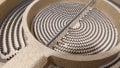
Hi, one of the circles of my ceramic cooktop wasn't turning on, so I disassembled it and using a multimeter I found out the resistor is broken at one point. I'm used to solder with your regular Pb+Sn solder, but that melts at 200ºC (370ºF) or so. I guess these resistors can go up to 700ºC, I'm not sure, but what I know is that regular soldering for electronics is not gonna work.

What can I do to repair the broken resistor?
It must be a piece of alloy or something that can join both sides and can support high temperatures.

I uploaded a picture of it, in the middle of the picture down there.
 

Attachments

Ya’akov

Joined Jan 27, 2019
10,226
85% silver solder has a melting point of ~740C. But, getting the solder to "wet" the element could prove very difficult. "Hard" silver solder used in jewelry making is the sort that might work. You will need the right flux, and mechanical preparation of the parts to receive solder (abrasives) will probably be necessary. A small torch of the jewelry making sort, using butane, is probably your best bet.

There are plenty of resources about hard soldering and the process online.

Usually, you'd weld or make mechanical connections but that seems impractical.

Good luck.
 

R.E.

Joined Jul 29, 2017
56
You cannot repair that element safely, it is a replacement only repair. Any attempt at repairing the element will lead to more issues and the element breaking again or even worse may cause a fire. If you try to weld or braze the element the heat will make a weak point in the wire and the element will break again.
 

Ya’akov

Joined Jan 27, 2019
10,226
You cannot repair that element safely, it is a replacement only repair. Any attempt at repairing the element will lead to more issues and the element breaking again or even worse may cause a fire. If you try to weld or braze the element the heat will make a weak point in the wire and the element will break again.
Safety is a concern, and replacement is a much safer route. Welding or brazing is impractical, the silver solder might work and doesn't present any particular stress, but it would still be better to replace it.
 

R.E.

Joined Jul 29, 2017
56
The stress, (thermal) comes from heating the nichrome element in one particular spot and now that area has a blob of higher conducting silver. There will be an imbalance in the element and it will fail.

You used to get splices that crimp on Nichrome element ends but they were designed specifically for toasters, furnaces, or dryers, nothing like a stove element. I have experience working appliance repair and experimenting since I was a wee lad of 5, I've tried repairing nichrome before and it works for a while then burns out, that's why rewind kits exist; https://www.amazon.com/UNIVERSAL-ELECTRIC-HEATING-ELEMENT-Restring/dp/B07788SCGD
 

MisterBill2

Joined Jan 23, 2018
27,384
While it might possibly create an unsafe condition to cobble a splice onto that resistance heating element, a short patch will not cause any problem. But you should only bypass a short section of the element, a half inch at most. To do that you will need both copper wire , about #14, and some of that circuit board repair liquid that contains a lot of copper. Then you will need to bend a short length of the wire to closely follow the element probably a total of 4 sections, to follow the element for one loop on each side of the break. Then apply the patch liquid to the element on both sides of the break, and gently clamp the wires against the element so that they are touching it. After the first application sets, add one more application. After it has all hardened you can check and see if that has made it work again. To protect the copper wire where it bridges the gap you can use a small amount of firebrick repair cement. I don't know where you can get it today, the jar I had is what I inherited from an old person 30 years ago. But since firebrick is still used it should still be available. It is also used for building big high power resistors, so that may help with finding a source.
 

Reloadron

Joined Jan 15, 2015
7,882
Putting it as simply as possible you remove and replace. You can try things but I don't see much working with a heating element. :( I would go with the general consensus and replace it.

Ron
 

Thread Starter

rambomhtri

Joined Nov 9, 2015
606
I know I can buy a replacement, but that's $90. If only I could fix it myself for free or almost for free... It took me quite some time to detect the fault and I was happy it was just "a little section broken". Problem is I don't have any kind of equipment for high temperature soldering, it's something I've never faced nor needed.

How about a mechanical join?
How could I join mechanically those parts?

One question came to my mind reading the replies... How could I start a fire repairing that?
I mean, those things are designed to support very high temperatures, any higher temperature could just only break it as my current fault, cutting instantly the current. Any bad fix I can think of could only end by failing at that point again, breaking the resistor in the same spot.
Could you explain further how one could make a dangerous repair?
 

Reloadron

Joined Jan 15, 2015
7,882
As to a "dangerous" repair I really don't know. The problem is the element is likely made of monochrome wire. It can be soldered but with a process and heat as well as for example silver solder, you also need I believe a special acid flux to prep the wire. I have seen it done using a small jeweler's torch. Crimps when properly done are popular but that involves more than a tube and pliers. Nichrome is also frequently staked but again, takes some know how and the right tools. Even with all of that nothing says a repair will remain intact. That is why I suggested remove and replace even at $90 but I can understand being reluctant to part with $90. It also looks like you are working in a tight space.

Years ago there were several companies that marketed brazing kits for soldering nichrome wire. They included a short piece of silver solder, the prep chemicals and flux. I have no clue if they are still marketed.

Ron
 

Thread Starter

rambomhtri

Joined Nov 9, 2015
606
It simply would make me sad if I had to buy a replacement, after all my effort to repair it and detecting the fault. I wouldn't care that much if I had no idea what's going on, I'd say "time to buy a new ceramic cooktop". But, you know, as most of you, we love to repair things, that's x1000 times better than a new purchase. Besides, we are real ecologists, it's a shame that we that can try to repair these things give up.

How about a mechanical join?
What could I do?
 

Tonyr1084

Joined Sep 24, 2015
9,744
If only I could fix it myself for free or almost for free.
I once tried to fix the heating element on a dryer. Took a mechanical approach at the repair. The repair lasted a few days then was burnt out adjacent the former repair. Seems with these heating elements the more you try to repair them the quicker they fail again.

I'm going to share my lot with replacement over repair. I believe you will get a very short time benefit from repairing this. And how much are you going to spend in time and money trying to fix this? I personally don't believe it's worth it.

And if you DO succeed in repairing the fault, who's to say you won't develop a new fault somewhere else? This element has probably already seen it's useful lifespan. Engineers design in a lifespan so you'll buy new sooner than you'd like. But they haven't always been that way. I still have a few hot trays my mother bought when I was a pre-teen. And they always heat up and work. But back then companies wanted their product to be known as the most reliable and long lasting. Nowadays they want you to buy new every few years.
 

Thread Starter

rambomhtri

Joined Nov 9, 2015
606
I'm finally replacing the heating element. Almost $90... :(
It's not that I'm poor or anything, it's just that I'm disappointed that after analyzing, opening the device and checking, disassembling the problematic element and finding out the failure, I'm not able to fix it. And it looks plain easy and simple, it's just a broken path, a simple soldering would do it, but I don't have the equipment.

What would you have done?
A. Buying a brand new cooktop +$300
B. Buying the replacement +$90
C. Repair it, botched job but good enough, and wait until something more fundamental and important fails, and then buy a new cooktop
 

Ya’akov

Joined Jan 27, 2019
10,226
I'm finally replacing the heating element. Almost $90...

What would you have done?
A. Buying a brand new cooktop +$300
B. Buying the replacement +$90
C. Repair it, botched job but good enough, and wait until something more fundamental and important fails, and then buy a new cooktop
If I had to guess, I’d say I may well have made a repair (I do have the tools and materials) and ordered a new one, putting it in when it failed again or when I got the chance.
 

MisterBill2

Joined Jan 23, 2018
27,384
I certainly would have investigated repairing it, I am not certain that those were not semi-ceramic heating elements, or else well oxidized nichrome. I probably would have attempted a repair, because I enjoy being able to fix things, but I am not certain that even the method that I described would last. The other problem is that heating element material becomes quite brittle and subject to breaking rather than bending.
What I did do years ago, when we did have an electric stove, is after the first failure that I fixed, we gave it away and bought a gas stove. We have since replaced perfectly good gas stoves with ones that have more capabilities, each time passing the prior stove to an organization that delivers them to less fortunate folks.. The only repairs I had to do on those stoves was oven door hinges. They do wear out.
 

Reloadron

Joined Jan 15, 2015
7,882
You can try making a small crimp. If you can find a tiny piece of maybe copper tubing make a crimp connector.
B. Buying the replacement +$90
That's my choice. Following remove and replace I have a few drinks and maybe cry in my beer. I would be grateful I was able to remove and replace. Really, $90 is not very much money at all unless of course you don't have an extra $90 in which case it is a heck of a lot of money.

Ron
 

MisterBill2

Joined Jan 23, 2018
27,384
You can try making a small crimp. If you can find a tiny piece of maybe copper tubing make a crimp connector.

That's my choice. Following remove and replace I have a few drinks and maybe cry in my beer. I would be grateful I was able to remove and replace. Really, $90 is not very much money at all unless of course you don't have an extra $90 in which case it is a heck of a lot of money.

Ron
So right you are, Ron. Being poor is not having enough, being middle class is having just about enough, while being rich is having more than enough. But that gives a chance to share with others.
 

Tonyr1084

Joined Sep 24, 2015
9,744
If my goal was to keep the machine I would have bought the replacement element. The reason why I would not attempt a repair is because I've repaired such sorts of things in the past only to find they fail again in short order. If repaired by mechanical means as @Reloadron suggests, and I have done this, the element develops very high resistance at the repair site and quickly fails - within one to two uses of the device. As you have said, soldering - that wouldn't work because of the extreme heat, also given the high carbon content of the element, solder wouldn't stick. Braising sounds like a feasible option, but again, I suspect the differing materials would just create a brittle point where it would soon break again.

Assuming a successful repair, how long before a different location fails? A chain is only as strong as its weakest link. So if you repair this link to 100% strength or stronger, the element is still old. Since it failed once, it will likely fail again, just in a different location. AND given the handling of the element, I would suspect that handling it could further weaken it in many other locations. Oils from the hand as well could present a problem. I would replace the element or buy new. OR change from a heat element cooktop to - perhaps - an induction cooker. Provided I had pans that had ferrous bottoms (magnetic capable).
 
I had a similar problem. I cut open a 30A multi block connector and used one of the brass connectors to effect a temporary repair. It survived daily use for two month before the replacement part came. Not sure if 'multi block' is correct term in English? The type sold in B&Q and many other places. I have use these connectors on Bosch fuel injection pumps. The post type connector pump is only 30% cost compared to screw-type. Otherwise is the same.
Thanks.
 

Tonyr1084

Joined Sep 24, 2015
9,744
@tobytroniccat; Welcome to AAC. Temporary is OK as long as you don't put any faith in it working for very long. As mentioned before, I've attempted mechanical repairs only to find they fail in short order. Sounds like your repair outlasted mine, but I still think replacing the entire element is the way to go. That or going a different route for cook-tops.
 

Thread Starter

rambomhtri

Joined Nov 9, 2015
606
Just replaced the piece. It's working fine. The piece uses mechanical joints originally, crimp wire terminals. Indeed, soldering didn't work at all, the cable didn't catch any solder at all, it was like solder-phobic.

One question:
Are there any advantages of a solder joint vs a crimp wire joint?

First things comes to my mind is size: crimp wire terminals I guess only really work when cables are think. Tiny electronic cables such as audio cables or smaller can't be managed with crimp terminals.
 
Top