SMD component for variable resistor to replace 1k 0805 resistor

Thread Starter

yef smith

Joined Aug 2, 2020
1,462
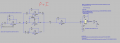
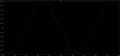
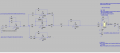
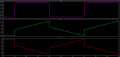
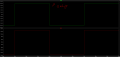
Hello, When I connected the P section only I increased its gain and saw increase from 2mA to 20mA of the step as shown below.
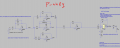
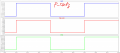
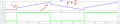
Then I connected the I to the P and I gont an intreseting shape.
So we sum a ramp with a step and this a shape which is results.
This is how we can see the effect of P on the I output?
Thanks.
1751201547642.png

1751201732038.png

1751201893446.png
1751201941658.png
 

ericgibbs

Joined Jan 29, 2010
21,463
Hi yef,
I assume you are applying PID based on the standard defintions?

Proportional (P):
The proportional term reacts to the current error. A larger proportional gain (Kp) means a stronger reaction to the error, leading to a faster response but potentially causing overshoot. It adjusts the output based on the instantaneous error.

  • Integral (I):
    The integral term addresses past errors by summing them up over time. This helps eliminate steady-state errors (errors that persist even after the proportional term has settled) and ensures the system reaches the desired setpoint. A larger integral gain (Ki) means a stronger correction for past errors.

  • Derivative (D):
    The derivative term anticipates future errors based on the rate of change of the error. It helps dampen oscillations and improve stability, but can also amplify noise. A larger derivative gain (Kd) provides more damping but can make the system overly sensitive to noise.
In essence, the PID controller uses a weighted sum of these three actions to calculate the output, which is then fed into the control device to adjust the process and bring it closer to the setpoint. The proper tuning of these parameters is crucial for achieving optimal control performance.

Is it possible you could select a White bacground for your LTS plots, Black makes it difficult for me to read.
E:)
 

Thread Starter

yef smith

Joined Aug 2, 2020
1,462
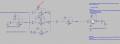
Hello, I increased the line thickness and made white background.
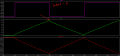
as you can see when I increase P component gain and see current 2mA to 20mAamplitude then weconnect P+I we see the triangle with a step.
maybe its normal and means that the larger the step thestronger contribution makes P=proportional component?
Thanks.
1751219812973.png
1751219871685.png
1751220448203.png
1751220551702.png
 

ericgibbs

Joined Jan 29, 2010
21,463
hi yef,
Consider this:
You are sitting in your parked car at the side of the road.
You are told when a car travelling at 30mph passes you,
you have to accelerate your car and take up a position and maintain a one
one car length behind that passing car, as quickly as possible.

What do you think the Proportional signal will be, you apply to the cars' accelerator pedal??

E
 

Thread Starter

yef smith

Joined Aug 2, 2020
1,462
hi yef,
Consider this:
You are sitting in your parked car at the side of the road.
You are told when a car travelling at 30mph passes you,
you have to accelerate your car and take up a position and maintain a one
one car length behind that passing car, as quickly as possible.
What do you think the Proportional signal will be, you apply to the cars' accelerator pedal??
At first I press high speed as the dustance will get smaller i will lower the speed .
thus is the strategy .


E
 

Ian0

Joined Aug 7, 2020
13,158
I'm not quite sure how instructive it is to observe the operation of the feedback signal when there is no actual feedback connection.
There is no way of observing what happens to the drive signal from the PID controller when the final output reaches its target, and the only way of knowing if it works stably is observing that event and the amount of overshoot.
So far, we have an integrator which turns square waves into triangle waves, and adds back a small amount of squarewave, and it works, but it could hardly fail.
 

ericgibbs

Joined Jan 29, 2010
21,463
hi yef,
I have used an Arduino sketch as a simulated PID source, also created a Visual Basic 6 plotted graph program.
This should help you visualize the various parameters of the PID signal and its effect on the test piece temperature.

The sim is a 25Watt heater being used to heat a small metal sample to the desired/maintained Set Point temperature of 200C deg.

Note the magnitude of the signals at start up, it uses common K' parameters

E
PIDPlot1.gif
 

Thread Starter

yef smith

Joined Aug 2, 2020
1,462
Hello, As you can see below I have made two sets of photos one when P is strong and one when P is weak.So do you agree that we can see the increase in the contribution of "P" by the increase of this discontinuety step?Thanks
 

Attachments

ericgibbs

Joined Jan 29, 2010
21,463
hi yef,
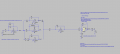
Could you please explain in detail what is the purpose of this circuit?
[considering there is no feedback loop in the PID]

Also, what is the function of the final L1 inductor?

E
 

Thread Starter

yef smith

Joined Aug 2, 2020
1,462
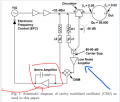
Hello Eric, the purpose of this circuit is a following .I have a frequency discriminator circuit with a YIG which has a drifting problem (about 2 MHz)
The YIG has two coils , one is Tune while the other is FM.
My feedback loop is powered by the FM coil,while the TUNE coil is very large and drifting over time.
So even If we have a lock the TUNE will drift ,Thats why we are using the integrator poart,the drift will cause an error which is ve
So this circuit needs to tune the YIG to the exact resonance with P (proportional part) while canceling the drift using the Integrator part.
So my questions are a folowing:
1. is it a good idia to battle the drift using PI controller
2. how can I know I know if the integrator is doing its purpose properly?
Thanks.
1751460136225.png
 

Attachments

Ian0

Joined Aug 7, 2020
13,158
This will only work if you know which way it drifted. Do you simply know that it has drifted off tune? Or do you know which direction the control voltage has to move to correct it? If you don't know, then a PID controller isn't going to fix it.
 

ericgibbs

Joined Jan 29, 2010
21,463

Thread Starter

yef smith

Joined Aug 2, 2020
1,462
This will only work if you know which way it drifted. Do you simply know that it has drifted off tune? Or do you know which direction the control voltage has to move to correct it? If you don't know, then a PID controller isn't going to fix it.
Hello Ian0,When I turn on the YIG its drifting about 2MHz to to the left (lowering the frequency)
How do I need to tune the integrator slope for battling the drift purpose?
 

Ian0

Joined Aug 7, 2020
13,158
Hello Ian0,When I turn on the YIG its drifting about 2MHz to to the left (lowering the frequency)
How do I need to tune the integrator slope for battling the drift purpose?
It depends on what happens to the output of the error amplifier when the frequency is too low.
Your PID stage is inverting. If the error amplifier is low for a frequency that is too low, and your oscillator frequency increases for a high control voltage, then your system will work.
However, if your error amplifier output is high for a frequency that is too low, then you need an extra inverting stage.
 

Thread Starter

yef smith

Joined Aug 2, 2020
1,462
Hello Ian , The drift will present itselt in the error of the mixer ,
error amplifier is the controller.
How to set the slope of the integrator in the PI controller?
Thanks.
 
Top