Worth salvaging these for resale? (Blackfin DSP, Renesas MCU, VHB75 DC-DC modules)

Thread Starter

kiroma

Joined Apr 30, 2014
334
Hi all,

I've got access to a batch of scrap boards that each carry three parts I'm thinking about pulling for resale - probably on eBay, since it reaches an international audience:

  • ADSP-BF532SBSTZ400 — Analog Devices Blackfin DSP (176-pin LQFP)
  • R5F61668RN50FPV — Renesas H8SX microcontroller (also high pin-count, fine-pitch)
  • VHB75-D12-S12 — CUI 75W isolated DC-DC converter module

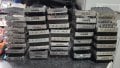
I've already desoldered 9 of the VHB75 modules, and there's a good chance I can get my hands on more boards with all three parts on them.

One thing worth mentioning: these all came off prototype boards — they never ran thousands of hours and weren't put under any real stress, so the parts should be in good shape. I've already bench-tested the VHB75 modules: fed them from a 17 V supply and pulled 60 W into an electronic load with no issues, so I know the pulled converters are working and healthy.

My hesitation is with the two ICs. Realistically, who's going to buy a salvaged fine-pitch part like a 176-pin LQFP and hand-solder it onto a board? It's not practical for a hobbyist, and any serious outfit would just buy new stock with proper traceability rather than trust a reclaimed chip of unknown thermal/ESD history. So I'm skeptical there's much real demand.

The DC-DC converters feel like the opposite case - they're fairly pricey new, genuinely reusable, and easy to drop into a project or a repair with no fine-pitch reflow headaches. Having confirmed mine actually work under load, they look like the only part really worth the effort of pulling.

Before I spend time removing the ICs too, I wanted to sanity-check with people who've actually done this:

  • Is there a real market for salvaged fine-pitch DSPs/MCUs like these, or is it just a waste of hot air?
  • Do reclaimed DC-DC modules like the VHB75 sell reasonably well, and do buyers care much about pulls vs. new (especially when they're tested and from low-hour prototype boards)?
  • Any tips on how to test and present pulled parts so buyers actually trust them?

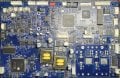
(photo attached for reference)

Thanks in advance.
 

Attachments

dl324

Joined Mar 30, 2015
18,524
My hesitation is with the two ICs. Realistically, who's going to buy a salvaged fine-pitch part like a 176-pin LQFP and hand-solder it onto a board? It's not practical for a hobbyist, and any serious outfit would just buy new stock with proper traceability rather than trust a reclaimed chip of unknown thermal/ESD history. So I'm skeptical there's much real demand.
I agree. Don't see much demand.
 

MisterBill2

Joined Jan 23, 2018
28,612
Certainly the boars shown could be sold "for parts"! I see two transformers with what look like 4-diode rectifier bridges nearby. They look to me to be mains powered, although I do not see a designated mains power connection. I am guessing that it is some sort of medical appliance, so the parts may even be better quality.
 

Thread Starter

kiroma

Joined Apr 30, 2014
334
Certainly the boars shown could be sold "for parts"! I see two transformers with what look like 4-diode rectifier bridges nearby. They look to me to be mains powered, although I do not see a designated mains power connection. I am guessing that it is some sort of medical appliance, so the parts may even be better quality.
The transformers are custom built from what I know, so no one is going to buy something like that.
Yes, it's a medical appliance, IIRC it's a cardioverter. But that 2 transistors near the transformers I bet that are switching the transformer at high frequency, so it's a match with the material of the core (ferrite) and also it means a DC-DC converter. I'm saying that because the product we are currently working has this exact same design.
 

WBahn

Joined Mar 31, 2012
33,350
I doubt there's a market for most of the pulled parts for the reasons that you've already identified. I'd recommend pulling the parts that you think you can sell and not waste the time and effort on the other parts. Instead, sell the rest of the board for parts and list the major components. Because you haven't put hardly any time into it, you can sell them cheap enough so that people that just want a few of the components may be interested. That may include someone that wants to take a shot at the DSP part. Personally, I've hand soldered LQFP parts with quite a few more pins than that (256), so there are people out there that might buy it for that part. I would rather buy the board with the part still on it rather than a part that's been removed -- I trust my ability to remove the part without damaging it more than I would trust someone selling it online, who may or may not have been the one to even remove it. But in no case would I be willing to pay a whole lot for it.
 

MisterBill2

Joined Jan 23, 2018
28,612
I doubt there's a market for most of the pulled parts for the reasons that you've already identified. I'd recommend pulling the parts that you think you can sell and not waste the time and effort on the other parts. Instead, sell the rest of the board for parts and list the major components. Because you haven't put hardly any time into it, you can sell them cheap enough so that people that just want a few of the components may be interested. That may include someone that wants to take a shot at the DSP part. Personally, I've hand soldered LQFP parts with quite a few more pins than that (256), so there are people out there that might buy it for that part. I would rather buy the board with the part still on it rather than a part that's been removed -- I trust my ability to remove the part without damaging it more than I would trust someone selling it online, who may or may not have been the one to even remove it. But in no case would I be willing to pay a whole lot for it.
Certainly you are right!! Years ago I experimented with removing PCB parts by using a hot-air gun on the solder side. That will work , but it is really hard on the PCB. And the parts need to be removed by hitting the hot inverted PCB on something, because it is all too hot to handle. And it only works if the parts did not have leads bent to hold the parts in place for soldering.
 

Thread Starter

kiroma

Joined Apr 30, 2014
334
Newly purchased VHB75-D12-S12 modules are expensive. 30–60% of new price for a tested pull is a good deal.
In the company, when they said they were going to put that many boards with this modules to the trash bin, it triggered my will to save this jewel. I knew it was a different thing than the rest because of the heatsink. The senior engineer said that it was so obsolete that nowadays you can do that for one dollar, but I didn't trust him because of his past knowledges. I knew such robust part would be valuable. At least I can save it for me if it doesn't sell, I'll have a 75 W DC-DC isolated module that I tested myself. If anyone is interested, it's on Ebay, but I live in Brazil, so I have to sell a lot of 10 to be competitive agaisnt the offers in USA (freight is expensive).

I doubt there's a market for most of the pulled parts for the reasons that you've already identified. I'd recommend pulling the parts that you think you can sell and not waste the time and effort on the other parts. Instead, sell the rest of the board for parts and list the major components. Because you haven't put hardly any time into it, you can sell them cheap enough so that people that just want a few of the components may be interested. That may include someone that wants to take a shot at the DSP part. Personally, I've hand soldered LQFP parts with quite a few more pins than that (256), so there are people out there that might buy it for that part. I would rather buy the board with the part still on it rather than a part that's been removed -- I trust my ability to remove the part without damaging it more than I would trust someone selling it online, who may or may not have been the one to even remove it. But in no case would I be willing to pay a whole lot for it.
Thank you for the suggestion, it's valuable. I don't get to waste my time nor my low-melting solder that is kinda expensive.
 

MisterBill2

Joined Jan 23, 2018
28,612
Hang on to those parts, either on the PCB or on cut out sections of the PCB, which protects the leads. The value can only increase.
 
Last edited:

MisterBill2

Joined Jan 23, 2018
28,612
Consider that heat-sinks do not tend to fail, except from corrosion, or mechanical damage from abuse. While some particular style may become obsolete, that hardly matters to the hobby class users.
 

Thread Starter

kiroma

Joined Apr 30, 2014
334
Yesterday I got my hands on the trash bin that is a bit restrictive here in the company for other reasons than just acessing the trash. Went home and counted 40 (more than I had) boards with that VHB75. Found out I can dessolder much faster (about 6x faster) if I go with the soldering iron instead of the hot air blower to the maximum it can reach. That means conducting the heat is faster than convection. Also, always use "save chip" (low-melting point solder, it melts @ 100 °C) to mix with the current solder on the component. Using a flat screwdriver to go between the board and the VHB, and then turning the screwdriver to make the component go up (or down, as I was on the back of the board). Then proceed to insert more of the screwdriver to pull the back part, and then passing the soldering iron quickly on all the pins. I could remove the component in like 1 minute on average. That was wild.
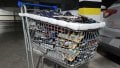
Photo for proof. The shopping cart full of boards is what I collected from the boxes of electronic trash. Got a lot more components to pull from them, as I mentioned here last week. Time to try selling them and making some good money.
 

Attachments

MisterBill2

Joined Jan 23, 2018
28,612
I am very impressed with your employers attitude of allowing you to collect the boards. It is far different from where I have worked in the past.
I have experimented with unsoldering parts using a larger soldering iron and a pool of solder on the "solder side", to melt all of the device connections at once. That works, and if I use cheap "plumbing grade" solder it is not expensive.
My question is about finding buyers for the stuff, or uses for the salvaged parts. Personal hobby use is great, but how much can a person use.
 

WBahn

Joined Mar 31, 2012
33,350
Yesterday I got my hands on the trash bin that is a bit restrictive here in the company for other reasons than just acessing the trash. Went home and counted 40 (more than I had) boards with that VHB75. Found out I can dessolder much faster (about 6x faster) if I go with the soldering iron instead of the hot air blower to the maximum it can reach. That means conducting the heat is faster than convection. Also, always use "save chip" (low-melting point solder, it melts @ 100 °C) to mix with the current solder on the component. Using a flat screwdriver to go between the board and the VHB, and then turning the screwdriver to make the component go up (or down, as I was on the back of the board). Then proceed to insert more of the screwdriver to pull the back part, and then passing the soldering iron quickly on all the pins. I could remove the component in like 1 minute on average. That was wild.
Photo for proof. The shopping cart full of boards is what I collected from the boxes of electronic trash. Got a lot more components to pull from them, as I mentioned here last week. Time to try selling them and making some good money.
I hope you are successful, but be careful not to count your chickens before they hatch. If there were "good money" to be made, then the company would quite possibly have already explored how to make it for themselves. Even just contracting with someone to do what you are doing on a some kind of a commission or other revenue-sharing arrangement. Many companies do something along these lines when their waste streams have sufficient value. It could be that your company either isn't aware or isn't interested in exploring this.

I'd be a bit careful about messing around with restricted-access trash bins. Ask yourself what happens if you get caught doing what you are doing. Is it worth losing your job over? If you really think there is good money to be made, I'd recommend approaching your employer and proposing an equitable arrangement.
 

Thread Starter

kiroma

Joined Apr 30, 2014
334
I am very impressed with your employers attitude of allowing you to collect the boards. It is far different from where I have worked in the past.
I have experimented with unsoldering parts using a larger soldering iron and a pool of solder on the "solder side", to melt all of the device connections at once. That works, and if I use cheap "plumbing grade" solder it is not expensive.
My question is about finding buyers for the stuff, or uses for the salvaged parts. Personal hobby use is great, but how much can a person use.
Yeah, I've worked at Tramontina for 5 years and they didn't allow to take anything from the trash; if you wanted something, you'd have to ask the manager and get a permission. But the last company I worked for (4 years), they let me take the trash, they just didn't put so good items in the trash. They were cautious. Here they don't have space, so they put everything they won't use. They even put a whole 300m Ethernet cable CAT 5e. I took before it went to the trash, because they were laughing at me because I was getting "trash to my house". It's real that I don't have that much space, but my parents have a country house that does have space.
About the plumbing grade solder, from what I saw the "chip saver solder" is often called by Quik Chip in english, it contains metals such as bismuth, indium, and/or tin. 95 °C it remained solid, and boiling water melted it. That's why I know that it's about 100 °C.
 

Thread Starter

kiroma

Joined Apr 30, 2014
334
I hope you are successful, but be careful not to count your chickens before they hatch. If there were "good money" to be made, then the company would quite possibly have already explored how to make it for themselves. Even just contracting with someone to do what you are doing on a some kind of a commission or other revenue-sharing arrangement. Many companies do something along these lines when their waste streams have sufficient value. It could be that your company either isn't aware or isn't interested in exploring this.

I'd be a bit careful about messing around with restricted-access trash bins. Ask yourself what happens if you get caught doing what you are doing. Is it worth losing your job over? If you really think there is good money to be made, I'd recommend approaching your employer and proposing an equitable arrangement.
Dude, you understood it wrong, I didn't tell the full details, but one of the owners is my boss, and I asked permission if I could access that area and take the trash to pull components off. He said that if I couldn't get there, he would help me. They just don't find a use for this, and here in the south of Brazil people are not aware of the cost of such things. The senior engineer said that if we wanted to make something with those components, we would buy new versions of them, because we wouldn't use an obsolete part (also said that the same part could be done for less than 1 dollar. I knew he was so wrong). Also, the flux of our R&D trash is very low, we produce cardioverter and automatic external defibrilators, in the few hundreds per month. Hope this clears up.

Edit: btw, if they aren't valued at like 45% of the price I'm selling, I can sell them for 1/4 of that and still make some money. Even if I don't sell them I have 50 DC-DC isolated buck-boost 12 V @ 75 W with adjust and enable pins.
 

MisterBill2

Joined Jan 23, 2018
28,612
Those buck-boost converters could be useful for powering automotive higher powered sound system amplifiers, depending on if they are noisy or not. The main potential problem with using obsolete parts is if you need to get replacements for them.
So I wish you GOOD LUCK!!
 

rsjsouza

Joined Apr 21, 2014
430
Since counterfeit parts are very prevalent in Brazil, the boards you have carry known genuine units that can be resold. The trick is to test them very well before reselling on Mercado Livre or other venue, since a bad review can give you quite a reputation damage.

As for the parts, I see a few voltage regulators, isolators, opamps, the SDRAM and other much more useful parts than the Blackfin or the Renesas processors. Lifemed (medical company) would use higher quality parts themselves, so you should have a good assortment.

Good luck in your "mining" operation! :)
 
Top