Facebook
 Google
 GitHub
 Linkedin
Well, DOL (Direct On Line) has been around for longer than most people on here.
It's difficult to believe anyone 'electrical', that has had any experience with AC motors, has never heard of it.
Sorry to hear it confused some people.
When using a VFD (Variable Frequency Drive) or VFI (Variable Frequency Inverter), to supply an AC (Alternating Current) motor, energy can be saved in multiple ways.
For a single, low or fractional HP (Horse Power) motor, it's unlikely to be a significant saving.
Remember, the inverter output operates on a VF (Voltage - Frequency) curve when varying speed.
A 60Hz (Hertz) 240V (Volt) motor, running at half speed would have around 120V across it.
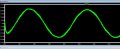
PWM (Pulse Width Modulated) , sine filtered or not.
If the current has also dropped by half, the power is now a quarter of its rating.
(The cooling air flow will have reduced, if it's self ventilating, and depending on the motor, may or may not be a problem ).
With a VFD, the power factor is always 1.0 so motor PF (Power Factor) losses are significantly zero.
If the motor is subject to frequent starts, the VFD controls the starting current, so no 10x motor rated current experienced, unlike DOL starting.
It won't slowly ramp up the current, it limits it to a preset multiple of the motor rated FLC (Full Load Current) and giving at least motor rated torque from zero speed.
If it has multiple windings, it is important to use the most appropriate for the speed range it will be used in. Obviously,
Using dampers on a ducting system to regulate flow, is not the way to go, particularly if being updated.
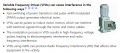
See attachment for further info on energy savings.
It's difficult to believe anyone 'electrical', that has had any experience with AC motors, has never heard of it.
Sorry to hear it confused some people.
When using a VFD (Variable Frequency Drive) or VFI (Variable Frequency Inverter), to supply an AC (Alternating Current) motor, energy can be saved in multiple ways.
For a single, low or fractional HP (Horse Power) motor, it's unlikely to be a significant saving.
Remember, the inverter output operates on a VF (Voltage - Frequency) curve when varying speed.
A 60Hz (Hertz) 240V (Volt) motor, running at half speed would have around 120V across it.
PWM (Pulse Width Modulated) , sine filtered or not.
If the current has also dropped by half, the power is now a quarter of its rating.
(The cooling air flow will have reduced, if it's self ventilating, and depending on the motor, may or may not be a problem ).
With a VFD, the power factor is always 1.0 so motor PF (Power Factor) losses are significantly zero.
If the motor is subject to frequent starts, the VFD controls the starting current, so no 10x motor rated current experienced, unlike DOL starting.
It won't slowly ramp up the current, it limits it to a preset multiple of the motor rated FLC (Full Load Current) and giving at least motor rated torque from zero speed.
If it has multiple windings, it is important to use the most appropriate for the speed range it will be used in. Obviously,
Using dampers on a ducting system to regulate flow, is not the way to go, particularly if being updated.
See attachment for further info on energy savings.
Attachments
-
514.5 KB Views: 15