Facebook
 Google
 GitHub
 Linkedin

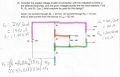
Hi. I'm relatively new to electrical engineering and circuit analysis. So, I'm having a bit of trouble with series-parallel circuits and determining when the rules do and do not apply. I've looked through my notes and textbook and searched around and I think I'm on the right track, but could use some feedback.
I've attached an image of the circuit that I'm working with (the colored wires are just to help me easily identify what is in series and what is in parallel). I know that the current through RL1 is 20mA, RL2 is 10mA, and the total current (IT) is 50mA. I also know that the voltage across RL1 is 60V and RL2 is 20V. I need to find the values of R1, R2, and R3. Here's what I have so far:
RT (total resistance) = ((R1+(R2//RL2))//RL1)+R3
RT = 1.44k ohms
RL1 = 60V/20mA = 3k ohms
RL2 = 20V/10mA = 2k ohms
Since components in parallel have the same voltage, and I know that RL1 is 60V and RL2 is 20V, would that mean that R2 is also 20V? And would that make R1 20V, as well, since (R1+(R2//RL2)) is in parallel with RL1, thus making the total voltage across those three components 60V?
Because the sum of currents through a parallel circuit add up to the total current, which is 50mA, and 20mA is flowing through RL1 and 10mA is flowing through RL2, would that mean that the current through R1 and R2 would be 10mA, each? And does that mean that the total current enters R3?
Assuming that all of the above is correct (or, even if it's not), how would I find the voltage across R3? Would that be 10V? Or maybe the total voltage?
Thanks in advance for the help.