Signal fluctuation

Thread Starter

Grck5000

Joined Mar 2, 2023
1
Hi guys,
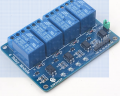
I'm reading signals from 20 different sensors and all these sensors are being controlled by relays. In other word, each sensor has a relay. Those relays are all on a relay module like the one in the picture below. The only problem is when one relay switches opens or closes, the signal of another sensor fluctuates, meaning it would jump. How do I prevent these small fluctuations. Can someone please help? Any idea?
1677792889257.png
 

ElectricSpidey

Joined Dec 2, 2017
3,335
The only way to solve the problem is to do experiments to determine the cause of the fluctuations.

They could be anything from power issues to EMI.

Of course, you could always start throwing solutions at the problem and hope to get lucky.
 

LowQCab

Joined Nov 6, 2012
5,101
There may be a much more elegant solution than ~20 clunky Relays.

What exactly are You trying to accomplish ?
Can the Sensors be averaged ?
Do You simply need to know the highest, or lowest, value ?
Are You manually selecting individual Sensors ?,
or does it need to have automatic cycling through the Sensors ?

A Schematic would be very helpful.
One picture is worth a thousand words.
.
.
.
 

Ian0

Joined Aug 7, 2020
13,132
Don't sample the inputs at the same time as opening or closing the relays.
(Some information about the switching frequencies and sampling frequencies would he handy)
 

MisterBill2

Joined Jan 23, 2018
27,519
If you are multiplexing one input with 20 relays the either you are connecting two sensors at once or you are having the input open between being connected. Either way will cause a big jump. There are analog switch IC devices that will reduce the jumps, and there are also ways to avoid the problem.
With a description of the signals some help might arrive, without a description you only get guesses.
Experimentation is OK if this is a hobby project for personal entertainment or education, but if this is part of a "for profit" business you really need to know and understand what you are doing prior to doing it. The place for experimenting is on your sketch pad.
LQC asks good questions in post #3. To which I will add: What kind of sensors and what are the output voltage ranges? And are you trying to switch sensor power also? How fast are the signals changing? and what are you feeding the signals into?
In short, a much more complete description is what is needed before any specific useful advice can be provided.
 
Last edited:
Top