Series

Thread Starter

mo2015mo

Joined May 9, 2013
157
Hello my friend,,,

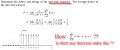
While i'm studying the DSP course , I faced this problem as attached photo
please help me about this theorem states Ʃ1 = N+1..
thanks in advance.. :)
 

Attachments

shteii01

Joined Feb 19, 2010
4,644
Hello my friend,,,

While i'm studying the DSP course , I faced this problem as attached photo
please help me about this theorem states Ʃ1 = N+1..
thanks in advance.. :)
You are reading the theorem wrong.

You have a sum of terms, the number of terms is from n=0 to N.

Let say you have one term, the first term is n=0, since you only have one term then N=0 too. So the sum of terms is u^2(0)=1^2=1.
Since N=0, then N+1=0+1=1.
So. u^2(0)=N+1

Now lets do two terms.
First term is n=0.
Second term is n=1.
N=1 because we are doing two terms where first term is n=0, second term is n=1.
u^2(0)+u^2(1)=1^2+1^2=1+1=2
N+1=1+1=2
So. u^2(0)+u^2(1)=N+1

And so on.
 

Thread Starter

mo2015mo

Joined May 9, 2013
157
You are reading the theorem wrong.

You have a sum of terms, the number of terms is from n=0 to N.

Let say you have one term, the first term is n=0, since you only have one term then N=0 too. So the sum of terms is u^2(0)=1^2=1.
Since N=0, then N+1=0+1=1.
So. u^2(0)=N+1

Now lets do two terms.
First term is n=0.
Second term is n=1.
N=1 because we are doing two terms where first term is n=0, second term is n=1.
u^2(0)+u^2(1)=1^2+1^2=1+1=2
N+1=1+1=2
So. u^2(0)+u^2(1)=N+1

And so on.
thanks very very very very much for your help :)
 
Top