Facebook
 Google
 GitHub
 Linkedin

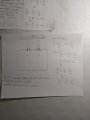
See the attached drawing. Trying to prove:
1/C total = 1/C1 + 1/C2 + ..... for series connected capacitors. My math is based on the entropy idea that matter and energy seek equal distribution. An example would be the Nernst equation from biology, whereby osmotic pressure, transmembrane potential, pH, and individual solute concentrations co-regulate each other.
Assuming 2 identical series connected capacitors. The system voltage would first charge the outer plates. This would be, for example, +3 and -3. The two electrical fields would develope based on a charge difference in plates c1a and c1b or c2a and c2b, charging the inner plates to +3 and -3. (Equal distribution of field and charge, thus including Equal distribution of associated voltages. If total voltage = v1+ v2...... then you soon arrive at the correct formula for series capacitors. The example assumes identical caps, and equal charge distribution. But, based on the Nernst equation idea, any series of caps with different plate areas, gaps and permitivities, would seek the most optimal distribution of charge, field and voltage. Thus, acting like a series of average-value identical caps. ????
1/C total = 1/C1 + 1/C2 + ..... for series connected capacitors. My math is based on the entropy idea that matter and energy seek equal distribution. An example would be the Nernst equation from biology, whereby osmotic pressure, transmembrane potential, pH, and individual solute concentrations co-regulate each other.
Assuming 2 identical series connected capacitors. The system voltage would first charge the outer plates. This would be, for example, +3 and -3. The two electrical fields would develope based on a charge difference in plates c1a and c1b or c2a and c2b, charging the inner plates to +3 and -3. (Equal distribution of field and charge, thus including Equal distribution of associated voltages. If total voltage = v1+ v2...... then you soon arrive at the correct formula for series capacitors. The example assumes identical caps, and equal charge distribution. But, based on the Nernst equation idea, any series of caps with different plate areas, gaps and permitivities, would seek the most optimal distribution of charge, field and voltage. Thus, acting like a series of average-value identical caps. ????
Attachments
-
 745.6 KB Views: 7