Seeking Assistance with Ceramic Fuses.

Thread Starter

Synoptic12

Joined Jan 23, 2026
32
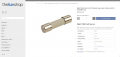
I'm seeking information regarding ceramic fuses, namely 'fast acting' (5x20mm) which would be used for a digital multimeter. It has been more than a task to find and/or acquire the Siba fuses. However, Bussman, Eaton, or any other name brands would suffice. I'm looking for Siba 7000140.10 which is 10 amp and 250V. The other fuse is similar > Siba 7000140.0.25 which is 250mA and 250V; 'fast acting' as well. I've been researching most of the day as the prices are ridiculous and the shipping charges are more than the fuses. If any can provide any insight here, that would be very much appreciated.SIBA 10 Amp 250V 5X20MM Fuse-1.pngSIBA 250mA 250V 5X20MM Fuse-1.png

 

Thread Starter

Synoptic12

Joined Jan 23, 2026
32
The second link is o.k. What brand are those fuses?
The first link does not have the correct amperage. The wrong voltage could damage the unit. So, the 10amp would not at all suffice. thank you for the courtesy. Areply is appreciated in looking for the second Siba fuse.
 

bertus

Joined Apr 5, 2008
22,908
Hello,

The fuses are from peaktech, a measurement equipment manufacturer.
The 10 Amp fuse is for 300 volts max, so 250 volts is no problem.
A higher voltage is better.

Bertus
 

tautech

Joined Oct 8, 2019
496
Let's take a minute to think what a fuse does in a DMM.......it protects the current shunt.
One might argue a shunt is also a fuse but rated much higher than what current range its designed to measure.

Some bench meters use 2 fuses, a normal break rating and a slow break and these can be 2 different current ratings....one is easy to replace in an external fuse holder while the 2nd internal fuse provides the real backstop protection for the current shunt.

Just why would one need a fast break fuse to protect a current shunt in a DMM ?
 

Thread Starter

Synoptic12

Joined Jan 23, 2026
32
Hello,

The fuses are from Peaktech, a measurement equipment manufacturer.
The 10 Amp fuse is for 300 volts max, so 250 volts is no problem.
A higher voltage is better.

Bertus
*That very well may be yet I follow or adhere to what was/is the original component as I've followed this procedure for numerous years. in terms of Peaktech, they mainly manufacture for their own devices (non critical). Reliabilty is a true factor that I would like to keep whereby Peaktech is a suitable replacement but not as reliable as Siba > 'German": none better. Thanks for your assistance and support. Are there any other than Peaktech that you know of?
 

Thread Starter

Synoptic12

Joined Jan 23, 2026
32
Let's take a minute to think what a fuse does in a DMM.......it protects the current shunt.
One might argue a shunt is also a fuse but rated much higher than what current range its designed to measure.

Some bench meters use 2 fuses, a normal break rating and a slow break and these can be 2 different current ratings....one is easy to replace in an external fuse holder while the 2nd internal fuse provides the real backstop protection for the current shunt.

Just why would one need a fast break fuse to protect a current shunt in a DMM ?
* Because that was the original part "Fast Break" Ultra Rapid line. Surely, you cannot believe that I would use a slow release, especially with AC. I'm not an engineer but would adhere to the manufacturer's specifications: 'That simple'.

* My question would be why would any use anything other than those fuses in the Ultra Rapid line?
 

Thread Starter

Synoptic12

Joined Jan 23, 2026
32

Thread Starter

Synoptic12

Joined Jan 23, 2026
32
I tried purchasing for the price was excellemt. However, one must spend $87.00 which I have no intention of doing. One waty or another, their tentacles are ever reaching.
 

panic mode

Joined Oct 10, 2011
4,929
ceramic fuse body does not mean fuse is fast or slow acting. the only visible difference would be perhaps with glass body because then you could see if it is filled with sand or not. when it is filled with quartz sand (and with all other things being equal), it takes longer to reach melting point but main reason is that silica or quartz sand helps extinguish the arc faults once the fuse is melted. ceramic body is also more robust and handles higher temperatures, temperature shock etc so it is a material of choice for heavy duty and industrial fuses. glass fuses are simply easier to see inside. is fast fuse fast enough depends on what circuit it protects can handle. because if fuse is not fast enough you are running risk of rest of the circuit suffering damage. so you get to decide where your money goes. if you are using expensive device, better fuse makes sense.
 

Thread Starter

Synoptic12

Joined Jan 23, 2026
32
are you sure that is the only thing being protected? what is the DMM model you are protecting?
Crenova ms8233d. Irrespective of that, I cannot find anywhere to purchase the fuses I'm seeking. Again, I have no intention: none; of spending far more that the meter is worth. Can you direct me to any website and/or location that I can purchase the aforementioned fuses?
 

Thread Starter

Synoptic12

Joined Jan 23, 2026
32
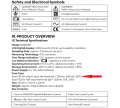
I purchased the Bussman 10A 250V. The other I made a mistake on and cancelled (250mA x250v). That was for the older 2000count digital meter as I downloaded the wrong manual. The other fuse (F1) I'm needing is 600mA x 250V as I cannot find it in ceramic. The closest is 630mA but I do not wish to change the capacitance at all. Can any assist me here?5X BUSS-BELFUSE 10A 250V Ceramic Fast.png
 

Ian0

Joined Aug 7, 2020
13,112
ceramic fuse body does not mean fuse is fast or slow acting. the only visible difference would be perhaps with glass body because then you could see if it is filled with sand or not. when it is filled with quartz sand (and with all other things being equal), it takes longer to reach melting point but main reason is that silica or quartz sand helps extinguish the arc faults once the fuse is melted. ceramic body is also more robust and handles higher temperatures, temperature shock etc so it is a material of choice for heavy duty and industrial fuses. glass fuses are simply easier to see inside. is fast fuse fast enough depends on what circuit it protects can handle. because if fuse is not fast enough you are running risk of rest of the circuit suffering damage. so you get to decide where your money goes. if you are using expensive device, better fuse makes sense.
That's the important thing: BREAKING CAPACITY, especially on DC ranges,
Most sand-filled ceramic fuses can break 6000A.
A glass cased fuse with no sand can probably only break 500A, and any fault currents above that create a sustained arc which would be destructive.
 

Thread Starter

Synoptic12

Joined Jan 23, 2026
32
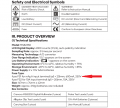
Would any know where I can purchase this fuse: 600mA x 250V Ceramic Fast Blow? It seems as the closest is 630mA and that I believe is glass. I've tried Mouser, Digikey, and others with no positive outcome.Crenova MS8233D FUSES - Copy.png
 

Thread Starter

Synoptic12

Joined Jan 23, 2026
32
Make sure you get 6kA or 10kA breaking capacity and don't worry about the odd 30mA. Fuses are not that precise!
"6kA (6 kiloamperes) is not the same as 600mA (600 milliamperes)". 'They represent vastly different amounts of electrical current'.
Crenova MS8233D FUSES - Copy.png
 

Ian0

Joined Aug 7, 2020
13,112
"6kA (6 kiloamperes) is not the same as 630mA (630 milliamperes). They differ by a factor of nearly 10,000".
Breaking capacity is different from fusing current.
If you connect it across the mains on a current range, whether it fuses at 600mA or 630mA is the least of your worries. It's far more important to know that it is going to break the circuit rather then strike an arc and start a fire.

Considering that the spec doesn't say whether it is Fast blow time delay, I haven't much confidence in the rating. 600mA is not a standard value, 630mA is.
 
Top