Can someone explain to me, in a 2-stage second-order RC low-pass filter, is the cutoff frequency at the -3 dB point or -6 dB point? In my MATLAB code, I found it to be -6 dB, but many sources say it should be -3 dB for an nth-order filter.
Do you have a buffer between the two stages? If so, the Q is 0.5 (critically damped) and it behaves exactly as two cascaded RC filters, so 1/(2πfCR) gives the -3dB frequency for each stage, so -6dB for the final filter.
If the second CR is much higher impedance than the first CR (C2=0.01C1, R2=100R1) then it is much the same as the buffered version.
If the two stages have similar impedances then the two stages interact and the -3dB point moves and the Q is even lower, 0.333 for equal values.
Test out a few values here: http://sim.okawa-denshi.jp/en/CRCRtool.php
The RCRC is a very useful filter. It can give 12dB/octave roll-off without any problems with self-capacitance of inductors or phase shifts of op amps. In case you haven't noticed, if you follow it with a buffer, then connect the end of the first capacitor to the output instead of to ground it becomes a Sallen & Key.
Do you have a buffer between the two stages? If so, the Q is 0.5 (critically damped) and it behaves exactly as two cascaded RC filters, so 1/(2πfCR) gives the -3dB frequency for each stage, so -6dB for the final filter.
If the second CR is much higher impedance than the first CR (C2=0.01C1, R2=100R1) then it is much the same as the buffered version.
If the two stages have similar impedances then the two stages interact and the -3dB point moves and the Q is even lower, 0.333 for equal values.
Test out a few values here: http://sim.okawa-denshi.jp/en/CRCRtool.php
The RCRC is a very useful filter. It can give 12dB/octave roll-off without any problems with self-capacitance of inductors or phase shifts of op amps. In case you haven't noticed, if you follow it with a buffer, then connect the end of the first capacitor to the output instead of to ground it becomes a Sallen & Key.
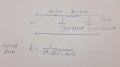
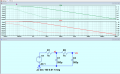
I do not have any buffer, the resistance values i used R1=R2 = 1 kohm, and C1 = 290mF and C2 = 260 mF for 2 stage RC low pass filter, the phase is -90 degree with cut off at -6dB.
Question: Two stages - each of first order? Passive or active?
In any case, the cut-off frequency is defined and designed by YOU.
In most cases, it is defined (selected) as the frequency where the magnitude is 3dB down.
When you combine two RC sections each having a certain 3dB point, the resulting lowpass function will have a 3dB-cutoff at a frequency which, of course, is lower than for one section only.
Perhaps you mean the following: When the cutoff of each first-order stage at the -3dB point is at w=wo , what is the damping at w=wo for the combination of both stages?
Is that your question?
Question: Two stages - each of first order? Passive or active?
In any case, the cut-off frequency is defined and designed by YOU.
In most cases, it is defined (selected) as the frequency where the magnitude is 3dB down.
When you combine two RC sections each having a certain 3dB point, the resulting lowpass function will have a 3dB-cutoff at a frequency which, of course, is lower than for one section only.
Perhaps you mean the following: When the cutoff of each first-order stage at the -3dB point is at w=wo , what is the damping at w=wo for the combination of both stages?
Is that your question?
Yes i have combined two first order RC low pass filters to get a second order LPF. I found in my cricuit and Matlab code The cut off frequency of first order filter is -3dB (phase -45 degree) and the second order LPF is -6dB (phase -90 degree). But in many sources i found for nth order filter the cut off frequency will remain same at - 3dB. my question is related to the cut off dB point and the phase value.
The answer is simple (and - more or less - contained in my first reply already).
1.) When one single RCsection has a 3db-cutoff at w=wo1 a combination of two EQUAL sections will have a damping at w=wo1 of -6dB only when both stages are decoupled (buffer amliffier).
2,) When both stages are not isolated to each other, the damping at w=wo1 will be anywhere between -3dB and -6dB
3.) The -3dB cutoff frequency of the 2nd-order filter (without a buffer in between) can be found as a result of a rather involved calculation. In this case, the magnitude of the 2nd-order function must be set equal to 1/sqrt(2) and solved for the complex frequency varaible w.
4.) Regarding the phase shift: For the 2nd-order function a phase shift of -90deg will appear at the so-called pole frequency wp only. This is the frequency where the complex function will approach infinity. Note that this pole frequency will be somewhat larger than the cut-off frequency wo under discussion
The answer is simple (and - more or less - contained in my first reply already).
1.) When one single RCsection has a 3db-cutoff at w=wo1 a combination of two EQUAL sections will have a damping at w=wo1 of -6dB only when both stages are decoupled (buffer amliffier).
2,) When both stages are not isolated to each other, the damping at w=wo1 will be anywhere between -3dB and -6dB
3.) The -3dB cutoff frequency of the 2nd-order filter (without a buffer in between) can be found as a result of a rather involved calculation. In this case, the magnitude of the 2nd-order function must be set equal to 1/sqrt(2) and solved for the complex frequency varaible w.
4.) Regarding the phase shift: For the 2nd-order function a phase shift of -90deg will appear at the so-called pole frequency wp only. This is the frequency where the complex function will approach infinity. Note that this pole frequency will be somewhat larger than the cut-off frequency wo under discussion
The answer is simple (and - more or less - contained in my first reply already).
1.) When one single RCsection has a 3db-cutoff at w=wo1 a combination of two EQUAL sections will have a damping at w=wo1 of -6dB only when both stages are decoupled (buffer amliffier).
2,) When both stages are not isolated to each other, the damping at w=wo1 will be anywhere between -3dB and -6dB
3.) The -3dB cutoff frequency of the 2nd-order filter (without a buffer in between) can be found as a result of a rather involved calculation. In this case, the magnitude of the 2nd-order function must be set equal to 1/sqrt(2) and solved for the complex frequency varaible w.
4.) Regarding the phase shift: For the 2nd-order function a phase shift of -90deg will appear at the so-called pole frequency wp only. This is the frequency where the complex function will approach infinity. Note that this pole frequency will be somewhat larger than the cut-off frequency wo under discussion
They are defined by their -3dB point, but there is a factor in the equation that takes the Q into account. The -3dB point does not automatically happen to be 1/(2πRC). The RCRC filter is no different in that respect.
They are defined by their -3dB point, but there is a factor in the equation that takes the Q into account. The -3dB point does not automatically happen to be 1/(2πRC). The RCRC filter is no different in that respect.
[QUOTE="Sup H, post: 2001867, member: 1056024"
In case of Sallen - key second order filter and Butterworth filter will have cut off frequency at -3dB ?
[/QUOTE]
You must clearly discriminate between
(1) different technical METHODS (circuits) for designing a filter (passiv RC, passive RLC, active Sallen-Key, active GIC, active MFB ....) , and
(2) different options for a second-order TRANSFER FUNCTIONS (Butterworth, Thomsn-Bessel, Cebyshev, elliptic/Cauer,...)
The cut-off frequency defines the end of the passband.
And this frequency is - in most cases (but not always) - defined/selected as the 3dB point.
However, for some special applications, you are free to use another frequency for defining the end of the passband.
There is not a "must" for using this definition.
As an example, for Chebyshev responses it is common practice to use another definition.
An apples and oranges comparison.
Sallen-Key is a common type of 2nd-order, active-filter configuration.
Butterworth (along with Chebyshev, Bessel, Elliptic, etc.) determines the roll-off response, phase-shift, and passband ripple that a filter (including the Sallen-Key) can have, depending on the relative component values.

 Facebook
 Google
 GitHub
 Linkedin