Safely rewire a dehumifier to start when ac power is turned on

Thread Starter

onasus

Joined Oct 29, 2018
3
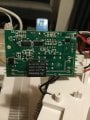
I'd like to have this dehumidifier turn on when ac power is detected, bypassing the momentary switch. I searched for information on the Ronway RWG1-DC18v-HS power relay to see if it could start without a trigger, but can't find any info. The momentary switch has 2 functions- press on/off, or hold down to change fan speed. Would sacrifice speed control if necessary to achieve auto on.
I'm not sure what circuit to add or change? I have bread boarded projects on battery power, but am extra cautious with AC. If anyone can point me in the right direction that would be great!
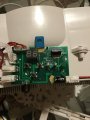
B27307AF-353F-4687-9B0F-4D0AC03DDD84.jpeg

D40B82B9-E549-42D5-ACA5-E78487C7BDED.jpeg

7B7A0088-0D1A-4DA3-87B0-9C7AC9CA7423.jpeg
 
Last edited by a moderator:

wayneh

Joined Sep 9, 2010
18,104
If you can live without the control functions (humidity settings, etc.), I think you could just bypass the control board entirely. All the board does is decide when to turn on the compressor and fan, and then sends a signal to a relay that actually switches the power to those components. So disconnecting the board and then bypassing the relay should make the unit run continuously.

It would help a lot to refer to the circuit diagram. There should be things like a high-temperature cutout, a frozen coil cutout, the "pan full" switch, and maybe something else I can't recall. You want to keep these safety features while eliminating the fancy control board.
 

Thread Starter

onasus

Joined Oct 29, 2018
3

  • Wayne- thanks for the response! The unit is very simple, no compressor..uses 'thermoelectric peltier module technology', 2 small fans, 2 coils, heat sink. I don't see any protection circuits other than a reservoir removal power cut. I do plan to use the continuous drain feature. No schematics online (that I could locate at least).

  • What you are recommending makes perfect sense for my immediate use. I'll see if I can figure out where on the circuit board.

  • Ideally I was hoping to preserve all the functionality and just add in an automatic trigger on power up. Spent some time reading about servos, timers, button pressers, and microbots. Frustrating and fascinating.
 
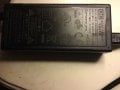
The adapter (brick) makes MOST of the voltage 15 VDC. Now that you said peltier, that explains the high current.

Let me ask about the LED indicators, like what do they mean.

The switches. The exact operation.

Sometimes identifying the IC's can help a little, They have SMD codes now and not full part numbers. The package type also helps identify the IC.

"Power on Reset" is not the easiest thing to do. Don;t know how many times something doesn't power up quite right because of a "power glitch" . A full power cycle or on off for some time is required to get a reset.


"Watch dog timers" are used for critical systems. The "program" activates an external circuit periodically. If the external circuit doesn't get the pulse, the processor resets.

Something "foolproof" might be a problem. There are some IC's that can help in the reset department.

It MIGHT be nice if the low current and high current aspects of the circuit can be isolated somewhat. Notice, I said might,

Push buttons, even though they have 4 pins, usually they are always connected in pin pairs. They are really only a 2-contact switch.

The LED voltage can sometimes be used. They can be monitored with comparators. Ones that don;t care if their supply voltage is exceeded.

Not on could be the X light hasn't been on in a while.

Take a look a www.picaxe.com
 

Thread Starter

onasus

Joined Oct 29, 2018
3
Thanks KISS, checking out the picaxe.
On the dehumidifier, the LED's left to right are power on, reservoir full, then 2 fan speed indicators hi and low. The top two push buttons change the humidity percentage on the panel, UP or DOWN. The unit will go into standby mode if the reading from the blue humidity sensor falls below the humidity threshold.
The bottom pushbutton is my on/off - connecting the two left legs momentarily will power the unit on or off. After the unit is on, you can hold the same pushbutton down to change fan speeds.

I was hoping that something as simple as a circuit detecting voltage on one leg could cause the loop to the other leg to close momentarily ..and then I went down the rabbit hole!


The main lightswitch powers all the outlets in the room, so ideally the unit would turn on automatically and stay on as long as the switch is on (or until the humidity level drops).
 

Sensacell

Joined Jun 19, 2012
3,784
The simplest I can think of is build an external circuit (with it's own little AC power supply) that simulates pressing the button, using a relay.
Wire this to the power button contacts.
Plug the dehumidifier and the gadget into the AC power that gets switched off.

It should probably delay before pressing the button, to let the unit wake up first.

I know this sounds complex, but given the nature of modern MCU controlled products, you need to make the MCU think you are really pressing the button.
 
The main lightswitch powers all the outlets in the room, so ideally the unit would turn on automatically and stay on as long as the switch is on (or until the humidity level drops).
Thats different.

See the PTR4 here. https://www.hwpro.cz/oc/index.php?route=product/category&path=186_203

Amazon in the US has it. Manual is easy to find. This https://www.jameslico.com/wp-content/uploads/2017/11/KnarkoPTR4-IND.pdf is a brief one. I think there are two versions of the timer.
It might work with a little bit of "electronic glue".

The question is "What glue?" Detecting power on is not necessarily easy.

Turning on with the "light switch" is one thing. "Turning on automagically" when the "light switch" is on and the power is out may be another.

The LTC6700 series of parts and companion parts https://www.analog.com/en/products/lt6700.html#product-overview might be a useful interface. OPTOMOS relays can do the buttons.
They are an optocoupler and a FET. I used a VTL5c1, but that part is obsolete. It has a 200 ohm on resistance, The OPTOMOS parts only require 2 mA for the LED to operate the switch.

I might have some ideas on how to get a decent reset if using a PICAXE or just in general.

The pseudocode might look like:
On successful power-up wait 10s
Pulse 1s if Power LED is not on.
Wait for power LED on. (error routine)
Wait for high or low fan led to come on.
(error routine)
Check speed (select on picaxe) High/low

Pan full might also be an error. e.g. Blink codes.

I'll have to look for the power good/reset IC. You could power the PICAXE with a 5V supply and a decent reset system.

The comparitors could monitor the LED voltage and create logic signals for the PICAXE. An OPTOMOS relay would be your button interface. Nothing bad will happen if inputs to the 6700 series comparitors are higher than say the 5V supply of the part or 0V of an unpowered part.

You might create a flashing LED sequence for errors.
Pulse on switch whatever is necessary to get desired selected speed.
 
Top