Safe high voltage generator for an arc lighter?

MaxHeadRoom

Joined Jul 18, 2013
30,686
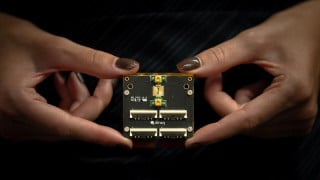
There is a kit on ebay for the tfmr a board and a Mosfet etc.
I assume you need a 555 oscillator and a drive mosfet similar to the kit.
It appears to have a ferrite core so will be capable of HF.
Max.
 

Thread Starter

-live wire-

Joined Dec 22, 2017
959
I want to design one myself, not just solder some stuff together. It is not just for functionality, but also to learn more about stepping up voltages and those kinds of circuits. And I would like to be able to customize it. So what do you think about what I said in #18?
 

MaxHeadRoom

Joined Jul 18, 2013
30,686
I would think this approach would be easier, you can trace out the circuit board to reverse-engineer it ebay 312116209165, you would need some kind of oscillator to drive the Mosfet.
You could also miniaturize it somehwhat.
Max.
 

Thread Starter

-live wire-

Joined Dec 22, 2017
959
But wouldn't my approach with the capacitor allow for bursts of very high power, required for a powerful arc? And wouldn't it being in bursts mean it would be less dangerous?
 

Thread Starter

-live wire-

Joined Dec 22, 2017
959
I don't think the ebay version is going to kill you!;)
Max.
Sure.... Ok, but how long can you handle a few amps (or a few hundred milliamps)? Because if it replicates static it could deliver very powerful arcs for a short enough duration. And also wouldn't there only be arcs near when the cap starts and stops discharging, making the duration even shorter?
 

Thread Starter

-live wire-

Joined Dec 22, 2017
959
Maybe I'll just build a HV/IGBT triac/PAC circuit and test it out, using the powerlines (because mains is not good enough for me). I'll have to use fast triacs, through. Otherwise the person might get fried instantly. I guess this might be the only option. That is, if no one responds.;)
 

Thread Starter

-live wire-

Joined Dec 22, 2017
959
I have been zapped for several seconds and survived. So the dangerous time is milliseconds not microseconds, it appears.
I mean a high voltage high current pulse. As in how long can you be shocked and have 500mA to a few amps go through you? Is it in the mS or uS range? I assume you did not touch power lines or a microwave transformer or something like that.
 

MisterBill2

Joined Jan 23, 2018
27,650
I mean a high voltage high current pulse. As in how long can you be shocked and have 500mA to a few amps go through you? Is it in the mS or uS range? I assume you did not touch power lines or a microwave transformer or something like that.
Mostly it was just mains contacts, 120 VAC, although I did bump a 480 volt circuit once. I jumped about 8 feet straight back with that one, and let out quite a yell, because it was very startling. I recommend avoiding shocks wherever it is possible.
 

Thread Starter

-live wire-

Joined Dec 22, 2017
959
L-ground or L-N? Just wondering. And what do you know about the duration where it goes from static-like to lethal cap-dis-like?
 

MisterBill2

Joined Jan 23, 2018
27,650
L-ground or L-N? Just wondering. And what do you know about the duration where it goes from static-like to lethal cap-dis-like?
Ground is close to neutral but with a green wire instead of a white one.And usually the longer duration shocks came from somehow being at line potential and then grabbing something grounded, rather than just accidentally touching a hot wire while grounded. The painful exception was many years ago, getting knocked off a grounded aluminum ladder when the bare end of a white wire swung around and got me. And it was a hot wire because some stupid did not understand about white was supposed to be hooked to the neutral side. Fortunately I was only about five feet up, and I landed on my feet. But it was VERY STARTLING indeed.
 

Thread Starter

-live wire-

Joined Dec 22, 2017
959
I ordered 2 of these step up transformers. They should get here in 16 days. :(
https://www.amazon.com/gp/product/B073VP18C8/ref=oh_aui_detailpage_o00_s00?ie=UTF8&psc=1

I could really use some help finding the right components for this and fine-tuning the design. Suggestions would be greatly appreciated. Again, I want to get all the components from Mouser and Amazon to minimize shipping costs. The end goal is an adjustable CD HV arc generator that is no more than 2.5in by 7 in by 1.5in.

So here this my current plan (no pun intended). First a voltage gets stepped up to 60V (or possibly less) and also up/down to a stable 5V for control electronics (5V being common for many ICs). I plan to use this boost converter or something similar. I am not sure on the B/B converter. Then the 60V is turned into CC with a BJT, resistor, and potentiometer. The resistor sets a max of 1.75A. The potentiometer allows from 40mA to 1.75A. That way if the input is less powerful, you can limit the power consumption. The BJT should have a constant and high (50+) beta. It should be able to dissipate (2A*60V)=120W with a small heatsink and more importantly not change its properties too much.

Then this CC should charge a capacitor, 200u-10m, and with an ultra-low ESR. I want the capacity to limit the duration to something non-lethal but still deliver a lot of power. This capacitor should discharge through the coil and deliver 100-200 amps. The charging/discharging should be controlled by a mosfet made for pulses like these and another one that can handle the 60V with minimal losses. I could use some suggestions for the mosfet to use here. Ideally it would not require too much external stuff and the required stuff would be easy to get (I am talking about heat sinks, drivers, etc).

A schmidt trigger would tell the cap to discharge after it reaches a certain voltage and then charge again once it falls below another threshold. It must have adjustable threshold voltages, which would be changed with potentiometers. The schmidt trigger should have two outputs, inverted and regular. They would drive the control mosfets. I really have no idea what specifically to look for when purchasing one and it would be really helpful if someone had specific suggestions for ICs.

There would be zener diodes at the capacitor, mosfets, and all of the components there to ensure the inductive spiking does not damage them. I could really use some suggestions on suitable zeners here.

So now here is what would ideally happen. The input voltage gets converted to 35-60V. It would only go to 35V if the input is more power limited. Then the capacitor gets charged to a certain adjustable voltage with the CC. It should happen fairly quickly. It would get charged slower if there are more input power limits. Then it discharges to a certain voltage. The threshold voltages would be adjusted to balance frequency and power. Then when it discharges the cap, it drives huge currents through the inductor momentarily. This would lead to even larger spikes on the secondary, with enough power to ignite something, but momentary enough to not be fatal. The inductive spiking would be managed by the zeners and not damage any components. If I must somehow limit the inductive spiking to avoid damage to components, I would at least like it to still have pretty big spikes.
 

Thread Starter

-live wire-

Joined Dec 22, 2017
959
Also this is turning into more of a project so maybe it should be moved to the projects forum. Could a mod possibly move it?
 

MisterBill2

Joined Jan 23, 2018
27,650
To generate a fair amount of heat in a spark takes a fair amount of power, V x I , and that gets a bit bulky and a bit heavy. But much of the functionality is similar to the trigger circuit for a xenon flash tube, so a study of those circuits may provide a bit more inspiration. And the high voltage they use comes from a very simple circuit. Also, the high voltage from an automotive timing light is another similar application,so those circuis and components might be useful to see.
 
Top