RV led strip light question

Thread Starter

hagith

Joined Dec 20, 2017
11
Hello all,

I am trying to rig up a led strip light in the storage area of my RV. There are two access doors on either side of the unit. I'd like to have a switch on either side of the RV that turn the lights on. Having read other posts here I understand that I would need two three way switches. So my questions are the following:

1. I'd like the switches to be activated by simply opening the storage door, would these work? and if so how to wire it?https://www.radioshack.com/products...MIsNOM2c2Z2AIVBbXACh1aOQxqEAQYBSABEgLKB_D_BwE

2. Also I have already run ground and power to inside one side of the doors from underneath. The wires are connected to a power hub which is connected to a 12v battery. I read somewhere that a lm 78l05 100m A 5v regulator in a To92 transistor case should be used with a 85-100 ohms resister. Yes, No?? Are there problems with this?

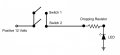
I saw this wiring diagram:
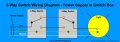
3-way-switch-wiring-diagram.jpg

thanks so much!!!
Mod edit: local image.
 
Last edited by a moderator:

ElectricSpidey

Joined Dec 2, 2017
3,334
That is not a three way switch, but you don’t need them anyway, and yes they will work. A three way switch allows you to turn on and off the light from either location, this is not needed here.

Plenty of LEDs available that will run straight off of 12 volts.

If you want to use a 5 volt strip yes, you will need a regulator, but I doubt a TO92 will do the job.

This is all you need to run a medium power LED with 12 volts.

Auto_LEDs.jpg
 

Reloadron

Joined Jan 15, 2015
7,889
Your best bet for the lighting is just find pre wired LED lights designed for 12 VDC including those designed as RV interior lights. Here are a few examples.

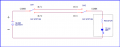
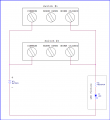
Your drawing for the 3 way switches is the common way of doing it. However, the SPDP snap acting switches you linked to will work but snap acting switches like this have a N/O and N/C contact (Normally Open & Normally Closed). The contacts need to be toggled as below:

3 Way Switch LED.png

Each switch has a Common, N/O and N/C just note how the N/O and N/C are connected and this should work fine with any lever actuated, roller actuated or Plunger Actuated snap acting switch. Also both switches can not be active at the same time. :)

Ron
 

ElectricSpidey

Joined Dec 2, 2017
3,334
There is no need to wire those switches like that, why would you want the light to go out if you open the other door?

Just place both switches in parallel using Common and NO.

That way the light will go on when you open either door or both.
 

Reloadron

Joined Jan 15, 2015
7,889
Well call me slow on the uptake. No clue what I was thinking or actually not thinking. Thanks for pointing that out.

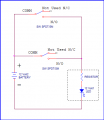
Snap Acting Switches.png

Now looking at this when a door is closed the lever will activate the switch so swap how I drew it using the N/C contacts which will be open when the door is closed. Sheese, I am not batting very well this evening. :)

Ron
 

Thread Starter

hagith

Joined Dec 20, 2017
11
Well call me slow on the uptake. No clue what I was thinking or actually not thinking. Thanks for pointing that out.

View attachment 142139

Now looking at this when a door is closed the lever will activate the switch so swap how I drew it using the N/C contacts which will be open when the door is closed. Sheese, I am not batting very well this evening. :)

Ron
 

Reloadron

Joined Jan 15, 2015
7,889
If you buy LED lighting designed for 12 VDC operation you do not need any resistor. That was the reason I enclosed the LED and Resistor in my diagram in a box. LED lighting like that which I linked to is designed for 12 VDC RV use making for easy install. As to the switch? The switch you originally linked to is a common snap acting switch, lever operated. The SPDT simply references Single Pole Double Throw. They are frequently called a Micro-Switch for the company which made them popular. They can be had from any number of suppliers, here is an example from Amazon. They also come with screw terminals and other actuators besides lever. The SPDT is just the contact arrangement. So if you buy a LED light or LED strip designed for 12 VDC there is no need for any additional hardware.

Ron
 

Thread Starter

hagith

Joined Dec 20, 2017
11
Thanks Ron et al, I'm sorry to be a dunce with this! Possibly another dumb question, no I'm sure it is: On the wiring diagram it says Positive to the Common on the first switch then run to the next switch on the common. If I am running a wire to the common on the first switch from what prong on the first switch do I run to the second to go into the Common. It is a twofer on the first common? thanks so much,

Jason
 

Reloadron

Joined Jan 15, 2015
7,889
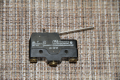
No problem, where I use Common or Com on the switch terminals it is merely how on the actual switch the terminals are labeled. Here is an example of a lever actuated snap acting switch:
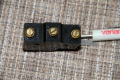
Micro Lever 1.png

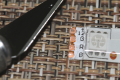
This one uses screw terminals. Here is how the terminals are labeled:

Micro Lever 2.png

While a little difficult to read the terminal on the left is labeled COMMON the center terminal is NORM. OPEN and on the right NORM. CLOSED. Different manufacturers may use slightly different words or symbols. So in my drawing my reference to a switch terminal as COM or COMMON is merely a terminal and not for example circuit common or battery negative. Also in my last drawing I did get it wrong. While COMMON is correct the lamp should connect to Normally Closed as with the door closed the switches will be active. :)

Your switches are in parallel so either switch will operate the light.

Ron
 

Thread Starter

hagith

Joined Dec 20, 2017
11
Ok, thanks, I think I got that, however when I connect the power wire to the Common on the first switch from which part of the first switch to I connect the second switch your diagram says Common. How do I connect two commons- just soldered together, twofer or something else. thanks!
 

Reloadron

Joined Jan 15, 2015
7,889
Both switches are in parallel so Battery (+) goes to the Common terminal of each switch. Then the normally closed terminal of each switch goes to the LED light(s). My drawing incorrectly reflected the Normally Open which will be closed when either door is closed. Make sense now? :)

Ron
 

Reloadron

Joined Jan 15, 2015
7,889
Yes, some strips include leads and sections which can be cut. Here is an example of a cut strip of RGB LEDs. Standard white would only have a Common (-) and Twelve Volt (+) lead or pads.
RGB Strip.png

LED5.png

Again, a white strip will normally have attached leads and yes, on the end for both (+) and (-) which will be polarity labeled. I guess I could have drawn it that way. :)

Ron
 
Top