Ring doorbell power draw

MisterBill2

Joined Jan 23, 2018
27,555
In this instance the "VA" was misunderstood to mean VAC=Volts AC. so the manual was really defective, it should never have used the term at all.
The correct description would have been "24 volts AC at 1.4 amps", which would have been both correct and not subject to misunderstanding. Why not use the more common units that are not going to be confusing?????
Of course I find it a challenge to imagine a doorbell requiring even one amp.
 

Tonyr1084

Joined Sep 24, 2015
9,744
Of course I find it a challenge to imagine a doorbell requiring even one amp.
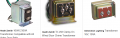
I believe the 40VA was a "Max" wattage suggested. Or perhaps a minimum, would have to look back to see. And it's just not that important to me. Besides, I didn't write the manual. But if I had - I'd probably have written it the same way.
 

MisterBill2

Joined Jan 23, 2018
27,555
I would have used "Amps" to avoid confusing those folks who do not use the expression V.A. This thread is proof that confusing folks is not good.
As we have seen in this instance, it is way too easy for a beginner to mistake VA for VAC, an entirely different meaning. So is t worth it just to show that one knows a bit more than a beginner and use a term likely to be misunderstood, instead of just stating a rating in AMPS, which would avoid any chance of getting it wrong??
 
Last edited:

MisterBill2

Joined Jan 23, 2018
27,555
I did not use the word "watts" for that very reason. Nor VA (voltamps).
That was very deliberate.
"Volts" and "AMPS", by themselves, are correct for both AC and DC, and not subject to misreading. Aside from that, certainly between the two, a transformers capability can be quite adequately described. So why select terms more likely to be misunderstood? IS it just to impress others with how smart one is??? THAT is exactly how I see it in many instances.
Which does bring up a question that I have, since an actual 40 volt transformer seems rather unusual, is what voltage IS that transformer, actually??? Is there a chance that it is a 40 VA transformer, delivering 24 volts???
 

Tonyr1084

Joined Sep 24, 2015
9,744
Which does bring up a question that I have, since an actual 40 volt transformer seems rather unusual, is what voltage IS that transformer, actually??? Is there a chance that it is a 40 VA transformer, delivering 24 volts???
I agree, a 40 volt transformer does seem like a very specific purpose built item, and yes, it is an unusual voltage. The way I read it is that a transformer capable of delivering 10 to 24 volts should be capable of 40 VA (or Watts, whichever you prefer).

Since coming to AAC I've learned a lot. Rather than remaining in the dark about terms, having others clarify and educate me has been greatly appreciated. If you look back at post #14 you will see that I explained the difference between VAC and VA. Not to show how smart I was but rather to help the TS understand what he's working with.
 

MisterBill2

Joined Jan 23, 2018
27,555
I agree, a 40 volt transformer does seem like a very specific purpose built item, and yes, it is an unusual voltage. The way I read it is that a transformer capable of delivering 10 to 24 volts should be capable of 40 VA (or Watts, whichever you prefer).

Since coming to AAC I've learned a lot. Rather than remaining in the dark about terms, having others clarify and educate me has been greatly appreciated. If you look back at post #14 you will see that I explained the difference between VAC and VA. Not to show how smart I was but rather to help the TS understand what he's working with.
You mention learning the difference between VA and VAC. Consider how easy it would be for an inexperienced person to not understand that "VA" means something totally different from VAC. Like the really inexpensive "100 Watt Stereo Amplifier" that could run on a 6 volt 250 MA power supply, or four AA cells. And then reading a detailed description discovering that it was actually a "100 milliWATT" amplifier.
 

MaxHeadRoom

Joined Jul 18, 2013
30,668
If a certain expression is used fairly widely then it should be up those using it to understand when to use it in the right context or arena
https://en.wikipedia.org/wiki/Volt-ampere#:~:text=Volt-amperes are usually used,V⋅A = 1 W.
Many examples out there and Home Depot where many DIY folk shop is no exception!
I generally use it when I am conversing with those that should understand it.
The significant difference between V/A & VAC should also be understood.

1740516121569.png
 

Tonyr1084

Joined Sep 24, 2015
9,744
Hey @MisterBill2, I totally get that you have your own way of expressing yourself, and I’m all for that. Let’s not argue about it, okay? We’re going off topic here, and I’d rather help the TS solve their problem or if they learn something along the way, that’s even better. Giving someone a fish and calling it a biscuit doesn’t really help them much, does it? But teaching them what a fish is and how to fish properly is way more important.

I think we can agree to disagree on this matter.

'av'a g'day mate.
 

wraujr

Joined Jun 28, 2022
260
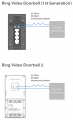
Pretty clear instructions online with warnings.

1740519362235.png

Very clear 8-24VAC (over and over). Clearly installer error if a 40VAC was used.

1740519493479.png

Hopefully over-voltage protection protected Ring and TS can recover.
Note that 1A at 25ohm dropped the Ring voltage down to approx. 15VAC which is typical operating voltage.
25ohm resistor takes the place of a typical door bell/solenoid coil.
 

nsaspook

Joined Aug 27, 2009
16,330
If a certain expression is used fairly widely then it should be up those using it to understand when to use it in the right context or arena
https://en.wikipedia.org/wiki/Volt-ampere#:~:text=Volt-amperes are usually used,V⋅A = 1 W.
Many examples out there and Home Depot where many DIY folk shop is no exception!
I generally use it when I am conversing with those that should understand it.
The significant difference between V/A & VAC should also be understood.

View attachment 343257
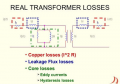
Yes, VA is the correct term for 'door bell' transformer ratings. Those types of transformers are a specific design with high leakage reactance of loose coupled primary to secondary coils that permits prolonged periods of short-circuit (and highly reactive currents in ring solenoid) currents without damage to the components for fire safety.
https://forum.allaboutcircuits.com/...former-for-ac-experiments.191282/post-1790636

They are electromagnetically power limited to the class (2 or 3 for most uses) listed VA safety rating with a LV side short. Most lower powered units 20VA-30VA are intrinsically safe with the proper bell ringer wiring.
1740522724419.png
https://electroncoil.com/leakage_transformers.php
https://www.hammfg.com/electronics/transformers/class-2/ba-c-d-e
 
Last edited:

MisterBill2

Joined Jan 23, 2018
27,555
My original assertion was that if the specification called for a 40 "VA" transformer and the TS, in error, interpreted that to mean a 40 VOLT AC transformer, it really does not matter at all how correct the term was, if it led to confusion and an incorrect choice.

Once again: IT DOES NOT MATTER how correct the words are IF THEY CONFUSE the folks who have no clue. IN ADDITION, specifying a transformer rating with voltage and amps of capacity is correct, even if it is not quite a s common.
 

nsaspook

Joined Aug 27, 2009
16,330
My original assertion was that if the specification called for a 40 "VA" transformer and the TS, in error, interpreted that to mean a 40 VOLT AC transformer, it really does not matter at all how correct the term was, if it led to confusion and an incorrect choice.

Once again: IT DOES NOT MATTER how correct the words are IF THEY CONFUSE the folks who have no clue. IN ADDITION, specifying a transformer rating with voltage and amps of capacity is correct, even if it is not quite a s common.
That confusion was easily corrected and the terms used are common knowledge to those versed in the art. There's IMO, a big difference between those that are clueless, and those that just don't have a clue to begin with.
 

MisterBill2

Joined Jan 23, 2018
27,555
That confusion was easily corrected and the terms used are common knowledge to those versed in the art. There's IMO, a big difference between those that are clueless, and those that just don't have a clue to begin with.
While the confusion may have "been easily corrected", possibly, but if damage caused by over-voltage caused by the confusion has been done, THAT is not so easily corrected in some instances. Please understand that the discussion is not about confusion of "the terms used are common knowledge to those versed in the art", but about the confusion of someone hoping to install a very "high tech" electronic computerized video doorbell button package, which, by the way, is fairly expensive, costing as much as a weeks worth of groceries. (for some folks).
 

MisterBill2

Joined Jan 23, 2018
27,555
I do see that the voltage is stated very explicitly as the very first description.
Now look back at the first line of post #1, and possibly some may see my point. Others will totally not get my point at all.
I have installed two "ring" devices, the first was for a lady who had much less than no clue, while her sister thought it would be wonderful. The second installation was for a lady who head read the book and understood it very well. THAT was an intereseting installation on a brick house. THAT installation is still in use almost two years later.
The first installation I was asked to remove a year later, it seems that they had not remembered to write the password and had totally no ideas what it might be.
Then this past summer I got a "blink" doorbell device at a cheap yard sale. Fifty cents, complete, with no instructions or warranty. It looks cool!
 
Top