Facebook
 Google
 GitHub
 Linkedin
Well, an interesting and expensive outcome follows!
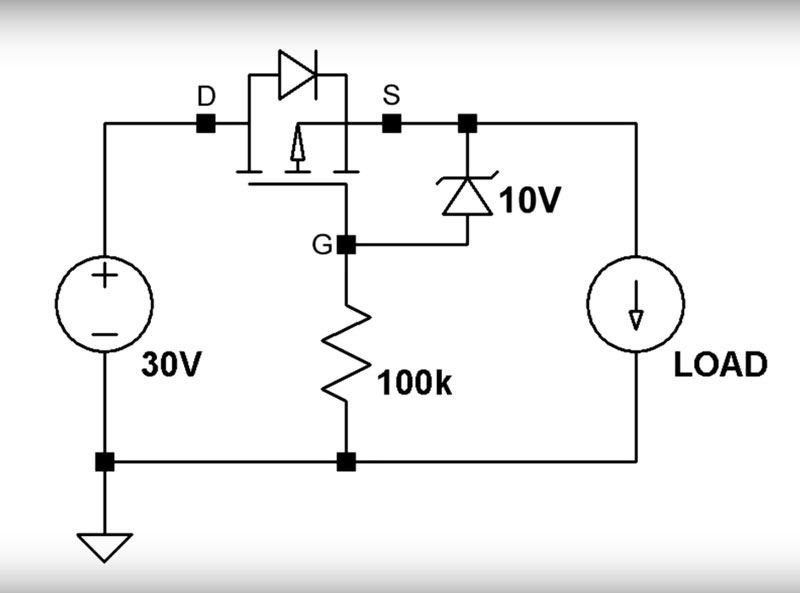
I connected the Mosfet to my circuit as described in the video posted above by "cmartinez", and did omit the zenor diode as mentioned by "crutschow". Stupidly however I didn't install an inline fuse, to my expense...."doh"!! But never again.
When I connected in the Mosfet modified circuit to the battery, and the correct way round to make sure the circuit worked as before, there seemed to be a larger spark momentarily when I connected the second crocodile clip to the battery. The circuit didn't work.
I then removed the Mosfet part of the circuit so it was as before, but the circuit still doesn't work. The power LED does light up but that's it, the pulsing is "dead".
I am no expert and have just basic knowledge of circuits. I also have no idea how to troubleshoot this problem, even if the circuit is recoverable.
One thing I would love to hear is, what could have happened?
Cheers
connected the battery the correct way round
I connected the Mosfet to my circuit as described in the video posted above by "cmartinez", and did omit the zenor diode as mentioned by "crutschow". Stupidly however I didn't install an inline fuse, to my expense...."doh"!! But never again.
When I connected in the Mosfet modified circuit to the battery, and the correct way round to make sure the circuit worked as before, there seemed to be a larger spark momentarily when I connected the second crocodile clip to the battery. The circuit didn't work.
I then removed the Mosfet part of the circuit so it was as before, but the circuit still doesn't work. The power LED does light up but that's it, the pulsing is "dead".
I am no expert and have just basic knowledge of circuits. I also have no idea how to troubleshoot this problem, even if the circuit is recoverable.
One thing I would love to hear is, what could have happened?
Cheers
connected the battery the correct way round