Relay switching

Thread Starter

EricSutton

Joined Oct 7, 2018
37
Hi,

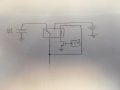
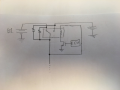
I am trying to switch between batteries when one gets to low. Looking at the circuit I think this is okay as long as the battery's voltage when it is about to die is sufficient for the relay coil. Aside from a missing flyback diode, is there any problem with this circuit?

Thanks

EDIT: the right side should have B2. For battery 2
 

Attachments

AlbertHall

Joined Jun 4, 2014
12,625
I think you may need a capacitor to store enough energy to keep the relay pulled in while it is switching to the other battery.
Also when the load is removed from B1 its voltage will rise. If that causes the relay to switch back to B1 the relay is going to chatter back and forth.
 

sghioto

Joined Dec 31, 2017
8,634
Elaborating on AlbertHall's advice you can add a couple of capacitors across the relay contacts. Values needed will depend on the relay.
battery's voltage when it is about to die is sufficient for the relay coi
One nice advantage of relays is that once it is energized the hold current is typically half or even less of the pull in current.
SG
EEE Relay switching.PNG
 

eetech00

Joined Jun 8, 2013
4,705
Hi

Here's another way.

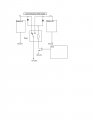
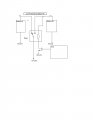
Initially, POR is latched by a control command from the ECU.
When B1 fails, POR de-energizes and switches the load to B2.
When B1 recovers, a new command from the ECU energizes and latches POR, and switches load back to B1.

eT

upload_2019-2-17_19-40-42.png
 

mvas

Joined Jun 19, 2017
539
Hi,

I am trying to switch between batteries when one gets to low. Looking at the circuit I think this is okay as long as the battery's voltage when it is about to die is sufficient for the relay coil. Aside from a missing flyback diode, is there any problem with this circuit?

Thanks
Or you could power the Relay Coil (+) from two diodes, instead of your existing location.
Diode #1 between B1 (+) and Relay Coil (+)
Diode #2 between B2 (+) and Relay Coil (+)
Allowing the Relay Coil to get (+) Power seamlessly from either B1 OR B2, whichever is stronger.
 

AlbertHall

Joined Jun 4, 2014
12,625
Or you could power the Relay Coil (+) from two diodes, instead of your existing location.
Diode #1 between B1 (+) and Relay Coil (+)
Diode #2 between B2 (+) and Relay Coil (+)
Allowing the Relay Coil to get (+) Power seamlessly from either B1 OR B2, whichever is stronger.
Then the relay would be operated whichever battery had the higher voltage. It wouldn't switch anything.
 

mvas

Joined Jun 19, 2017
539
Then the relay would be operated whichever battery had the higher voltage. It wouldn't switch anything.
No, you are wrong....
The ECU energizes the Coil via the MOSFET and the Ground Wire.
The ECU determines when the coil is ON and when the coil is OFF
The OR'd Diodes just supply the seamless (+) power from the strongest battery, when needed.

You need to review the diagram in Post #1.

NOTE:
It may be possible to connect the Relay Coil (+) wire to (+) Battery #2,
since that is the only battery that supplies (+) power to the Relay Coil.
 
Last edited:

sghioto

Joined Dec 31, 2017
8,634
It may be possible to connect the Relay Coil (+) wire to (+) Battery #2,
since that is the only battery that supplies (+) power to the Relay Coil.
That's not correct as drawn. The relay + terminal is connected to the COM of the contacts so power comes from either B1 or B2. Your suggestion of using two diodes actually would eliminate the need for a relay. I think the TS intentions for using a relay is to isolate the low battery during charging.
SG
 

mvas

Joined Jun 19, 2017
539
That's not correct as drawn. The relay + terminal is connected to the COM of the contacts so power comes from either B1 or B2. Your suggestion of using two diodes actually would eliminate the need for a relay. I think the TS intentions for using a relay is to isolate the low battery during charging.
SG
I suggested the the coil could be powered via two OR'd diodes, to provide seamless power to the coil and battery isolation.
See my circuit below ...

I do not think the relay or relay contacts can be eliminated, if needed for the rest for the circuit.

Finally, I suggested ...
Since only Battery #2 needs to ever provide (+) Power to the Relay Coil,
then simply connect the Relay Coil directly to (+) Battery #2 & switch the Relay Coil Ground wire ON/OFF via MOSFET & ECU. No connection between the Relay Coil & Battery #1 is ever needed, since that is the Coil's "OFF" position.

OR-d_Coil.jpg
 

sghioto

Joined Dec 31, 2017
8,634
I do not think the relay or relay contacts can be eliminated, if needed for the rest for the circuit
That may be true as we don't know what the exact load is.
Either circuit you have suggested will work. We don't know what the TS intent is when a battery is low. Does he just replace it or charge it?
Other possible issues, is the ECU part of the load?
What happens to the load during that brief moment when switching between batteries?
SG
 

mvas

Joined Jun 19, 2017
539
Correct, I was only solving the issue with ...
The glitch with the (+) Power temporarily dropping-out at the Relay Coil when switching the Relay Coil from Off-to-On.
And that has been accomplished, simply & easily.

If the Load and/or the ECU cannot handle the glitch when switching between Battery #1 & Battery #2 then
Eric Sutton needs to provide significantly more information vs the original basic schematic.

If needed, Dual LM5050 Ideal Diodes (or equiv) with individual Enable Pins can seamless switch-over between two battery packs.
http://www.ti.com/general/docs/datasheetdiagram.tsp?genericPartNumber=LM5050-1&diagramId=SNVS629E

In any new design, I would not use a relay to switch between two battery packs.
 
Last edited:

Thread Starter

EricSutton

Joined Oct 7, 2018
37
That's not correct as drawn. The relay + terminal is connected to the COM of the contacts so power comes from either B1 or B2. Your suggestion of using two diodes actually would eliminate the need for a relay. I think the TS intentions for using a relay is to isolate the low battery during charging.
SG
That is my intention, sorry for taking a couple months off, I am back and am working on this.
 

Thread Starter

EricSutton

Joined Oct 7, 2018
37
Correct, I was only solving the issue with ...
The glitch with the (+) Power temporarily dropping-out at the Relay Coil when switching the Relay Coil from Off-to-On.
And that has been accomplished, simply & easily.

If the Load and/or the ECU cannot handle the glitch when switching between Battery #1 & Battery #2 then
Eric Sutton needs to provide significantly more information vs the original basic schematic.

If needed, Dual LM5050 Ideal Diodes (or equiv) with individual Enable Pins can seamless switch-over between two battery packs.
http://www.ti.com/general/docs/datasheetdiagram.tsp?genericPartNumber=LM5050-1&diagramId=SNVS629E

In any new design, I would not use a relay to switch between two battery packs.
So my intention as I just said above is to charge the battery that is not being used once it reaches a certain threshold. About the ECU being able to handle the glitch, I did not take that into consideration, I would need to think of something for that.

So you recommend using that Dual LM5050 Idea Diodes for switching between batteries?
 
Last edited:

Thread Starter

EricSutton

Joined Oct 7, 2018
37
Also, the relay is latching, so it does not need a substantial amount of current, just a pulse. Does this mean I still should use the capacitors?
 
Top