Facebook
 Google
 GitHub
 Linkedin

I have spent over a week on this problem, pulling my hair out and finally narrowed it down to the relay itself....
ISSUE: trying to power a small air conditioner unit from inverter, but when using the factory relay that kicks on the compressor, it trips the inverter protection! IF I BYPASS THE RELAY AND HARD WIRE THE COMPRESSOR, THE INVERTER HAS NO PROBLEM RUNNING IT. (specific relay datasheet below)
Main Question: is there a simple solution to mitigate the spike of the relays contacts closing? Or should I remove the relay and try to use a mosfet instead?
(from searching online I found a couple possible solutions. Using either a Metal-oxide Varistor (Vos) or a TVS Diode. Your thoughts, would these work?)
(I came across this post here on the forum from a while back talking about reducing relay voltage spike on the coil. Not sure if applicable to my situation...) https://forum.allaboutcircuits.com/threads/reduce-voltage-spike-on-relay-coil.184312/
More Info: the air conditioner main board has a time delay to engage the compressor. Originally every time the compressor kicked on it was tripping my inverter. So I went down a week's long rabbit hole trying to implement a couple different soft starter methods. I've tried using NTC inrush current limiters, as well as making a resistive inrush current limiter with a on time delay circuit and I had some varying success...
So I then decided to just completely bypass control board and to my surprise with no inrush current limiting whatsoever, the inverter has no problem powering the air conditioner with the fans and compressor kicking on at the same time.
So I now narrowed it down to the relay for the compressor is what is tripping the inverter! It would be ideal to be able to still use the factory main board in the air conditioner since it provides all the float switch sensors and the delay for the compressor etc.. If I can't figure out the relay problem I'm just going to hardwire the whole damn thing but I'd rather not
Any ideas on how to avoid this? Is there a way to smooth the spike of the relay contacts or should I maybe try to remove the relay and install a mosfet instead?
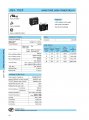
ISSUE: trying to power a small air conditioner unit from inverter, but when using the factory relay that kicks on the compressor, it trips the inverter protection! IF I BYPASS THE RELAY AND HARD WIRE THE COMPRESSOR, THE INVERTER HAS NO PROBLEM RUNNING IT. (specific relay datasheet below)
Main Question: is there a simple solution to mitigate the spike of the relays contacts closing? Or should I remove the relay and try to use a mosfet instead?
(from searching online I found a couple possible solutions. Using either a Metal-oxide Varistor (Vos) or a TVS Diode. Your thoughts, would these work?)
(I came across this post here on the forum from a while back talking about reducing relay voltage spike on the coil. Not sure if applicable to my situation...) https://forum.allaboutcircuits.com/threads/reduce-voltage-spike-on-relay-coil.184312/
More Info: the air conditioner main board has a time delay to engage the compressor. Originally every time the compressor kicked on it was tripping my inverter. So I went down a week's long rabbit hole trying to implement a couple different soft starter methods. I've tried using NTC inrush current limiters, as well as making a resistive inrush current limiter with a on time delay circuit and I had some varying success...
So I then decided to just completely bypass control board and to my surprise with no inrush current limiting whatsoever, the inverter has no problem powering the air conditioner with the fans and compressor kicking on at the same time.
So I now narrowed it down to the relay for the compressor is what is tripping the inverter! It would be ideal to be able to still use the factory main board in the air conditioner since it provides all the float switch sensors and the delay for the compressor etc.. If I can't figure out the relay problem I'm just going to hardwire the whole damn thing but I'd rather not
Any ideas on how to avoid this? Is there a way to smooth the spike of the relay contacts or should I maybe try to remove the relay and install a mosfet instead?
Last edited: