Facebook
 Google
 GitHub
 Linkedin

There's clearly some misinformation in this thread. For those serious about learning RTOS, I highly recommend this book: Real-Time Embedded Components and Systems with Linux and RTOS. After having taken Dr. Siewert's course, I can say that any RTOS, properly designed, will be head and shoulders above any best effort system.
Here's an example of a RTOS...
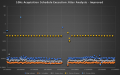
In the course, for the final project, we used a webcam to take video of an analog clock with a Raspberry Pi. We then analyzed each frame to provide images of the second hand at each individual second, without any skips or blurred movement in the second hand, for 30 minutes. I found this to be pretty easy... I generally had 30 frames to work with. I did some image processing to determine when the hand of the clock didn't move much and saved that image. Another requirement was that you had to use at least two threads on the processor. You could do this all on one thread, but that defeats the purpose of learning about RTOS.
A poor persons Rolex:
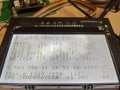
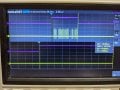
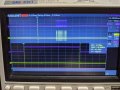
For extra credit, we used a digital clock to take images every 100ms without any blurs. This was much more difficult - you needed to save 1 frame in 3 so you had to somehow synchronize your camera to your digital clock. I was unsuccessful in this endeavor, so I don't have a video to share, but I was close. It's a project I'll likely circle back around to when I have more time. Here's a few images to give you the idea.
You can clearly see the last digit from 600ms to 700ms is blurred, and would not be acceptable to complete the project. Only one student in our class was successful, and there were maybe 5 that were close. About 30 total people were in the class.
Frankly, this was the best academic course I've ever taken.
Here's an example of a RTOS...
In the course, for the final project, we used a webcam to take video of an analog clock with a Raspberry Pi. We then analyzed each frame to provide images of the second hand at each individual second, without any skips or blurred movement in the second hand, for 30 minutes. I found this to be pretty easy... I generally had 30 frames to work with. I did some image processing to determine when the hand of the clock didn't move much and saved that image. Another requirement was that you had to use at least two threads on the processor. You could do this all on one thread, but that defeats the purpose of learning about RTOS.
A poor persons Rolex:
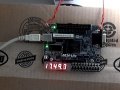
For extra credit, we used a digital clock to take images every 100ms without any blurs. This was much more difficult - you needed to save 1 frame in 3 so you had to somehow synchronize your camera to your digital clock. I was unsuccessful in this endeavor, so I don't have a video to share, but I was close. It's a project I'll likely circle back around to when I have more time. Here's a few images to give you the idea.
You can clearly see the last digit from 600ms to 700ms is blurred, and would not be acceptable to complete the project. Only one student in our class was successful, and there were maybe 5 that were close. About 30 total people were in the class.
Frankly, this was the best academic course I've ever taken.