Facebook
 Google
 GitHub
 Linkedin

My IQ is not enough to conclusively solve this by myself, so here I go...
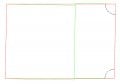
I have an antique piece of furniture that has 2 doors of unequal size on the front, depicted in green. The doors used to sit in a rectangular opening which with time became a parallelogram, depicted in red in the diagram. The angles are exaggerated, but accurately reflect the direction of the tilt.
I have a suspicion that this was caused by sitting on an uneven floor for decades which twisted the whole piece. Plausible?
And then is it possible to slowly twist it back by wedging 1 or 2 corners that sit on the floor? Where with time and gravity it would take original shape.
I have an antique piece of furniture that has 2 doors of unequal size on the front, depicted in green. The doors used to sit in a rectangular opening which with time became a parallelogram, depicted in red in the diagram. The angles are exaggerated, but accurately reflect the direction of the tilt.
I have a suspicion that this was caused by sitting on an uneven floor for decades which twisted the whole piece. Plausible?
And then is it possible to slowly twist it back by wedging 1 or 2 corners that sit on the floor? Where with time and gravity it would take original shape.