Facebook
 Google
 GitHub
 Linkedin

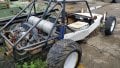
Hello, I am restoring a 1983 Chenowth Fast Attack Vehicle FAV Buggy as used by the former 9th Infantry Division on Ft Lewis, WA. These highly modified Chenowth 4LWC dune buggies used high performance air cooled VW Boxer 1984cc engines built by Don Hatz. The 9th Inf Division was known as the High Technology Test Bed unit the conventional Army used to test these mobility platforms that went on to be used by Navy SEALs and USMC Recon. They fielded the first "Blue Force Tracker" type devices, ground located laser designators for air strikes, etc, with doctrine of fighting at night with the AN/PVS-5 NVG. The idea for the Chenowth dune buggies came from Emerson Electrical Engineering who had a contract for remote controlled target drones for the Navy. They modified Chenowth 2RW/2LW chassis buggies with the VW 003 Autostick Transmissions and a box full of servos, for the Drone to be dual control, able to driven by a human long distances out to the target range, then switched over to RC for the Navy to attempt to hit them with naval gunfire.
In order to try to protect these engines from the 17-19 year old Privates who would be driving them an Engine Protection System circuit board was made to automatically kill the engine when the cylinder head temp CHT reached a certain point, likely somewhere around 350-400 degrees F. This EPS did have an Emergency Ignition System that allowed the crew to override the kill switch if needed in combat.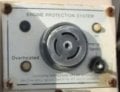
On the 9cm x 6cm faceplate there is a 12vdc alarm buzzer in the center to emit an audible alert the engine is overheated. There are also two 5mm bezel amber indicator lights, one in the lower left to indicate the Overheated status, the other in the upper right that lights when the Emergency Ignition System toggle switch is turned on. Then on the lower right a waterproofed micro toggle switch SPDT 6 pin soldered to the board. There is a 44mm x 68mm hole in the dash for the EPS circuit board to pass through.
Main component is Potter Brumfield R50.-E2.Y2 12VDC DPDT Relay.
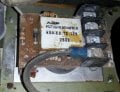 Solder footprint for 6 pin SPDT micro 1/4" toggle switch
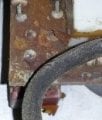 There are some resistors used on the board.
4 place terminal block, like the Uxcell 4 position 11mm pitch 300v 20 a terminal strip.
Amber indicator lights back then were incandescent, but for my purposes the Blue Sea Amber 8033 Indicator LED are contemporary substitute.
The FAV dashboard has a VDO 85mph speedometer; 18v Ammeter; 70 PSI oil pressure; fuel gauge; and a VDO 310-901 Cylinder Head Temp Gauge which uses a K-Type VDO 323-701 14ft long thermocouple 14mm ID terminal under one of the spark plugs, unknown Ohm.
I don't know if the CHT Thermocouple is part of the EPS circuit.
I think it would be safe to assume the main starter switch power passes through the EPS so the micro toggle switch should be an On/On type, the "Off" position being the ON for the main starter power from rotary starter switch to the coil.
Any assistance would be greatly appreciated. There are several of us, like 6-10 who would be able to use these EPS boards for personal use, vehicle collector purposes, not commercial.
In order to try to protect these engines from the 17-19 year old Privates who would be driving them an Engine Protection System circuit board was made to automatically kill the engine when the cylinder head temp CHT reached a certain point, likely somewhere around 350-400 degrees F. This EPS did have an Emergency Ignition System that allowed the crew to override the kill switch if needed in combat.
On the 9cm x 6cm faceplate there is a 12vdc alarm buzzer in the center to emit an audible alert the engine is overheated. There are also two 5mm bezel amber indicator lights, one in the lower left to indicate the Overheated status, the other in the upper right that lights when the Emergency Ignition System toggle switch is turned on. Then on the lower right a waterproofed micro toggle switch SPDT 6 pin soldered to the board. There is a 44mm x 68mm hole in the dash for the EPS circuit board to pass through.
Main component is Potter Brumfield R50.-E2.Y2 12VDC DPDT Relay.
Solder footprint for 6 pin SPDT micro 1/4" toggle switchThere are some resistors used on the board. 4 place terminal block, like the Uxcell 4 position 11mm pitch 300v 20 a terminal strip.
Amber indicator lights back then were incandescent, but for my purposes the Blue Sea Amber 8033 Indicator LED are contemporary substitute.
The FAV dashboard has a VDO 85mph speedometer; 18v Ammeter; 70 PSI oil pressure; fuel gauge; and a VDO 310-901 Cylinder Head Temp Gauge which uses a K-Type VDO 323-701 14ft long thermocouple 14mm ID terminal under one of the spark plugs, unknown Ohm.
I don't know if the CHT Thermocouple is part of the EPS circuit.
I think it would be safe to assume the main starter switch power passes through the EPS so the micro toggle switch should be an On/On type, the "Off" position being the ON for the main starter power from rotary starter switch to the coil.
Any assistance would be greatly appreciated. There are several of us, like 6-10 who would be able to use these EPS boards for personal use, vehicle collector purposes, not commercial.