Question on Negative Ion Generators

Thread Starter

KnowNothing001

Joined Jul 17, 2023
2
Apologies, not only am I a newbie, but I'm (mostly) electronics ignorant, although I have completed one project.

I am trying to explore a way to get a custom Negative Ion Generator constructed. There is nothing useful on the market currently, I have looked (including AliExpress). I am in the USA. FORGIVE ME there is a bit of info here. I wanted answer as many questions up front as possible.

I need a powerful Negative Ion Generator, and I think I found a one-of-a-kind version on-line. It's very simple, but I'm not completely sure it makes negative ions, and I don't trust myself to make one safely. I need to see if I can hire a qualified person to make a few.


I have 2 of these. They are not effective:
https://tinyurl.com/2zavd2yz
this MAY also be a negative ion generator. It may solve my problem, not sure:
https://tinyurl.com/yyfkdcdc


----- Background: ------

I had a wonderful "NaturAir" Negative Ion Generator (from China) a few years ago. It was absolutely amazing and cleaned all the air in my tiny stuffy bedroom so well that it felt like I was on top of a mountain. Completely cleared my oppressive allergies. I couldn't believe it and had never experienced anything like it with any expensive hepa filters. I was energized and allergy-free. The most effective thing ever!

They unfortunately went out of business just as Covid started.
YouTube Review:

The NaturAir line worked amazing, but they all used dozens of "brush clusters" to generate the massive amount of negative ions. After about 6-9 months, the brush clusters get clogged with dust, and there's no way I found to clean them.

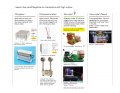
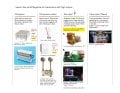
NEW Style: I "think" these are Negative Ion Generators. He's using them as "Ion Thrusters", but if the output is negative ions, then that's what I need. (First video, at top, or the "Kits" listed on the enclosed JPEG file)


-------- Next Generation Ion Generators? --------
(I don't need these! Just for reference):
https://www.youtube.com/@PlasmaChannel

Please see attached file for reference. THANK YOU FOR READING THIS!
- Tim
 

Attachments

MisterBill2

Joined Jan 23, 2018
27,315
I would not trust anything seen on you-toob to be correct. That lack of trust is based on seeing obvious fakes.
There is at least one company, "Exair" which does sell a device for reducing dust adhesion based on negative ions. I have not investigated it, but since they have been in business many years, and that is only a small part of their business, O would tend to believe what they say about their products.
 

Thread Starter

KnowNothing001

Joined Jul 17, 2023
2
I would not trust anything seen on you-toob to be correct. That lack of trust is based on seeing obvious fakes.
There is at least one company, "Exair" which does sell a device for reducing dust adhesion based on negative ions. I have not investigated it, but since they have been in business many years, and that is only a small part of their business, O would tend to believe what they say about their products.
Many thanks to you, Mr Bill, for your reply. I looked up the Exair, and they have a nice bench-top model I will inquire on. Several other similar products by other companies. Yes, these industrial models seem sturdy and they may be the ticket. That is a niche I never would have found without your help!

Thanks again!!
T
 

MisterBill2

Joined Jan 23, 2018
27,315
I am glad that I was able to point you to a company that produces products that really do what they are claimed to do. Truth in advertising is refreshing to come across.
 

LowQCab

Joined Nov 6, 2012
5,101
The problem with Negative-Ion-Generators is that they remove
unwanted particulates in the Air by making them "sticky",
so, instead of them just floating around aimlessly,
all these unwanted particulates will "stick", semi-permanently,
to every object in the room, including the Walls and the Carpet.

A far superior method, ( and much more expensive ), is sold by all of the major Industrial-Suppliers
such as Grainger, and McMaster-Carr.
The units are designed to mount to the inlet of a Central-Air-Conditioning-Unit-Air-Handler.
These units contain dozens of very thin Aluminum-Plates which give all the charged particles
a close surface to "stick" to thus actually removing the unwanted particles.
Depending upon the "Load" of particles being processed,
these Plates must be removed, and soaked in Water with some Dish-Detergent added
to release the captured particles into the Water for flushing away with a Garden-Hose.

Back when I worked for a large Limousine company for a couple of years,
I was also in charge of building-maintenance, as well as the 22 Limousines.
The building was an ancient car repair facility with 2 floors,
and the ONLY source of fresh-air was the single front Door.
The second floor was originally parts-storage, which had been converted into a "Drivers-Lounge",
with ~10 to ~15 Drivers all smoking Cigarettes at the same time.
Even with a decent Central-AC-Unit for the second floor,
the smoke was thick enough to be cut with a knife.
An Electronic-Air-Cleaner turned the Air pristine in a matter of several hours.
It blew my mind that it could actually work that well, and that fast.

I think having your whole house clean is a clear bonus over having just one room "sorta-kinda" cleaned-up.
.
.
.
 

Tonyr1084

Joined Sep 24, 2015
9,744
The problem with Negative-Ion-Generators is that they remove
unwanted particulates in the Air by making them "sticky",
so, instead of them just floating around aimlessly,
all these unwanted particulates will "stick", semi-permanently,
to every object in the room, including the Walls and the Carpet.
I've never heard that before. And I've been around ionized air for many years. ESD control ionizers produce a cloud of ions of both positive charges and negative charges. Some of the ions recombine and cancel each other out while others will be attracted to other oppositely charged items, thus neutralizing them. But I've never heard that they float around and stick to stuff. It kind of makes some sense, but it doesn't seem to me to be entirely intuitively true. Ionized dust should stick to the ionizer probes or plates as you explained in your smoke eaters in the drivers lounge. And yes, they do need to be cleaned periodically, depending on the load of materials they are extracting from the air. But again I've never heard of them sticking to other things. Do you have a source of that information? I'd like to look it up for myself.

Negative ions are generated by falling water. Rain storms tend to remove dust mostly from the rain drops but also from the generation of negative ions. If you've ever heard the term "There's an ill wind a blowin'" this may be in reference to the positive effects that make waterfalls so appealing to visitors. The "ill wind" would likely be positive ions.

What I know (or what I think I know) about ion generators is that they have high voltage and rectification. High rectified voltage can produce a negative ion charge or a positive one. Depends on how the diodes are stacked. The ones I've seen a long time ago had a stack of diodes in series, thus being capable of handling the high voltage.

The two ionizers you linked are not suited for your purpose. The first one does not look like an effective air purifier, even though it touts the ability to filter the air. The second one isn't intended for air purification. It's for eliminating static cling of printer paper so that the machine doesn't try to draw up a dozen pages at once and jam the machine.

As for the video - eh! It's a thruster, but it's a poor thruster. Not going to move much. And if your goal is to clean the air - the small size doesn't suggest confidence in the ability to remove much dust at all. The "Brush" type of emitter makes sense as it has large quantity of surface area. But as you noted it's hard to clean. The ionizer dust extractor I've seen have smooth plates with large surface areas. Being smooth they're easy to clean.

What is your goal? To remove dust from the air? If so - a good extractor isn't cheap. I've looked for one for my laser engraver/cutter. My first experiences with laser cutting was to fill the shop with smoke. I've then switched to a heppa filter (spell check doesn't like my spelling) which works. But clogs up fairly quickly and the filters are not cheap. I'll be watching this thread to see if someone recommends a good smoke extractor, as I definitely need one too.
 

MisterBill2

Joined Jan 23, 2018
27,315
I've never heard that before. And I've been around ionized air for many years. ESD control ionizers produce a cloud of ions of both positive charges and negative charges. Some of the ions recombine and cancel each other out while others will be attracted to other oppositely charged items, thus neutralizing them. But I've never heard that they float around and stick to stuff. It kind of makes some sense, but it doesn't seem to me to be entirely intuitively true. Ionized dust should stick to the ionizer probes or plates as you explained in your smoke eaters in the drivers lounge. And yes, they do need to be cleaned periodically, depending on the load of materials they are extracting from the air. But again I've never heard of them sticking to other things. Do you have a source of that information? I'd like to look it up for myself.

Negative ions are generated by falling water. Rain storms tend to remove dust mostly from the rain drops but also from the generation of negative ions. If you've ever heard the term "There's an ill wind a blowin'" this may be in reference to the positive effects that make waterfalls so appealing to visitors. The "ill wind" would likely be positive ions.

What I know (or what I think I know) about ion generators is that they have high voltage and rectification. High rectified voltage can produce a negative ion charge or a positive one. Depends on how the diodes are stacked. The ones I've seen a long time ago had a stack of diodes in series, thus being capable of handling the high voltage.

The two ionizers you linked are not suited for your purpose. The first one does not look like an effective air purifier, even though it touts the ability to filter the air. The second one isn't intended for air purification. It's for eliminating static cling of printer paper so that the machine doesn't try to draw up a dozen pages at once and jam the machine.

As for the video - eh! It's a thruster, but it's a poor thruster. Not going to move much. And if your goal is to clean the air - the small size doesn't suggest confidence in the ability to remove much dust at all. The "Brush" type of emitter makes sense as it has large quantity of surface area. But as you noted it's hard to clean. The ionizer dust extractor I've seen have smooth plates with large surface areas. Being smooth they're easy to clean.

What is your goal? To remove dust from the air? If so - a good extractor isn't cheap. I've looked for one for my laser engraver/cutter. My first experiences with laser cutting was to fill the shop with smoke. I've then switched to a heppa filter (spell check doesn't like my spelling) which works. But clogs up fairly quickly and the filters are not cheap. I'll be watching this thread to see if someone recommends a good smoke extractor, as I definitely need one too.
I did not attempt to evaluate the TS application at all.
I DID pass on the name of an honest company that produces a product that matched the TS description of what was needed. That was what was needed. There are way to many fraudulent sellers touting synthetic snake oil to cure whatever one might complain about. "EXAIR" is not one of them.
 
Top